

Optics / photonics equipment
We personally find you the right used, refurbished and new optics / photonics equipment from verified suppliers.
Optics and photonics equipment is the class of instruments that generate, direct, measure and control light for research and industrial use, covering everything from laser sources and detectors to the mounts and stages that position them. The Questpair catalogue holds 2529 optics and photonics listings from 23 verified suppliers and distributors across 12 countries. Of those, 96 percent are used, the remainder new, so a buyer choosing between new and used or refurbished laboratory hardware works almost entirely in the second-hand market here. Prices run from EUR 9 to EUR 231.579, a range that reflects how far this field stretches, from a single optical mount to a complete laser system.
Updated:
Optics / photonics equipment product list


Not the exact instrument you need?
Tell our scientists what you are after. We track it down, including off-market supply.
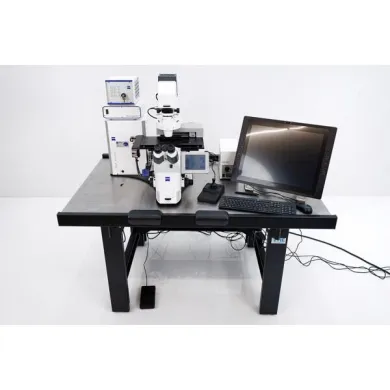
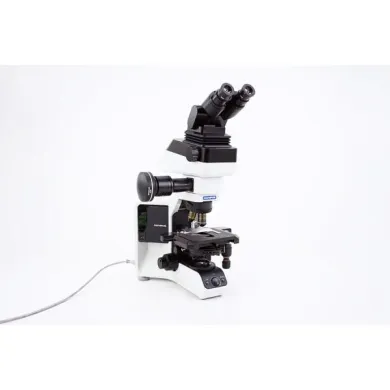
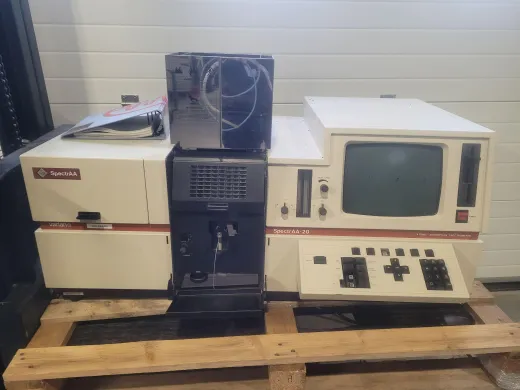
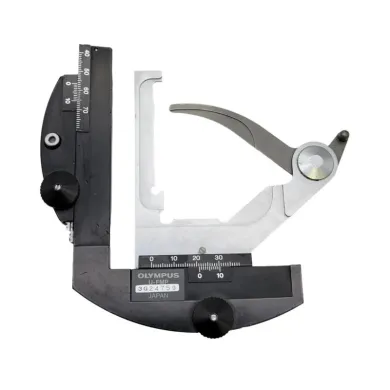
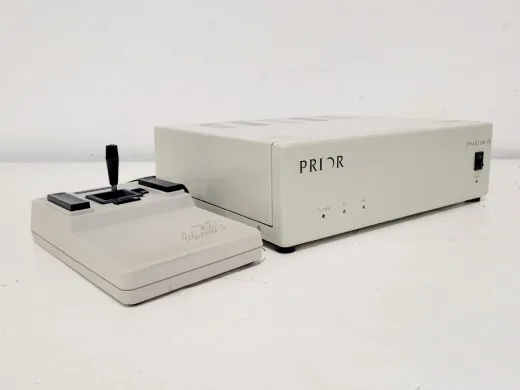
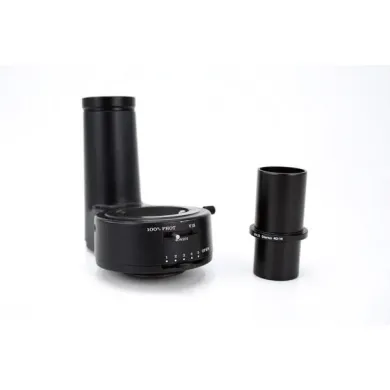
Not the exact instrument you need?
Tell our scientists what you are after. We track it down, including off-market supply.
Showing 1–40 of 1,764 listings
Show 40 more listingsBuying guide
The wavelength you work at settles most of what follows. An optic coated for 1064 nm is close to opaque at 532 nm, a silicon detector sees almost nothing in the mid-infrared, and a laser line that suits Raman is wrong for fluorescence. Fix the wavelength band first, then the specifications a buyer actually compares fall into place: the damage threshold a mirror has to survive, the responsivity curve of a detector across the band, the numerical aperture of a lens, the repeatability a translation stage returns to the same position. Reading those off a datasheet is straightforward. Confirming they hold on a used unit is the harder job.
On a used optical component, the coating is where condition lives. A scratch or a burn on a high-damage-threshold mirror is often invisible until the beam hits it, and a detector that has been over-illuminated reads low without looking damaged. Ask whether a photodiode or a camera still matches its original responsivity, whether a motorised stage has drive electronics and the right controller, and whether a light source has hours logged against a lamp or diode with a finite life. A laser head sold without its power supply and interlock is a different purchase from a working system, and the listing should make clear which one it is. Where a figure matters to you, point to the individual listing and arrange a warranty in consultation for that unit.
Price tracks that spread almost exactly. A used optical mount costs little more than a small part, while a complete laser bench runs into five figures, and the Questpair range from EUR 9 to EUR 231.579 holds both ends. What a given unit costs depends more on whether it is a bare component or an integrated instrument than on any single specification, so a budget set per item rather than per category tends to hold. Among the brands that recur here, Olympus, Thermo Scientific, Thermo Fisher Scientific, Nikon, Agilent appear most, which matters for a buyer because a named maker makes a model easier to look up and to compare against another listing. Refurbished and used optics listed for sale sit below new pricing, and with 96 percent of this catalogue second-hand, the affordable end is where most of the choice is.
Types of Optics / photonics equipment
Optical detectors
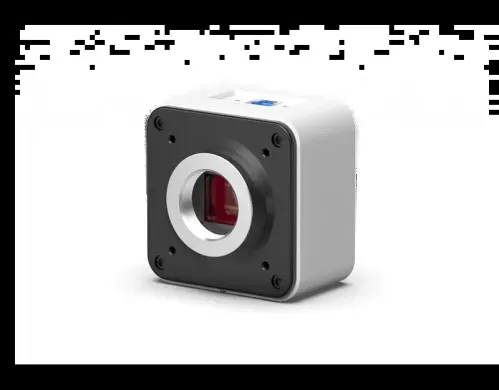
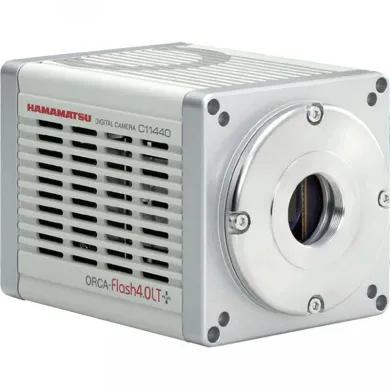
Optical detectors convert light into an electrical signal, and they are the most heavily listed subtype here. The category spans photodiodes and photomultiplier tubes, CCD and CMOS cameras, and complete detector modules, separated chiefly by the wavelength band they respond to, their sensitivity, and how fast they read. A silicon photodiode suits the visible and near-infrared, an InGaAs device reaches further into the infrared, and a cooled camera trades speed for the low-noise sensitivity that faint signals need. Detectors do the measuring in spectroscopy and in optical readout generally, and in the life sciences they sit at the heart of fluorescence microscopy and flow cytometry, where a photomultiplier counts the photons a labelled cell emits. The same sensors read out plate-based immunoassay and are built into cell imaging systems used across molecular biology, which is why a used scientific camera attracts buyers well beyond pure optics.
Optomechanical equipment
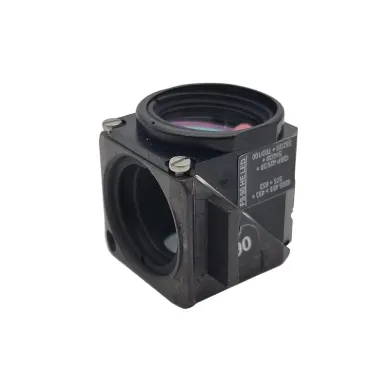
Optomechanical equipment is the mechanical hardware that holds, aligns and connects optical components: mounts, posts, rails, breadboards, cage systems, lens tubes and fibre couplers. What separates the items is less a specification than a format, the mounting standard, the thread, the degree of adjustment a kinematic mount offers, the stiffness a post or breadboard brings to a vibration-sensitive setup. This is the subtype a buyer reaches for when building or extending a bench rather than measuring anything, and it is where used purchasing makes the most sense, since a mount does not wear out the way a lamp or a detector does. Across life sciences laboratories the same hardware underpins any custom cell imaging or optical readout rig, so a researcher assembling an instrument for microscopy or electrophoresis documentation draws on exactly these parts.
Light sources
Light sources supply the illumination an optical measurement starts from, and they divide by spectrum and by stability. Broadband lamps, deuterium and tungsten-halogen sources, arc lamps, and laser-driven light sources each cover a different wavelength range and output level, and the choice turns on whether an application needs a smooth continuum or a bright, stable line. These systems illuminate spectrophotometers and microscopes, and in the life sciences a stable source is what makes a fluorescence or absorbance reading repeatable, so the subtype feeds directly into molecular diagnostics and protein quantitation work. A used lamp housing is common here, though a buyer weighs it against logged hours, since every lamp and diode source has a finite life.
Motion control equipment
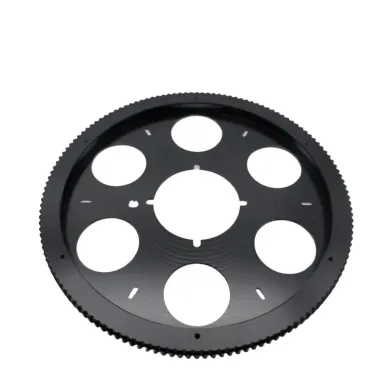
Motion control equipment moves optical components with precision: translation and rotation stages, goniometers, actuators, and the controllers that drive them. The distinction between units is the axis count, the travel range, and above all the resolution and repeatability, how closely a stage returns to the same point run after run. A manual micrometer stage and a closed-loop piezo stage sit at opposite ends of that scale and serve different work. Automated stages position samples under a microscope objective and scan them, which is the mechanism behind high-content cell imaging and whole-slide histology, so this subtype carries real weight in biomanufacturing quality control and in genomics instrumentation where many samples are scanned in sequence. A buyer should confirm a stage arrives with its matching controller, as the two are often separable.
Laser systems
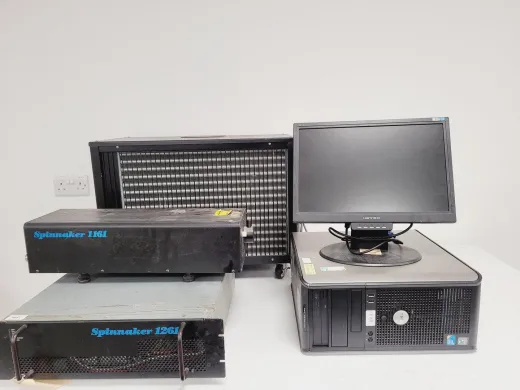
Laser systems are the coherent light sources of the category, and only a small number are listed. They range from diode and gas lasers to solid-state and fibre lasers, separated by wavelength, output power, and whether the beam is continuous-wave or pulsed. That last distinction decides the application: a continuous diode suits alignment and some spectroscopy, while a pulsed source drives time-resolved measurement. Lasers do the exciting in Raman and fluorescence spectroscopy and in confocal microscopy, placing them in cell imaging and molecular biology workflows, and they also serve gene editing readout where a specific excitation line is needed. A used laser warrants close attention to whether its power supply, cooling and interlock are included, since a bare head is not a working system.
Power meters
Power meters measure optical output, reading the power or energy a beam delivers so that a source or a laser can be characterised and set. Very few are listed. The meaningful differences are the sensor type, thermal, photodiode or pyroelectric, the wavelength range it is calibrated across, and the power span it can read without saturating. A buyer picks the sensor to match the beam, a thermal head for high average power, a photodiode head for low-level work. These instruments underpin any quantitative optical measurement, including the laser power checks that precede flow cytometry and imaging sessions, where a known excitation level keeps results comparable.
LED
LEDs are compact solid-state light sources, and a single listing represents them here. An LED differs from a lamp in its narrow, defined spectrum, its long life, and its ability to switch quickly, which is why LED illumination has spread through microscopy and plate readers. The relevant specifications are the emission wavelength or colour, the optical output, and whether the part is a bare emitter or a mounted, driveable module. Also used for fluorescence excitation and for general illumination in cell imaging, an LED source offers a stable, low-heat alternative to an arc lamp, which matters for live-cell work and for any measurement sensitive to thermal drift. With one unit listed, availability in this subtype is limited rather than typical of the catalogue.
Frequently asked questions
What is optics / photonics equipment?
It is the class of instruments that generate, direct, measure and control light for research and industrial use. The range covers laser sources, detectors, light sources, power meters, and the mounts and stages that position optical components.
What does optics / photonics equipment mean?
Photonics refers to the generation and manipulation of light, so the equipment in this category is anything that produces light, routes it, holds the components in place, or converts light back into a measurable signal. In practice it spans a single optical mount up to a complete laser bench.
How does optics / photonics equipment work?
A light source supplies illumination, optomechanical hardware aligns and directs the beam, and a detector converts the returning light into an electrical signal that can be read. Motion control positions the sample or optic, and power meters verify how much optical output the source delivers.
What types of optics / photonics equipment are there?
The category covers optical detectors, optomechanical equipment, light sources, motion control equipment, laser systems, power meters and LEDs. Detectors and optomechanical hardware are listed in the largest numbers, while lasers, power meters and LEDs appear in small quantities.
What is optics / photonics equipment used for?
It underpins spectroscopy, optical readout, and imaging across physics, chemistry and the life sciences. In biology the same detectors, lasers and light sources sit inside fluorescence microscopy, flow cytometry, plate readers and confocal imaging systems.
How do I choose the right optics / photonics equipment?
Fix the wavelength band you work at first, since an optic coated for one wavelength is near-opaque at another and a silicon detector sees almost nothing in the mid-infrared. Once the band is set, compare the damage threshold, responsivity, numerical aperture or stage repeatability that your application needs.
What is the difference between refurbished and used optics / photonics equipment?
Used describes a unit sold in its existing condition, while refurbished implies it has been checked or reconditioned before resale. For either, confirm the specific condition on the listing, since on optical components the coating and the detector responsivity are where wear hides.
How much does optics / photonics equipment cost?
Prices in the Questpair catalogue run from EUR 9 to EUR 231.579, with an average around EUR 6.158. What a unit costs depends more on whether it is a bare component or an integrated instrument than on any single specification, so budget per item rather than per category.
What are the main brands in optics / photonics equipment?
The names that recur most in this catalogue are Olympus, Thermo Scientific, Thermo Fisher Scientific, Nikon and Agilent. A named maker makes a model easier to look up and compare against another listing.
Can I get a warranty on refurbished optics / photonics equipment?
A warranty is often possible and is arranged in consultation for the specific listing. Where a figure or condition matters to you, point to that individual unit and settle the terms before purchase.
Are parts available for optics / photonics equipment?
Parts can be sourced via Questpair. For a laser head or a motorised stage, confirm whether the power supply, controller or interlock is included, since these are often separable from the main unit.
How long does optics / photonics equipment last?
Passive optomechanical hardware such as mounts, posts and breadboards does not wear out and can last indefinitely with care. Light sources and lasers have a finite life, so ask for logged hours on any lamp or diode, and detectors can degrade if they have been over-illuminated.
Should I buy new or refurbished optics / photonics equipment?
Used and refurbished units are listed below new prices, and with 96 percent of this catalogue second-hand, the affordable end is where most of the choice sits. For a used component the question is condition, so check the listing for coating damage, logged hours or missing drive electronics before deciding.
Where can I buy optics / photonics equipment?
The Questpair catalogue holds 2529 optics and photonics listings from 23 verified suppliers and distributors across 12 countries. You can compare individual listings there and contact the supplier through the platform.
What are the lead time and shipping for optics / photonics equipment?
Lead time and shipping depend on the individual supplier and the item, so they are set per listing rather than centrally. For questions on a specific unit you can contact Questpair, where specialists respond within an hour.
How is optics / photonics equipment calibrated and maintained?
Power meters are calibrated across a defined wavelength range, and detectors are characterised against their original responsivity, so ask whether a used unit still matches that figure. Questpair does not provide servicing, but documentation to support maintenance can be requested through the platform.
Which types in this category are listed most, and who buys which?
Optical detectors are the most heavily listed subtype, drawing buyers from spectroscopy, fluorescence microscopy and flow cytometry, and a used scientific camera attracts molecular biology labs too. Optomechanical equipment is the second common group, bought by anyone building or extending a bench rather than measuring, while lasers, power meters and LEDs appear in small numbers.
Which brands dominate this category and what does that mean for a buyer?
Olympus, Thermo Scientific, Thermo Fisher Scientific, Nikon and Agilent appear most often across the listings. A recognised maker and model number makes it easier to look up specifications and to compare one listing against another, which matters more in a second-hand market where condition varies unit to unit.
What separates the cheapest optics / photonics listings from the most expensive?
The bottom of the band is single bare components such as an optical mount, which costs little more than a small part. The top is a complete integrated laser system running into five figures, where the price reflects the source, cooling, controller and interlock arriving as one working unit rather than any one specification.