Price on request
In stock
Can't find what you're looking for?
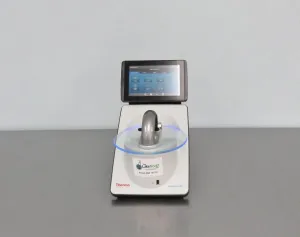
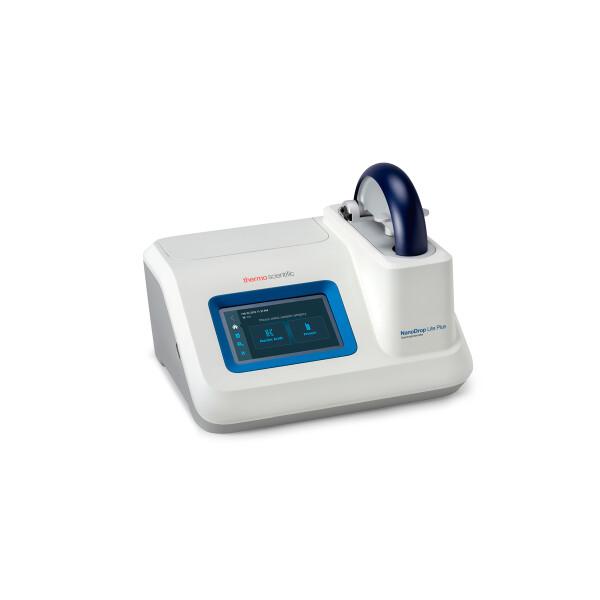
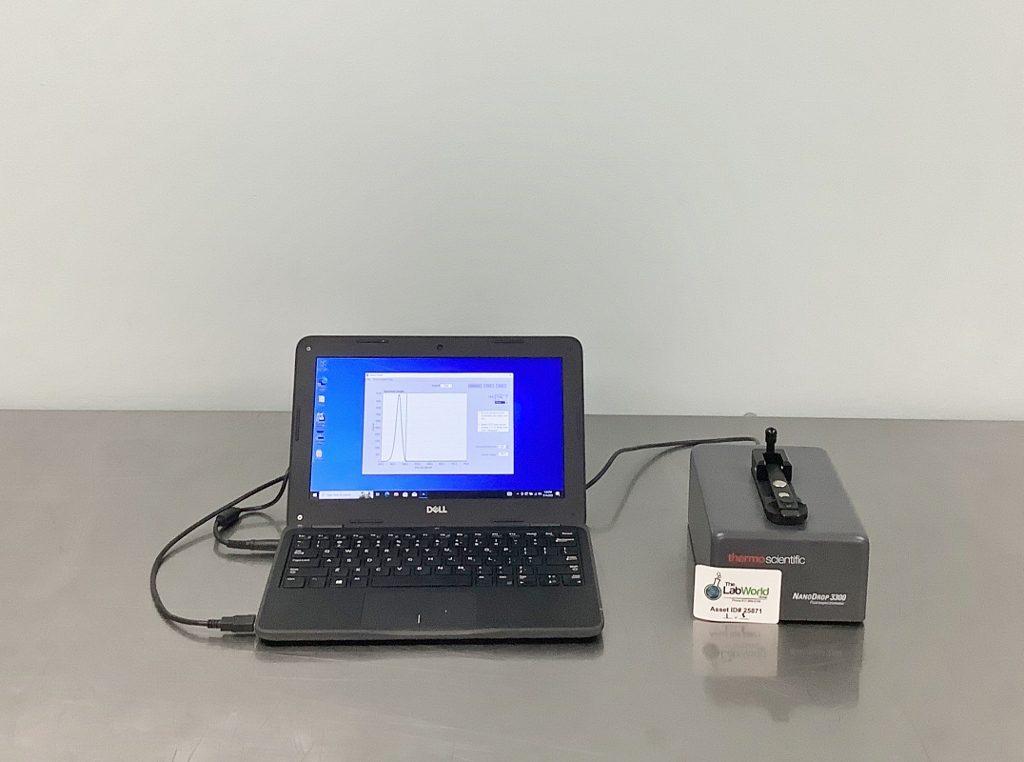
Fast microvolume UV-Vis spectrophotometer with automated path length for DNA, RNA, protein quantification using 1–2 µL samples.
The Thermo Scientific NanoDrop One is a precision microvolume UV-Vis spectrophotometer designed for rapid quantification of nucleic acids and proteins with sample volumes as low as 1 µL. It utilizes a Xenon flash lamp and a 2048-element CMOS linear image sensor to deliver accurate absorption spectra across a wavelength range of 190–850 nm with ±1 nm accuracy. Automated path length adjustment from 0.030 to 1.0 mm enables measurement of highly concentrated samples without dilution, benefiting workflows in molecular diagnostics, gene editing research, and bioprocessing.
Key technical features include:
The NanoDrop One is essential for researchers performing routine nucleic acid and protein quantification, OD600 measurements for microbial growth, and general UV-Vis absorbance assays in fields such as biomedical engineering, clinical diagnostics, live-cell imaging workflows, and biomanufacturing quality control. It is particularly advantageous in molecular cloning workflows where minimal sample consumption and rapid, accurate data are critical.
Its pedestal-only design suits laboratories prioritizing fast, stand-alone quantification, while labs requiring cuvette-based or kinetic measurements may select the related NanoDrop OneC model. This spectrophotometer’s robustness and precision make it a trusted instrument widely adopted across biotechnology and life sciences research sectors.
Lab equipment markets are fragmented. Buyers spend weeks calling distributors, comparing quotes, and verifying supplier reliability. Sellers struggle to reach global research labs.
We built Questpair to fix this. Every supplier on the platform is verified before listing. Every quote you receive comes from a real, vetted seller. AI prepares your case in minutes, then a real specialist takes over.
We're an independent team based in The Netherlands, working with research labs and procurement teams across Europe and worldwide.
With a service contract, ten to fifteen years is normal for most benchtop instruments. Detectors and pumps are the parts that wear first.
Yes. Every verified supplier states which service partners cover the instrument, and we list that alongside the offer.
Ask a scientist through the request button. Parts are often available even when the instrument itself is discontinued.
Two to six weeks, depending on refurbishment scope and whether calibration is included.
We ship to 38 countries. Crating and customs handling are quoted with the instrument.
Tell us what you need and a scientist finds it for you, usually within the hour.
Last updated 19 October 2026
The middle half of the 448 with a price runs from €268 to €4,441.