Price on request
In stock
Can't find what you're looking for?
Pre-Owned
Integrated optofluidic platform for high-throughput single-cell manipulation, fluorescence imaging, and real-time phenotypic analysis.
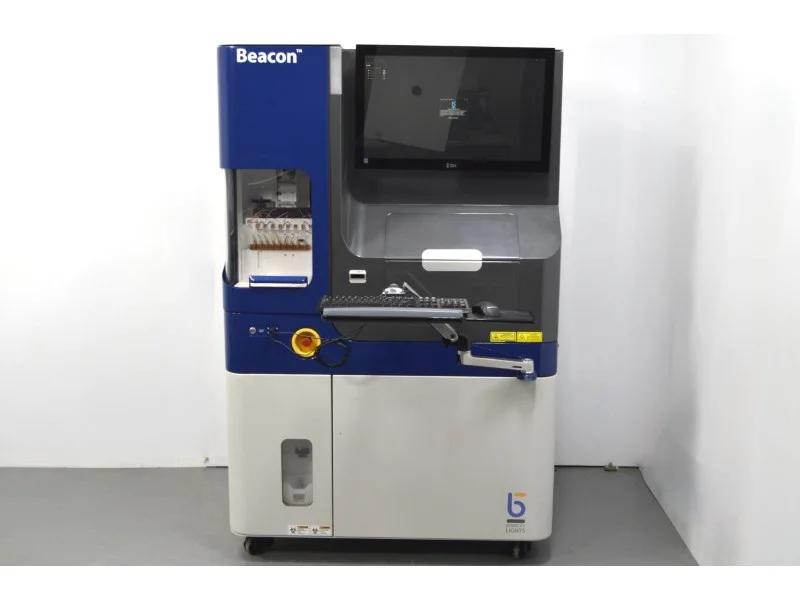
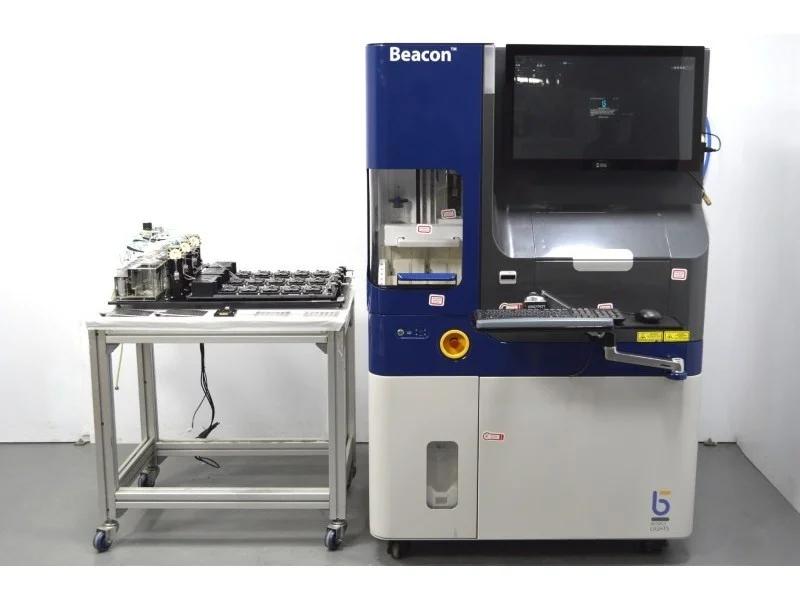
The Bruker Berkeley Lights Beacon CAS 2.4 Premium is a cutting-edge optofluidic single-cell analysis system designed for precise manipulation and characterization of individual cells in biotechnology research and development. This integrated platform combines advanced microfluidic chip arrays and fluorescence imaging to enable *non-contact, light-driven positioning* of cells within nanoliter-scale NanoPen chambers (500 pL or 1 nL). The system supports high-throughput single-cell screening, essential for applications such as monoclonal antibody discovery, cell line development, T-cell and immune profiling, and functional genomics.
Key technical features include:
This system is widely adopted in biotechnology and molecular diagnostics workflows, supporting *gene editing research*, *bioprocessing*, and *biopharmaceutical production pipelines*. The fluidics station uses multi-channel syringe pumps to streamline media and reagent flow, critical for maintaining physiological conditions during single-cell assays. Its modular design and automated handling are critical for synthetic biology research and cell therapy development.
Dimensions of the fully integrated unit are approximately 46 in (W) × 34 in (D) × 71.5 in (H), with a weight around 1,260 lbs. The system operates on 110–240 V AC with 50–60 Hz frequency. Although sold as-is without consumables, this instrument provides a robust platform for labs focused on personalized medicine, antibody discovery, and advanced cell profiling.
This Beacon system is essential for single-cell phenotypic screening, enabling biologists and clinical researchers to conduct comprehensive, automated experiments that were previously unattainable at high throughput. It supports seamless integration into biomanufacturing workflows and is a cornerstone technology for workflows in synthetic biology and molecular cloning applications.
---
Primary Keywords included: optofluidic single-cell analysis system, fluorescence imaging, automated single-cell manipulation, microfluidic cell handling Long-tail Keywords included: light-driven cell positioning within nanoliter scale chambers, high-throughput single-cell screening for antibody discovery, automated workflows for biopharmaceutical production pipelines, critical system for cell line development and functional genomics, essential for molecular diagnostics and cell therapy research
Lab equipment markets are fragmented. Buyers spend weeks calling distributors, comparing quotes, and verifying supplier reliability. Sellers struggle to reach global research labs.
We built Questpair to fix this. Every supplier on the platform is verified before listing. Every quote you receive comes from a real, vetted seller. AI prepares your case in minutes, then a real specialist takes over.
We're an independent team based in The Netherlands, working with research labs and procurement teams across Europe and worldwide.
With a service contract, ten to fifteen years is normal for most benchtop instruments. Detectors and pumps are the parts that wear first.
Yes. Every verified supplier states which service partners cover the instrument, and we list that alongside the offer.
Ask a scientist through the request button. Parts are often available even when the instrument itself is discontinued.
Two to six weeks, depending on refurbishment scope and whether calibration is included.
We ship to 38 countries. Crating and customs handling are quoted with the instrument.
Tell us what you need and a scientist finds it for you, usually within the hour.
Last updated 19 October 2026
The middle half of the 84 with a price runs from €223 to €4,316.