

Medical diagnostic instruments
We personally find you the right used, refurbished and new medical diagnostic instruments from verified suppliers.
Medical diagnostic instruments are the devices that measure, image or monitor a patient's physiological state to inform a clinical decision. The group spans bedside patient monitors, endoscopic imaging systems and electrocardiographs, alongside the analysers that read blood gases and chemistry. On Questpair, 99 percent of the listings are used, and the catalogue holds new, used and refurbished laboratory and clinical units from 16 verified suppliers and distributors across 8 countries. Prices run from EUR 16 to EUR 40.817. Brands that recur across the listings include Olympus, Nova Biomedical, GE Datex-Ohmeda, Pentax, Radiometer. The breadth means a buyer is rarely comparing one device against one other; the comparison is usually across a condition and a price band at once.
Updated:
Medical diagnostic instruments product list


Not the exact instrument you need?
Tell our scientists what you are after. We track it down, including off-market supply.


Not the exact instrument you need?
Tell our scientists what you are after. We track it down, including off-market supply.
Showing 1–40 of 241 listings
Show 40 more listingsBuying guide
What settles a diagnostic instrument purchase is rarely the headline it ships with. It is whether the unit still measures what it claims to, within the tolerance the application demands, after whatever working life it has already had. A blood gas analyser that reads pO2 half a kilopascal off is not a bargain at any price, and a patient monitor whose SpO2 channel drifts is a liability on a ward. So the first thing to establish is the calibration and verification history, because almost every unit here has one.
On a used instrument, verify three things before the specification matters at all. First, whether the measuring element has a defined service life: analyser electrodes and reference solutions deplete, lamps in endoscopy light sources dim, and a monitor's internal battery holds a clinical charge for a finite number of cycles. Second, what accessories arrive with it. An endoscope without its matching processor and light source is a different purchase from a complete tower, and the gap is often the larger part of the cost. Third, the error and usage logs where the device keeps them, since a self-reported hour count tells you more about remaining life than age alone.
Specification then narrows the field within what verification leaves standing. For a patient monitor the question is the parameter set: whether it carries capnography and invasive pressure channels or only the core vitals. For a blood gas or chemistry analyser it is the menu of measured versus calculated values and the throughput. For endoscopy it is working length, channel diameter and whether the optics are fibre or video. Each of these is a datasheet figure a buyer can check against a listing.
Where price sits reflects all of this. Across the catalogue the cost of a diagnostic instrument runs from EUR 16 to EUR 40.817, with an average near EUR 3.535. The low end is accessories, probes and single parameter devices; the high end is complete analyser platforms and full endoscopy towers. A refurbished unit listed for sale is priced below an equivalent new one, which is what keeps a tested instrument within a tight budget when a new platform would not fit it. Brands such as Olympus, Nova Biomedical, GE Datex-Ohmeda, Pentax, Radiometer appear often enough that models can be compared against each other rather than judged in isolation, which is itself what makes an affordable unit easier to vet.
Types of Medical diagnostic instruments
Patient monitors
A patient monitor is the bedside or transport device that displays a patient's vital signs continuously, so a clinician reads trend rather than a single reading. What separates one model from the next is the parameter set it carries: every unit tracks the core vitals, but the clinically decisive difference is whether it adds invasive pressure, capnography, cardiac output or multi-gas analysis. A theatre or intensive care unit reaches for the fuller configuration; a ward or recovery bay often runs the core set. These instruments sit at the centre of clinical monitoring, and in a research setting they also support physiological studies and patient monitoring work in clinical trials, where continuous vitals capture feeds the trial record. This is the deepest subtype in the catalogue by listing volume.
Endoscopy
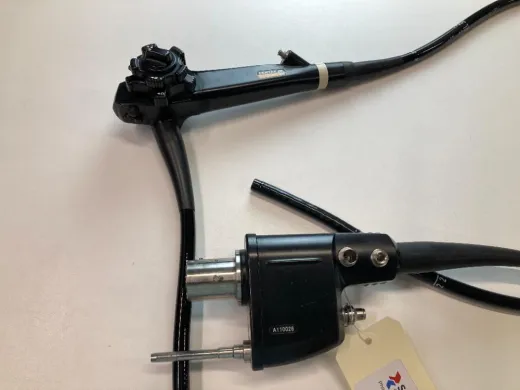
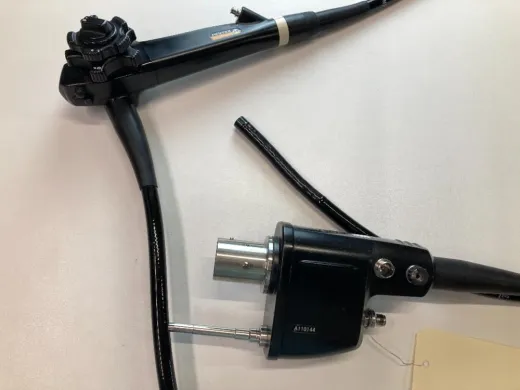
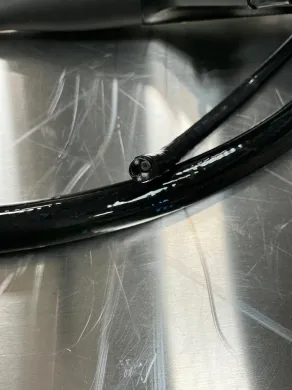
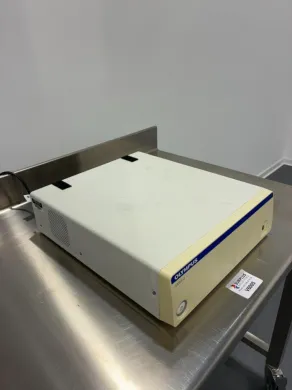
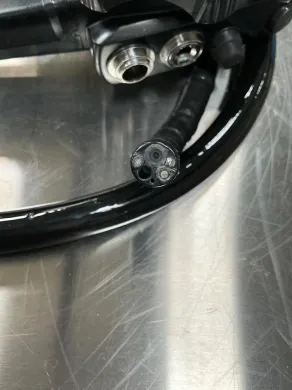
Endoscopy equipment is the imaging system that inspects the interior of a hollow organ or cavity through a flexible or rigid scope, returning a direct video or fibre-optic view. The variants divide on the route and the optics: a gastroscope, colonoscope, bronchoscope or cystoscope differs in working length and channel diameter, and a video system differs from an older fibre one in how the image is captured and recorded. A buyer selects by the procedure, since a scope is matched to the organ it enters, and by whether the listing is a bare scope or a complete tower with processor and light source. Beyond the clinic, endoscopic imaging is also used for small-sample inspection and minimally invasive sampling in life sciences work, and endoscopy equipment for research applications turns up where an intact specimen has to be examined without opening it.
ECG or EKG
An electrocardiograph is the instrument that records the heart's electrical activity across a set of skin electrodes and prints or stores the resulting trace. The distinction between models is channel count and portability: a twelve-lead resting unit captures a full diagnostic picture, while a single or three-channel portable device suits screening or ambulatory use. A cardiology department or a general practice chooses by where the recording happens and how much interpretation the device does on board. In the laboratory the same technology serves cardiac electrophysiology and the physiological measurement side of drug safety studies, where electrocardiography records how a compound affects conduction. This subtype appears least often in the current listings, so availability is narrower than for monitors or scopes.
Frequently asked questions
What is a medical diagnostic instrument?
A medical diagnostic instrument is a device that measures, images or monitors a patient's physiological state to inform a clinical decision. The group covers bedside patient monitors, endoscopic imaging systems, electrocardiographs, and the analysers that read blood gases and chemistry.
What does 'medical diagnostic instrument' mean?
The term refers to any instrument whose output feeds a clinical or laboratory decision, whether that output is a continuous vital sign trace, a video image of an internal organ, or a measured chemistry value. It is defined by function rather than by a single technology.
How do medical diagnostic instruments work?
Each type uses a different sensing method: a patient monitor reads skin electrodes and probes to display vitals, an electrocardiograph records the heart's electrical activity across electrodes, an endoscope returns a video or fibre-optic image through a scope, and an analyser measures blood gas or chemistry values from a sample. What they share is that the raw signal is converted into a reading a clinician interprets.
What types of medical diagnostic instruments are there?
The catalogue is built mainly around patient monitors, endoscopy systems and electrocardiographs, alongside blood gas and clinical chemistry analysers. By listing type the recurring entries are flexible endoscope, medical imaging device, clinical chemistry analyser, diagnostic endoscope, gastrointestinal endoscope and therapeutic endoscope.
What are medical diagnostic instruments used for?
They are used to track vital signs at the bedside, inspect the interior of hollow organs, record cardiac activity, and measure blood gases and chemistry. Beyond the clinic the same devices support physiological studies, drug safety work and minimally invasive sampling in life sciences research.
How do I choose a medical diagnostic instrument?
Start with the measuring element and its verification history, since an instrument that no longer reads within tolerance is not usable at any price. Then match the specification to the application: the parameter set for a monitor, the measured versus calculated menu for an analyser, and working length, channel diameter and fibre versus video optics for an endoscope.
What is the difference between refurbished and used instruments?
A used instrument is sold in the condition it arrives in, while a refurbished one has been tested and brought back to a working specification before listing. For a diagnostic instrument, the practical difference is whether the measuring element and calibration have been verified, so check that against the individual listing.
How much does a medical diagnostic instrument cost?
Across the catalogue prices run from EUR 16 to EUR 40.817, with an average near EUR 3.535. The low end is accessories, probes and single-parameter devices; the high end is complete analyser platforms and full endoscopy towers.
Which brands come up most in this category?
Brands that recur across the listings include Olympus, Nova Biomedical, GE Datex-Ohmeda, Pentax and Radiometer. They span different parts of the category, with Olympus and Pentax on the endoscopy side, Nova Biomedical and Radiometer on blood gas and chemistry analysis, and GE Datex-Ohmeda on patient monitoring.
Can I get a warranty on a refurbished instrument?
A warranty is often possible and is arranged in consultation for the specific listing. Because terms depend on the unit, check the listing and raise the question before purchase.
Are parts available for these instruments?
Parts can be sourced via Questpair. For consumable elements such as analyser electrodes, reference solutions and light source lamps, confirm availability against the specific model you are buying.
How long do medical diagnostic instruments last?
Lifespan depends on the measuring element rather than the chassis: analyser electrodes and reference solutions deplete, endoscopy light source lamps dim, and a monitor's internal battery holds a clinical charge for a finite number of cycles. A usage and hour count tells you more about remaining life than the device's age.
New versus refurbished, which should I buy?
Used and refurbished units are listed at lower prices than new ones, which is what keeps a tested instrument within a tight budget. Where you have to weigh the two, go by the individual listing and the verification history, and note that warranty is arranged in consultation for each unit.
Where can I buy medical diagnostic instruments?
On Questpair the catalogue holds new, used and refurbished units from 16 verified suppliers and distributors across 8 countries. The listings cover laboratory and clinical devices across the full price band.
What is the lead time and shipping on these instruments?
Lead time and shipping depend on the individual supplier and the unit, since the catalogue draws on verified suppliers and distributors across 8 countries. Check the specific listing for the dispatch detail, and contact Questpair if the listing does not state it.
What about calibration and maintenance?
Verifying the calibration history is the first step on any used instrument here, because a blood gas analyser reading pO2 off by half a kilopascal or a monitor with a drifting SpO2 channel is a clinical liability. Confirm the verification record and the state of any consumable measuring element against the listing before specification matters.
Which types are listed most, and who reaches for which?
Patient monitors are the deepest subtype by listing volume, with theatre and intensive care choosing the fuller configuration carrying invasive pressure, capnography or multi-gas, and wards running the core vitals. Endoscopy comes next, selected by the procedure and the organ the scope enters, while electrocardiographs appear least often, with twelve-lead resting units used for a full diagnostic picture and single or three-channel portables for screening.
Which brands dominate this category and what does that mean for a buyer?
Olympus, Nova Biomedical, GE Datex-Ohmeda, Pentax and Radiometer recur across the listings. Because the same brands appear repeatedly, a buyer can compare models against each other rather than judging one device in isolation, which makes an affordable unit easier to vet.
What separates the bottom of the price band from the top?
The low end holds accessories, probes and single-parameter devices, so the price reflects a narrow function. The top is complete analyser platforms and full endoscopy towers with processor and light source, where the accessories and the breadth of measured values make up the larger part of the cost.