53k+ listingsShips to NLResponse within one hour+31 73 711 4717info@questpair.com
Procurable · sourced on request

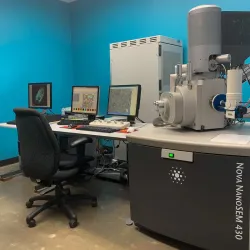
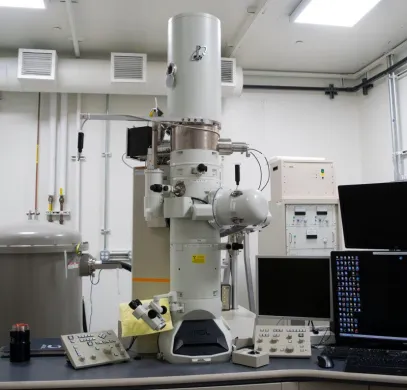
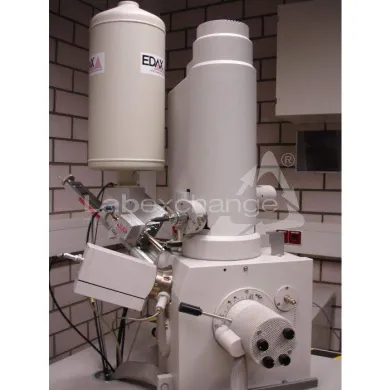
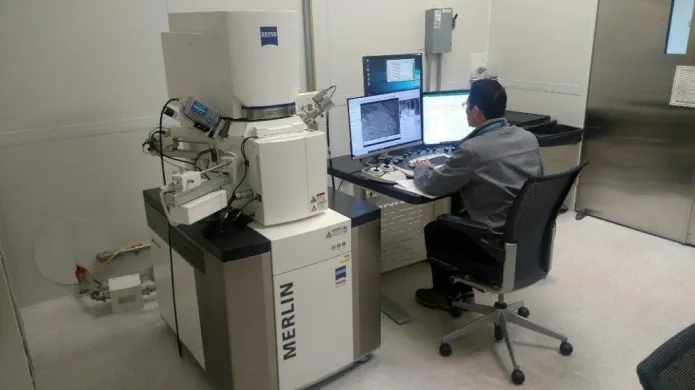
Thermo Fisher Scientific FEI NanoSEM

UsedThermo Fisher ScientificElectron microscopesNetherlands
Procurable

Not in stock, available to order through our sourcing team

Not in stock, but we can get it for you

We source this model through our supplier network. Request a quote and we'll come back within one hour.

  1. Request a quote
  2. We confirm price and lead time
  3. You approve, we ship to you
Resolution at 15 kV
1.0 nm
Resolution at 30 kV in STEM mode
0.8 nm
Beam energy range
20 eV to 30 keV
Probe current
up to 200 nA
Low vacuum mode pressure
up to 2,600 Pa (H₂O) or 4,000 Pa (N₂)
Availability
Procurable
Lead time
Confirmed with your quote
All 23 specifications
  • Ships to NL
  • Response within 1 hour
  • Warranty available. Buy without worry
  • Support from a scientist

Specifications 23

Brands
Thermo Fisher Scientific
New/Used
Used
Resolution at 15 kV
1.0 nm
Resolution at 30 kV in STEM mode
0.8 nm
Beam energy range
20 eV to 30 keV
Probe current
up to 200 nA
Low vacuum mode pressure
up to 2,600 Pa (H₂O) or 4,000 Pa (N₂)
High vacuum mode pressure
typically less than 10⁻⁵ mbar
Environmental SEM (ESEM) mode pressure
up to 4,000 Pa
Sample stage dimensions
150 mm x 150 mm x 10 mm
Sample stage tilt range
-15° to 54°
Stage rotation range
360° continuous
Stage Z-range
0 to 25 mm
Stage eucentric position working distance
5 mm
Stage tilt range
-15° to 54°
Stage dimensions
110 mm x 110 mm x 25 mm
Sample weight capacity
5 kg
Electron gun type
Schottky field-emission electron gun
Operating voltage range
50 V to 30 kV
Detectors included
In-lens secondary electron detector, Everhart-Thornley secondary electron detector, Annular backscattered electron detector
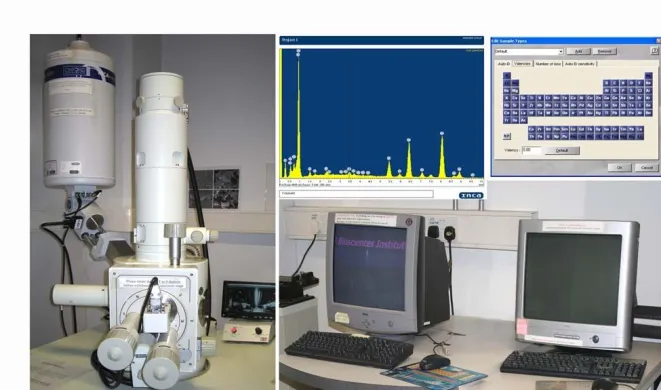
Energy dispersive X-ray spectroscopy (EDS) system
Oxford X-Max 20 mm² SDD EDS detector
Availability
Procurable
Lead time
Confirmed with your quote

Product description

Ultra-high-resolution FE-SEM with STEM mode, low vacuum imaging, advanced detectors, and motorised 5-axis stage.

The FEI NanoSEM is a high-performance field emission scanning electron microscope (FE-SEM) designed for ultra-high-resolution imaging and advanced material characterisation. This instrument excels in analysing a diverse range of materials, including bulk samples, nanoparticles, thin films, and organic specimens, making it particularly valuable in the biotechnology sector.

Key features include:

  • Ultra-High Resolution Imaging: Achieves resolutions down to 1.0 nm at 15 kV and 0.8 nm at 30 kV in STEM mode, facilitating detailed structural analysis.
  • Advanced Detection System: Equipped with Everhart-Thornley secondary electron detectors, in-lens secondary and backscatter detectors, retractable backscattered detectors, and STEM bright-field/dark-field detectors for comprehensive imaging capabilities.
  • Versatile Beam Energy and Current Range: Offers continuously adjustable beam energy from 20 eV to 30 keV and probe currents up to 200 nA, accommodating various sample types and analytical requirements.
  • Low Vacuum Capabilities: Features a true low-vacuum mode, enabling high-resolution imaging of non-conductive and contaminating materials without the need for sample coating.
  • High Precision Stage: Incorporates a motorised 5-axis stage with rotation, tilt, and high repeatability, supporting samples up to 150 mm in diameter and weights up to 500 g.

The FEI NanoSEM is widely utilised in scientific fields such as biotechnology, materials science, life sciences, biomaterials, solar and battery materials, earth sciences, and medical sciences. It is commonly employed in university laboratories, biomedical research centres, and clinical environments, supporting applications like live-cell imaging, fluorescence analysis, and molecular diagnostics.

Introduced in 2005, the FEI NanoSEM remains a relevant and widely adopted tool in various research domains, including biotechnology.

Why Questpair exists

Lab equipment markets are fragmented. Buyers spend weeks calling distributors, comparing quotes, and verifying supplier reliability. Sellers struggle to reach global research labs.

We built Questpair to fix this. Every supplier on the platform is verified before listing. Every quote you receive comes from a real, vetted seller. AI prepares your case in minutes, then a real specialist takes over.

We're an independent team based in The Netherlands, working with research labs and procurement teams across Europe and worldwide.

Frequently asked questions

How long does laboratory equipment typically last?

With a service contract, ten to fifteen years is normal for most benchtop instruments. Detectors and pumps are the parts that wear first.

Can I get service for older equipment?

Often, yes. Verified suppliers frequently work with service partners converting the instrument. If applicable, we can list servicing options alongside the offer.

Where can I buy parts?

Ask a scientist through the request button. Parts are often available even when the instrument itself is discontinued.

What is the typical lead time for refurbished equipment?

Two to six weeks, depending on refurbishment scope and whether calibration is included.

Does laboratory equipment ship internationally?

We ship to 38 countries. Crating and customs handling are quoted with the instrument.

Reply in one hour

Can't find the exact configuration?

Tell us what you need and a scientist finds it for you, usually within the hour.

Last updated 3 November 2026