53k+ listingsShips to NLResponse within one hour+31 73 711 4717info@questpair.com
Procurable · sourced on request

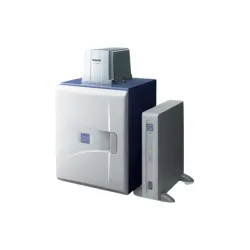
Fujifilm LAS-3000

UsedFujifilmMolecular imagersNetherlands
Procurable

Not in stock, available to order through our sourcing team

Not in stock, but we can get it for you

We source this model through our supplier network. Request a quote and we'll come back within one hour.

  1. Request a quote
  2. We confirm price and lead time
  3. You approve, we ship to you
Dimensions (Camera Head)
180 x 170 x 250 mm
Weight (Camera Head)
3.4 kg
Dimensions (Dark Box IV)
510 x 730 x 480 mm
Weight (Dark Box IV)
49.0 kg
Sensor Type
Fujifilm Super CCD Area Type
Availability
Procurable
Lead time
Confirmed with your quote
All 27 specifications
  • Ships to NL
  • Response within 1 hour
  • Warranty available. Buy without worry
  • Support from a scientist

Specifications 27

Brands
Fujifilm
New/Used
Used
Dimensions (Camera Head)
180 x 170 x 250 mm
Weight (Camera Head)
3.4 kg
Dimensions (Dark Box IV)
510 x 730 x 480 mm
Weight (Dark Box IV)
49.0 kg
Sensor Type
Fujifilm Super CCD Area Type
Number of Pixels
3.2 million pixels
Pixel Size
10.75 x 10.75 µm
Dynamic Range
Four orders of magnitude
Gradation
16 bits (65,536 levels)
Binning Modes
1 x 2, 2 x 4, 4 x 8, and 8 x 16 pixels
Cooling Method
Two-stage thermoelectric module with air circulation
Cooling Temperature
-30°C (when room is below 28°C)
Exposure Time Range
1/100 second to 30 hours
Lens Aperture (F-number)
0.85
Lens Focal Length
43 mm
Lens Focus Type
Remote power focusing
Lens Mount
Bayonet mount; adapter to Nikon F mount
Interface
USB 1.1
Software Compatibility
Windows XP or Mac OS 9 & X
File Formats Supported
16-bit TIFF, Fuji IMG/INF
Printer Compatibility
Pictrography 3500
Maximum Sample Size (Wide Angle Lens)
250 x 250 mm
Maximum Sample Size (Fujinon VRF43LMD Lens)
140 x 210 mm
Availability
Procurable
Lead time
Confirmed with your quote

Product description

High-sensitivity luminescent imager with 3.2 MP Super CCD, multiple light sources, motorized optics, and dual software modes.

Fujifilm LAS-3000 is a high-performance luminescent image analyser designed for the detection and quantification of chemiluminescent and fluorescent signals in molecular biology and biochemistry applications.

Key features:

  • High-sensitivity imaging: Equipped with a 3.2-megapixel Super CCD sensor, capable of achieving up to 6.3 million pixels through software processing, ensuring accurate visualisation and quantification of signals.
  • Versatile light sources: Incorporates multiple illumination options, including transmitted UV light at 312 nm, blue incident light at 460 nm, and optional green (520 nm) and red (630 nm) LEDs, facilitating the detection of a wide range of fluorochromes.
  • Advanced optics: Features a fast F0.85 lens system with motorised focus and iris control, delivering bright and sharp images even for low-intensity signals.
  • Flexible software interface: Offers dual modes—Lite for simplified image capture and Pro for advanced settings—catering to both routine and complex protocols.
  • Comprehensive image management: Supports various file formats, including 16-bit TIFF and Fuji IMG/INF, and allows direct printing via a connected printer.

This instrument is widely utilised in molecular biology, biochemistry, and biotechnology research for applications such as Western blot analysis, DNA gel imaging, and protein quantification. It is commonly employed in academic laboratories, hospital research centres, and industrial biotech facilities. First released in 2006, the LAS-3000 remains relevant in laboratories requiring reliable and sensitive imaging solutions.

Why Questpair exists

Lab equipment markets are fragmented. Buyers spend weeks calling distributors, comparing quotes, and verifying supplier reliability. Sellers struggle to reach global research labs.

We built Questpair to fix this. Every supplier on the platform is verified before listing. Every quote you receive comes from a real, vetted seller. AI prepares your case in minutes, then a real specialist takes over.

We're an independent team based in The Netherlands, working with research labs and procurement teams across Europe and worldwide.

Frequently asked questions

How long does laboratory equipment typically last?

With a service contract, ten to fifteen years is normal for most benchtop instruments. Detectors and pumps are the parts that wear first.

Can I get service for older equipment?

Often, yes. Verified suppliers frequently work with service partners converting the instrument. If applicable, we can list servicing options alongside the offer.

Where can I buy parts?

Ask a scientist through the request button. Parts are often available even when the instrument itself is discontinued.

What is the typical lead time for refurbished equipment?

Two to six weeks, depending on refurbishment scope and whether calibration is included.

Does laboratory equipment ship internationally?

We ship to 38 countries. Crating and customs handling are quoted with the instrument.

Reply in one hour

Can't find the exact configuration?

Tell us what you need and a scientist finds it for you, usually within the hour.

Last updated 5 November 2026