53k+ listingsShips to NLResponse within one hour+31 73 711 4717info@questpair.com
Procurable · sourced on request

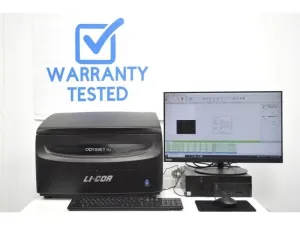
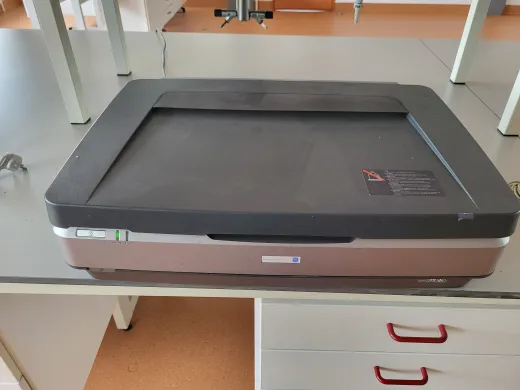
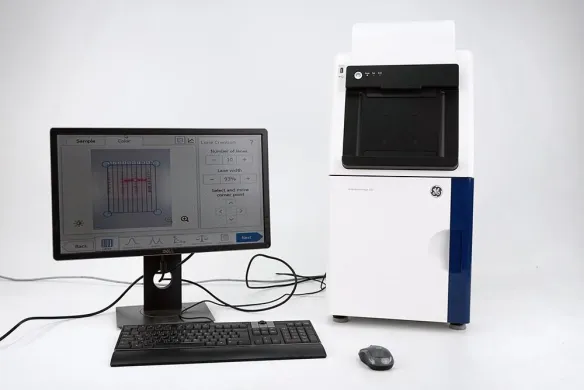
LI-COR Biosciences Odyssey Imaging System

UsedLI-COR BiosciencesMolecular imagersNetherlands
Procurable

Not in stock, available to order through our sourcing team

Not in stock, but we can get it for you

We source this model through our supplier network. Request a quote and we'll come back within one hour.

  1. Request a quote
  2. We confirm price and lead time
  3. You approve, we ship to you
Dimensions (Instrument Only)
414 mm W × 470 mm D × 673 mm H
Image Field Size
100 mm W × 120 mm D
Resolution
125 µm
Dynamic Range
>6 logs
Laser Lifetime
20,000 hours
Availability
Procurable
Lead time
Confirmed with your quote
All 19 specifications
  • Ships to NL
  • Response within 1 hour
  • Warranty available. Buy without worry
  • Support from a scientist

Specifications 19

Brands
LI-COR Biosciences
New/Used
Used
Dimensions (Instrument Only)
414 mm W × 470 mm D × 673 mm H
Weight
27 kg
Image Field Size
100 mm W × 120 mm D
Resolution
125 µm
Dynamic Range
>6 logs
Laser Lifetime
20,000 hours
Light Sources
Solid-state diode laser at 685 nm, Solid-state diode laser at 785 nm
Detectors
Low-noise CCD, thermoelectrically cooled
Power Supply
Universal input range is between 100-127 VAC and 200-240 VAC; 50/60 Hz
Power Consumption
4 Amp maximum; at 120V, 0.5 Amp typical when idle
Focusing
Adjustable to be aligned to the top surface of the scan bed up to 4 mm above the scan bed
Operating Temperature Range
15 - 35 °C
Operating Humidity
Dew point not greater than 22 °C, non-condensing
Network Protocol
TCP/IP
Network Connection
Cat. 5e RJ45, 10BASE-T/100BASE-TX/1000BASE-T
Availability
Procurable
Lead time
Confirmed with your quote

Product description

Infrared imaging system for quantitative Western blots and gels with dual-channel fluorescence detection.

The LI-COR Odyssey® Infrared Imaging System revolutionised protein analysis by introducing near-infrared (NIR) fluorescence detection, offering a superior alternative to traditional chemiluminescence methods. This system enables precise, quantitative imaging of Western blots, protein arrays, and nucleic acid gels, delivering clear, sharp bands with minimal background noise.

Key features include:

  • Wide Linear Dynamic Range: Accurately detects both strong and weak signals on the same blot, enhancing quantification accuracy.
  • High Sensitivity: NIR fluorescence reduces autofluorescence and light scatter, resulting in cleaner backgrounds and higher signal-to-noise ratios.
  • Dual-Channel Detection: Simultaneously visualises and quantifies two separate targets, facilitating multiplex analysis.
  • Direct Detection: Eliminates the need for film, darkrooms, or substrates; fluorescent signals remain stable on membranes for extended periods.
  • Versatile Applications: Supports a range of assays, including Coomassie-stained gels, DNA gel staining, ELISA/FLISA, EMSA, glycoprotein detection, In-Cell Western™ assays, Northern and Southern blots, protein arrays, and tissue section imaging.

Widely adopted in molecular biology, biochemistry, and proteomics, this imaging system is utilised in university laboratories, biomedical research centres, and clinical environments. Since its release in 2001, the Odyssey has set a new standard in quantitative imaging, with its technology continuing to evolve to meet the demands of modern research.

Why Questpair exists

Lab equipment markets are fragmented. Buyers spend weeks calling distributors, comparing quotes, and verifying supplier reliability. Sellers struggle to reach global research labs.

We built Questpair to fix this. Every supplier on the platform is verified before listing. Every quote you receive comes from a real, vetted seller. AI prepares your case in minutes, then a real specialist takes over.

We're an independent team based in The Netherlands, working with research labs and procurement teams across Europe and worldwide.

Frequently asked questions

How long does laboratory equipment typically last?

With a service contract, ten to fifteen years is normal for most benchtop instruments. Detectors and pumps are the parts that wear first.

Can I get service for older equipment?

Often, yes. Verified suppliers frequently work with service partners converting the instrument. If applicable, we can list servicing options alongside the offer.

Where can I buy parts?

Ask a scientist through the request button. Parts are often available even when the instrument itself is discontinued.

What is the typical lead time for refurbished equipment?

Two to six weeks, depending on refurbishment scope and whether calibration is included.

Does laboratory equipment ship internationally?

We ship to 38 countries. Crating and customs handling are quoted with the instrument.

Reply in one hour

Can't find the exact configuration?

Tell us what you need and a scientist finds it for you, usually within the hour.

Last updated 5 November 2026