58k+ listingsShips to NLResponse within one hour+31 73 711 4717info@questpair.com
Procurable · sourced on request

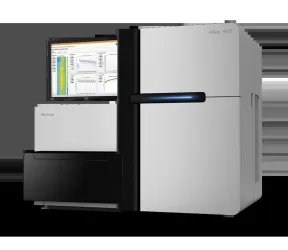
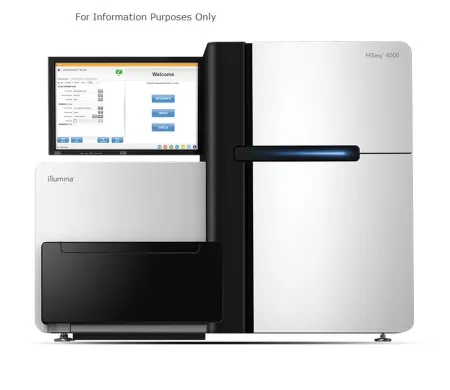
Illumina HiSeq 4000

UsedIlluminaDNA sequencersNetherlands
Procurable

Not in stock, available to order through our sourcing team

Not in stock, but we can get it for you

We source this model through our supplier network. Request a quote and we'll come back within one hour.

  1. Request a quote
  2. We confirm price and lead time
  3. You approve, we ship to you
Number of Flow Cells per Run
1 or 2
Data Yield per Run (2 × 150 bp)
1300–1500 Gb
Data Yield per Run (2 × 75 bp)
650–750 Gb
Data Yield per Run (1 × 50 bp)
210–250 Gb
Clusters Passing Filter per Flow Cell (Single Reads)
4.3–5 billion
Availability
Procurable
Lead time
Confirmed with your quote
All 20 specifications
  • Ships to NL
  • Response within 1 hour
  • Warranty available. Buy without worry
  • Support from a scientist

Specifications 20

Brands
Illumina
New/Used
Used
Number of Flow Cells per Run
1 or 2
Data Yield per Run (2 × 150 bp)
1300–1500 Gb
Data Yield per Run (2 × 75 bp)
650–750 Gb
Data Yield per Run (1 × 50 bp)
210–250 Gb
Clusters Passing Filter per Flow Cell (Single Reads)
4.3–5 billion
Quality Scores (2 × 50 bp)
≥ 85% bases above Q30
Quality Scores (2 × 75 bp)
≥ 80% bases above Q30
Quality Scores (2 × 150 bp)
≥ 75% bases above Q30
Daily Throughput
> 400 Gb
Run Time
< 1–3.5 days
Human Genomes per Run
up to 12
Exomes per Run
up to 96
Transcriptomes per Run
up to 100
Maximum Read Length
150 bp
Sequencing Technology
Sequencing by Synthesis (SBS)
Patterned Flow Cell Technology
Utilizes billions of nanowells at fixed locations to increase cluster density
Availability
Procurable
Lead time
Confirmed with your quote

Product description

High-throughput NGS system delivering up to 1.5 Tb and 5 billion reads/run with patterned flow cell technology.

Illumina HiSeq 4000

The Illumina HiSeq 4000 is a high-throughput next-generation sequencing (NGS) system designed to deliver rapid, high-quality genomic data for large-scale projects. Released in January 2015, this instrument leverages patterned flow cell technology to enhance sequencing speed and output, making it ideal for production-scale genomic laboratories.

Key Features:

  • High Data Output: Capable of generating up to 1.5 terabases (Tb) and 5 billion reads per run, facilitating the sequencing of up to 12 human genomes in under 3.5 days.
  • Patterned Flow Cells: Utilises billions of nanowells at fixed locations to increase cluster density, resulting in higher throughput and improved data quality.
  • Flexible Configurations: Supports dual-flow cell operation, allowing parallel processing to maximise efficiency and throughput.
  • Versatile Applications: Suitable for whole genome sequencing, exome sequencing, RNA sequencing, and other genomic studies.

Research Applications:

  • Genomics: Comprehensive analysis of entire genomes to identify genetic variations and mutations.
  • Transcriptomics: Profiling gene expression patterns across different conditions or time points.
  • Epigenetics: Studying DNA modifications and their impact on gene regulation.

Commonly Used In:

  • Academic Research Institutions: Conducting large-scale genomic studies and collaborative projects.
  • Pharmaceutical Companies: Accelerating drug discovery and development through genomic insights.
  • Clinical Research Organisations: Advancing personalised medicine by analysing patient genomes.

The HiSeq 4000 was discontinued, with full support and reagent supply ending on 31 March 2024. While newer platforms have succeeded it, the HiSeq 4000 remains a significant milestone in high-throughput sequencing technology.

Why Questpair exists

Lab equipment markets are fragmented. Buyers spend weeks calling distributors, comparing quotes, and verifying supplier reliability. Sellers struggle to reach global research labs.

We built Questpair to fix this. Every supplier on the platform is verified before listing. Every quote you receive comes from a real, vetted seller. AI prepares your case in minutes, then a real specialist takes over.

We're an independent team based in The Netherlands, working with research labs and procurement teams across Europe and worldwide.

Frequently asked questions

How long does laboratory equipment typically last?

With a service contract, ten to fifteen years is normal for most benchtop instruments. Detectors and pumps are the parts that wear first.

Can I get service for older equipment?

Often, yes. Verified suppliers frequently work with service partners converting the instrument. If applicable, we can list servicing options alongside the offer.

Where can I buy parts?

Ask a scientist through the request button. Parts are often available even when the instrument itself is discontinued.

What is the typical lead time for refurbished equipment?

Two to six weeks, depending on refurbishment scope and whether calibration is included.

Does laboratory equipment ship internationally?

We ship to 38 countries. Crating and customs handling are quoted with the instrument.

Reply in one hour

Can't find the exact configuration?

Tell us what you need and a scientist finds it for you, usually within the hour.

Last updated 21 October 2026