58k+ listingsShips to NLResponse within one hour+31 73 711 4717info@questpair.com
Procurable · sourced on request

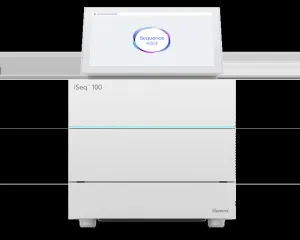
Illumina iSeq 100

UsedIlluminaGenome editing and molecular toolsNetherlands
Procurable

Not in stock, available to order through our sourcing team

Not in stock, but we can get it for you

We source this model through our supplier network. Request a quote and we'll come back within one hour.

  1. Request a quote
  2. We confirm price and lead time
  3. You approve, we ship to you
Maximum Output per Run
1.2 Gb
Maximum Read Length
2 × 150 bp
Run Time for 2 × 150 bp Read Length
19 hours
Single-End Reads per Run
4 million
Paired-End Reads per Run
8 million
Availability
Procurable
Lead time
Confirmed with your quote
All 22 specifications
  • Ships to NL
  • Response within 1 hour
  • Warranty available. Buy without worry
  • Support from a scientist

Specifications 22

Brands
Illumina
New/Used
Used
Dimensions
305 mm × 330 mm × 425 mm
Weight
16 kg
Maximum Output per Run
1.2 Gb
Maximum Read Length
2 × 150 bp
Run Time for 2 × 150 bp Read Length
19 hours
Single-End Reads per Run
4 million
Paired-End Reads per Run
8 million
Sequencing Quality Score (Q30) for 2 × 150 bp Read Length
> 80% of bases higher than Q30
Sequencing Chemistry
Sequencing by Synthesis (SBS)
Power Supply
100–240 V AC, 50/60 Hz
Power Consumption
300 W
LED Wavelength
520 nm
Operating Temperature Range
15°C to 30°C
Operating Humidity Range
20% to 80% RH (non-condensing)
Operating Pressure Range
70 kPa to 106 kPa
Sample Throughput for Small Genome Sequencing (2 × 150 bp)
1–8 samples per run
Sample Throughput for Targeted Gene Expression Profiling (1 × 50 bp)
1–48 samples per run
Sample Throughput for Targeted Amplicon Sequencing (2 × 150 bp)
1–48 samples per run
Availability
Procurable
Lead time
Confirmed with your quote

Product description

High-throughput genotyping and methylation profiling with dual-probe microarray for precise genomic analysis.

The Illumina I assay is a pioneering microarray technology designed to deliver high-throughput, accurate genotyping and methylation profiling at single-nucleotide resolution. This system employs a dual-probe approach per locus, enabling precise detection of genetic and epigenetic variations across the genome.

Key features:

  • Dual-probe design: Utilises two bead types per CpG locus, enhancing detection accuracy for both methylated and unmethylated states.
  • High data quality: Achieves average call rates exceeding 99% and reproducibility of ≥ 99.9%, ensuring reliable results.
  • Flexible content: Supports customisable arrays, allowing researchers to target specific regions of interest.
  • Scalable workflow: Compatible with automation, facilitating processing of large sample volumes efficiently.

The Illumina I assay is widely applied in various scientific domains, including:

  • Genomics: Facilitates genome-wide association studies (GWAS) to identify genetic variants linked to diseases.
  • Epigenetics: Enables comprehensive DNA methylation analysis, crucial for understanding gene regulation mechanisms.
  • Biotechnology: Supports applications in bioprocessing and synthetic biology by providing detailed genetic and epigenetic profiles.

This technology is commonly utilised in:

  • Academic research institutions: For large-scale genetic and epigenetic studies.
  • Biotechnology companies: To advance research in gene editing and molecular diagnostics.
  • Clinical laboratories: For developing personalised medicine approaches based on genetic and epigenetic information.

Introduced in the early 2000s, the Illumina I assay has been instrumental in advancing genomic and epigenomic research, and it continues to be relevant in current scientific investigations.

Why Questpair exists

Lab equipment markets are fragmented. Buyers spend weeks calling distributors, comparing quotes, and verifying supplier reliability. Sellers struggle to reach global research labs.

We built Questpair to fix this. Every supplier on the platform is verified before listing. Every quote you receive comes from a real, vetted seller. AI prepares your case in minutes, then a real specialist takes over.

We're an independent team based in The Netherlands, working with research labs and procurement teams across Europe and worldwide.

Frequently asked questions

How long does laboratory equipment typically last?

With a service contract, ten to fifteen years is normal for most benchtop instruments. Detectors and pumps are the parts that wear first.

Can I get service for older equipment?

Often, yes. Verified suppliers frequently work with service partners converting the instrument. If applicable, we can list servicing options alongside the offer.

Where can I buy parts?

Ask a scientist through the request button. Parts are often available even when the instrument itself is discontinued.

What is the typical lead time for refurbished equipment?

Two to six weeks, depending on refurbishment scope and whether calibration is included.

Does laboratory equipment ship internationally?

We ship to 38 countries. Crating and customs handling are quoted with the instrument.

Reply in one hour

Can't find the exact configuration?

Tell us what you need and a scientist finds it for you, usually within the hour.

Last updated 22 October 2026