58k+ listingsShips to NLResponse within one hour+31 73 711 4717info@questpair.com
Procurable · sourced on request

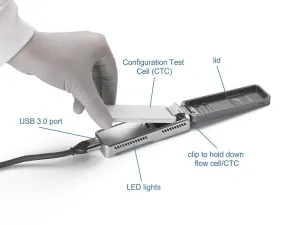
Oxford Nanopore MinION

UsedOxford NanoporeDNA sequencersNetherlands
Procurable

Not in stock, available to order through our sourcing team

Not in stock, but we can get it for you

We source this model through our supplier network. Request a quote and we'll come back within one hour.

  1. Request a quote
  2. We confirm price and lead time
  3. You approve, we ship to you
Power Supply
USB 3.0 (Type-B)
Maximum Power Consumption
5 W
Operating Temperature Range
18°C to 25°C
Functional Temperature Range
5°C to 40°C
Sample Types
DNA and RNA
Availability
Procurable
Lead time
Confirmed with your quote
All 14 specifications
  • Ships to NL
  • Response within 1 hour
  • Warranty available. Buy without worry
  • Support from a scientist

Specifications 14

Brands
Oxford Nanopore
New/Used
Used
Dimensions
105 x 23 x 33 mm
Weight
100 g
Power Supply
USB 3.0 (Type-B)
Maximum Power Consumption
5 W
Operating Temperature Range
18°C to 25°C
Functional Temperature Range
5°C to 40°C
Sample Types
DNA and RNA
Sequencing Read Length
Up to 4 Mb
Sequencing Output per Flow Cell
Up to 48 Gb
Connectivity
USB 3.0 (Type-B)
Availability
Procurable
Lead time
Confirmed with your quote

Product description

Compact USB sequencer delivering real-time long-read DNA/RNA sequencing (6-20 kb) for diverse genomic applications.

Oxford Nanopore MinION is a compact, portable DNA and RNA sequencer that delivers real-time, long-read sequencing capabilities. Since its commercial release in 2015, this device has revolutionised genomic research by enabling rapid and accessible sequencing in diverse environments.

Key features include:

  • Portability: Weighing approximately 100 grams, the MinION connects via USB, making it ideal for fieldwork and on-site analyses.
  • Real-time data streaming: Provides immediate sequencing results, facilitating prompt decision-making in research and clinical settings.
  • Long-read sequencing: Capable of reading DNA fragments ranging from 6 to 20 kilobases, enhancing genome assembly and structural variant detection.
  • Versatility: Supports sequencing of both DNA and RNA, including direct RNA sequencing to detect modifications.
  • User-friendly operation: Compatible with standard computing devices, including iPads, for seamless integration into various workflows.

The MinION is widely utilised across multiple scientific domains:

  • Genomics: For whole-genome sequencing and structural variant analysis.
  • Transcriptomics: Enables direct RNA sequencing to study gene expression and RNA modifications.
  • Metagenomics: Facilitates the identification of microbial communities in environmental samples.
  • Clinical diagnostics: Assists in rapid pathogen detection and disease surveillance.
  • Biotechnology: Supports applications in synthetic biology, molecular diagnostics, and biomanufacturing.

Commonly adopted by university laboratories, biomedical research centres, clinical environments, and biotechnology companies, the MinION continues to be a pivotal tool in advancing genomic research and its applications.

Why Questpair exists

Lab equipment markets are fragmented. Buyers spend weeks calling distributors, comparing quotes, and verifying supplier reliability. Sellers struggle to reach global research labs.

We built Questpair to fix this. Every supplier on the platform is verified before listing. Every quote you receive comes from a real, vetted seller. AI prepares your case in minutes, then a real specialist takes over.

We're an independent team based in The Netherlands, working with research labs and procurement teams across Europe and worldwide.

Frequently asked questions

How long does laboratory equipment typically last?

With a service contract, ten to fifteen years is normal for most benchtop instruments. Detectors and pumps are the parts that wear first.

Can I get service for older equipment?

Often, yes. Verified suppliers frequently work with service partners converting the instrument. If applicable, we can list servicing options alongside the offer.

Where can I buy parts?

Ask a scientist through the request button. Parts are often available even when the instrument itself is discontinued.

What is the typical lead time for refurbished equipment?

Two to six weeks, depending on refurbishment scope and whether calibration is included.

Does laboratory equipment ship internationally?

We ship to 38 countries. Crating and customs handling are quoted with the instrument.

Reply in one hour

Can't find the exact configuration?

Tell us what you need and a scientist finds it for you, usually within the hour.

Last updated 22 October 2026