58k+ listingsShips to NLResponse within one hour+31 73 711 4717info@questpair.com
Procurable · sourced on request

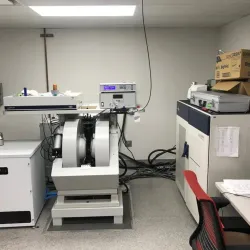
Bruker EMX

UsedBrukerElectron microscopesNetherlands
Procurable

Not in stock, available to order through our sourcing team

Not in stock, but we can get it for you

We source this model through our supplier network. Request a quote and we'll come back within one hour.

  1. Request a quote
  2. We confirm price and lead time
  3. You approve, we ship to you
Microwave Frequency Range
9 - 9.8 GHz
Tuning Range
60 MHz
Sweep Range
0 - 18 kG (0 - 1.8 mT)
Modulation Frequency Range
500 Hz - 120 kHz
Modulation Amplitude
Up to 20 G
Availability
Procurable
Lead time
Confirmed with your quote
All 28 specifications
  • Ships to NL
  • Response within 1 hour
  • Warranty available. Buy without worry
  • Support from a scientist

Specifications 28

Brands
Bruker
New/Used
Used
Microwave Frequency Range
9 - 9.8 GHz
Tuning Range
60 MHz
Sweep Range
0 - 18 kG (0 - 1.8 mT)
Modulation Frequency Range
500 Hz - 120 kHz
Modulation Amplitude
Up to 20 G
Center Field Resolution
24 bit
Signal Digitization
24 bit
Sweep Points
Up to 256,000
Sensitivity
Up to 2000:1 (International Weak-Pitch Protocol)
Field Stability
10 mG / hour
Sweep Resolution
256,000
Amplitude Resolution
24 bit
Time Constant
0.01 ms - 1 s
Maximum Leveled Source Output
200 mW
Maximum Attenuation
60 dB
Triggering
Internal / external
Microwave Attenuation
Up to 90 dB
Operating Magnetic Field Range
100 G - 18 kG
Cryogenic Temperature Range (Liquid Nitrogen)
100 K - 700 K
Cryogenic Temperature Range (Liquid Helium)
4 K - 100 K
Sample Tube Access
Up to 10 mm
Sample Tube Outer Diameter
4 mm or 5 mm
ENDOR Probehead Frequency Range
1 - 100 MHz
Simultaneous Detection
0° / 90° modulation phase, 1st / 2nd harmonic, dual inputs
Availability
Procurable
Lead time
Confirmed with your quote

Product description

High-sensitivity EPR spectrometer with versatile temperature control and comprehensive accessories for paramagnetic species analysis.

The Bruker EMX is a high-performance Electron Paramagnetic Resonance (EPR) spectrometer designed for the precise analysis of paramagnetic species, including free radicals and transition metal complexes. This instrument provides critical insights into the electronic structures and dynamics of these species, making it indispensable in various scientific research fields.

Key features:

  • High sensitivity and resolution: Enables detection of subtle paramagnetic signals, essential for detailed molecular studies.
  • Versatile temperature control: Equipped with liquid nitrogen and helium cryostats, facilitating experiments across a broad temperature range.
  • Comprehensive accessory suite: Includes dedicated resonators and variable temperature units, enhancing experimental flexibility.
  • User-friendly interface: Streamlines operation, allowing both routine analyses and complex experimental setups.

Applications span multiple scientific domains:

  • Chemistry: Investigating reaction kinetics, catalysis, and the behaviour of organometallic compounds.
  • Materials science: Characterising defects in semiconductors, polymers, and novel magnetic materials.
  • Biology and medicine: Studying enzyme mechanisms, free radical biology, and the effects of oxidative stress.
  • Biotechnology: Analysing biomolecules, assessing oxidative stability in bioprocessing, and monitoring free radicals in biomanufacturing processes.

The Bruker EMX is widely adopted in university laboratories, biomedical research centres, and biotechnology companies. Since its introduction, it has remained a cornerstone in EPR spectroscopy, continually supporting advancements in scientific research and industrial applications.

Why Questpair exists

Lab equipment markets are fragmented. Buyers spend weeks calling distributors, comparing quotes, and verifying supplier reliability. Sellers struggle to reach global research labs.

We built Questpair to fix this. Every supplier on the platform is verified before listing. Every quote you receive comes from a real, vetted seller. AI prepares your case in minutes, then a real specialist takes over.

We're an independent team based in The Netherlands, working with research labs and procurement teams across Europe and worldwide.

Frequently asked questions

How long does laboratory equipment typically last?

With a service contract, ten to fifteen years is normal for most benchtop instruments. Detectors and pumps are the parts that wear first.

Can I get service for older equipment?

Often, yes. Verified suppliers frequently work with service partners converting the instrument. If applicable, we can list servicing options alongside the offer.

Where can I buy parts?

Ask a scientist through the request button. Parts are often available even when the instrument itself is discontinued.

What is the typical lead time for refurbished equipment?

Two to six weeks, depending on refurbishment scope and whether calibration is included.

Does laboratory equipment ship internationally?

We ship to 38 countries. Crating and customs handling are quoted with the instrument.

Reply in one hour

Can't find the exact configuration?

Tell us what you need and a scientist finds it for you, usually within the hour.

Last updated 22 October 2026