

Labelling equipment
We personally find you the right used, refurbished and new labelling equipment from verified suppliers.
Labelling equipment is the class of printers and applicators that produce adhesive labels for sample tubes, reagent bottles, storage boxes and laboratory inventory. On Questpair, new, used and refurbished units are listed across 449 items from 17 verified suppliers and distributors. Of those listings, 98 percent are used. The range spans desktop label printers for benchtop work through to industrial systems built for continuous production runs, which is why prices run from EUR 17 to EUR 29.701. Most units in a laboratory setting handle cryogenic-resistant and chemical-resistant label stock, since a sample identifier that smears in a freezer or dissolves under solvent defeats the point of labelling at all.
Updated:
Labelling equipment product list


Not the exact instrument you need?
Tell our scientists what you are after. We track it down, including off-market supply.
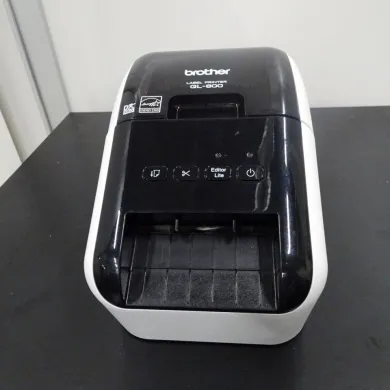
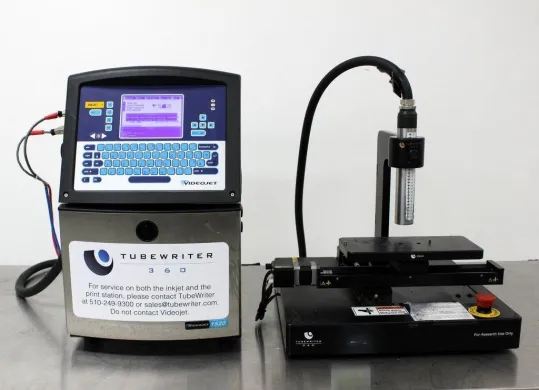
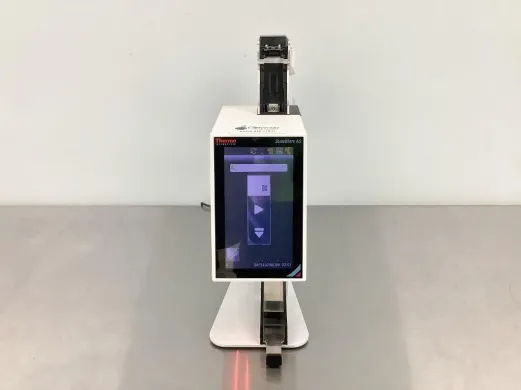
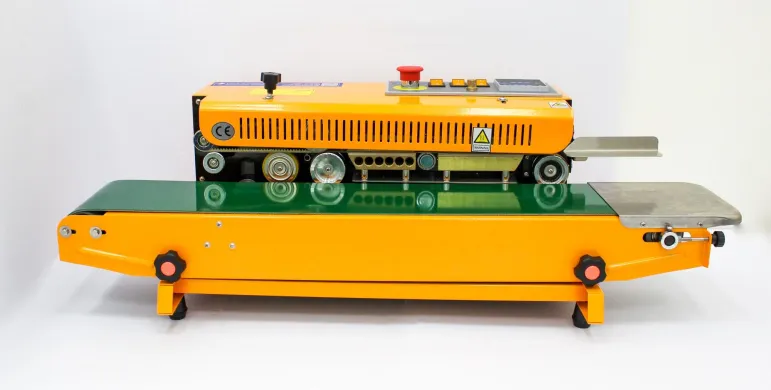
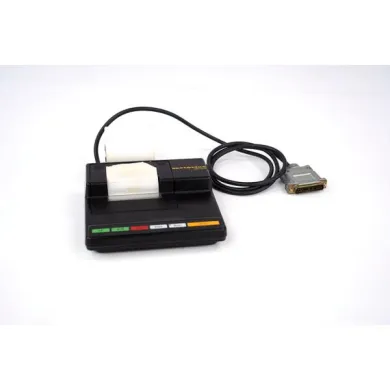
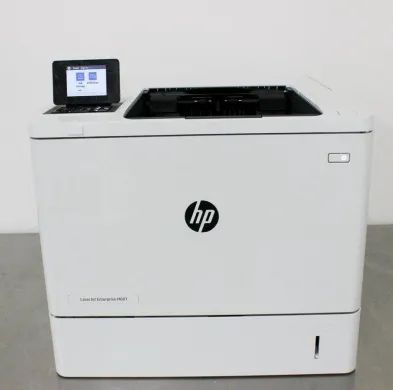
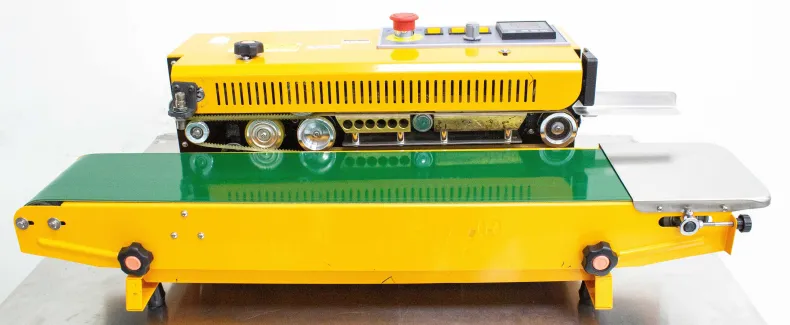
Not the exact instrument you need?
Tell our scientists what you are after. We track it down, including off-market supply.
Showing 1–40 of 162 listings
Show 40 more listingsBuying guide
What settles a labelling purchase is almost never the printer itself. It is the label stock the printer has to survive. A unit that prints beautifully on standard paper is useless if the application involves liquid nitrogen storage, autoclave cycles or wash-down with solvent, because the adhesive lifts and the ink runs. So the first thing to establish is the environment the finished label lives in: freezer temperature, exposure to ethanol or xylene, time under UV, and whether the surface is a curved cryovial or a flat slide. That environment dictates the print technology. Direct thermal printing fades under heat and light and suits short-lived labels; thermal transfer printing, which melts a ribbon onto the stock, holds up to freezers, solvents and long archival storage. For most laboratory work the thermal transfer route is the one that lasts, and it is worth confirming a used unit still accepts the ribbon width and label media a given protocol needs.
With the technology fixed, condition is what to verify on a used machine. The printhead is the wear part and the expensive one: it degrades with every pass, and a worn head leaves voids that break a barcode scan. Ask for the print count or an age estimate, and request a recent sample print to judge edge sharpness. Rollers and the ribbon drive also wear, though those are cheaper to replace. Parts for the common models can be sourced via Questpair, which matters more here than on many categories because printheads are consumables that a long-serving printer will eventually need.
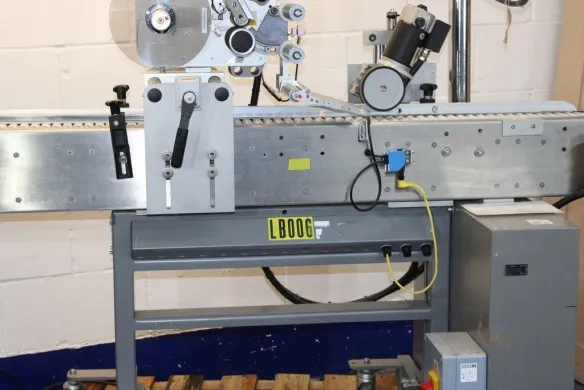
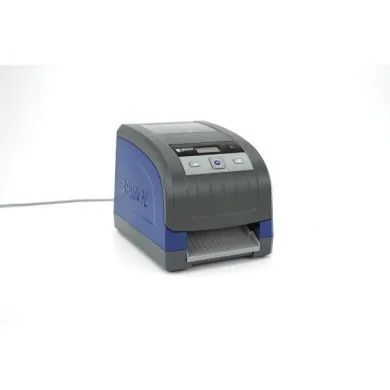
Price then follows from throughput and build. A desktop label printer that fits a budget sits at the low end, handling intermittent runs of a few hundred labels. An industrial label printer built for a production line, with a metal chassis and a large media capacity, occupies the upper band. Across the catalogue the average lands well below the ceiling, so a buyer weighing cost against duty cycle will find most listings affordable relative to new, with Zebra and Brady dominating the mid and upper tiers and smaller desktop units for sale at the entry level. Refurbished units are listed below new pricing, and where warranty matters it is arranged in consultation for the specific listing.
Types of Labelling equipment
Which labelling printer types are listed?
Among the listings that specify a type, the catalogue splits mainly by print method and by physical scale. Direct thermal printers burn an image into heat-sensitive stock and need no ribbon, which makes them cheap to run but limits them to short-lived labels that will not face heat or UV. Thermal transfer printers melt ink from a ribbon onto the label, producing a durable mark that survives freezers, solvents and years of archival storage, so they are the mainstay for sample identification in molecular biology and genomics workflows where a tube may sit at minus eighty for a decade. Barcode printers are a thermal transfer or direct thermal printer tuned for machine-readable output, feeding the inventory and chain-of-custody tracking that a biobanking or biomanufacturing operation runs on. Desktop label printers are the compact benchtop class for intermittent runs, while industrial label printers are the heavy-duty chassis built for continuous, high-volume production.
Laboratory labelling underpins a good deal of life sciences work beyond simple inventory. A thermal transfer printer producing cryogenic labels is what keeps a cell culture bank traceable through repeated freeze-thaw, and the same durable-label requirement governs sample tracking in proteomics, histology and clinical molecular diagnostics, where a mislabelled slide or plate corrupts the result rather than merely inconveniencing the operator. Barcode labelling also feeds the automated sample handling used in high-throughput genomics and immunoassay runs, where a scanner reads the plate rather than a technician reading a handwritten mark.
The brands behind the labelling listings
The listings are led by Zebra, Zebra Technologies Corporation, Brady, Brady Worldwide, Inc., Brother. For a buyer, that concentration is useful: Zebra and Brady are long-established in industrial and laboratory labelling, which means printheads, ribbons and rollers for their common models are widely available and a given unit is easy to compare against others of the same series. Brother occupies the compact desktop end. A dominant brand on the catalogue generally means lower parts risk and a clearer secondhand price, and parts can be sourced via Questpair where a used machine needs them.
What a used labelling printer costs here
New, used and refurbished units are all listed, and 98 percent of the listings are used. Prices run from EUR 17 to EUR 29.701, a spread that covers everything from a basic desktop unit to an industrial production system with a metal build and high media capacity. The average sits well under the ceiling, which reflects how many of the listings are benchtop-scale rather than industrial.
Frequently asked questions
What is labelling equipment?
Labelling equipment is the group of printers and applicators that produce machine-readable and human-readable labels for samples, reagent containers, inventory and shipping. In a lab it marks specimen tubes, microplates, slides and storage boxes with barcodes that have to survive refrigeration, autoclaving and solvent contact.
What does labelling equipment mean in a lab context?
It refers specifically to the printers and applicators that generate the barcodes linking a physical tube or plate to a record in a laboratory information system. The term covers both the printer that marks the label and, on industrial lines, the applicator that places it.
How does labelling equipment work?
Two printing methods dominate. Direct thermal printing heats a chemically coated label without a ribbon, while thermal transfer printing melts ink from a ribbon onto the label so the mark survives freezing, autoclaving and solvent wipes.
What types of labelling equipment are there?
The listings here span direct thermal printers, thermal transfer printers, desktop label printers, barcode printers, industrial label printers and general label printers. The split follows printing method and duty cycle, from a single bench to a continuous production line.
What is labelling equipment used for?
It is used for specimen tracking in genomics and proteomics pipelines, sample management in cell culture and biobanking, and chain-of-custody labelling in molecular diagnostics. Cryogenic labels for minus eighty storage and autoclave-resistant labels for sterilised glassware are two formats these printers are commonly configured to produce.
How do I choose labelling equipment?
Match the printing method to the environment the label must survive: thermal transfer for freezer, autoclave and solvent exposure, direct thermal where running cost matters more than durability. Then size the printer to volume, with desktop units for a single bench and industrial units for central specimen reception or production output.
What is the difference between refurbished and used labelling equipment?
Used describes a unit sold in its existing working condition, while refurbished means it has been checked and reconditioned before resale. Both are listed below the price of new equipment, and the exact condition is stated in the individual listing.
How much does labelling equipment cost?
Prices in the catalogue range from EUR 17 to EUR 29.701, with an average around EUR 1.117. The low end covers compact desktop units and the high end covers industrial systems with applicators and wide-format media handling.
Which brands of labelling equipment are available?
The listings concentrate around Zebra and Zebra Technologies, Brady and Brady Worldwide, and Brother. Zebra appears across both desktop and industrial tiers, Brady is known for laboratory-specific and cryogenic label systems, and Brother sits mainly at the desktop and benchtop end.
Is there a warranty on refurbished labelling equipment?
A warranty is often possible and is arranged in consultation for the specific listing. Terms depend on the individual unit rather than a central policy.
Can I get parts for labelling equipment?
Parts such as printheads and media components can be sourced via Questpair. For the common Zebra and Brady models, consumables and spares are widely stocked because of their large installed base.
How long does labelling equipment last?
Lifespan depends on duty cycle and construction. Industrial printers with metal chassis and large media handling are built for continuous throughput, while desktop units are intended for lower-volume point-of-use printing, and the printhead is usually the first component to wear.
New versus refurbished labelling equipment, which should I buy?
The one difference the catalogue data supports is price: used and refurbished units are listed below new equipment. Where warranty matters, check the specific listing, since warranty is arranged in consultation rather than set centrally.
Where can I buy labelling equipment?
The Questpair catalogue holds 449 listings in this category from 17 verified suppliers and distributors across 10 countries. Units are offered new, used and refurbished.
What are the lead time and shipping like?
Lead time and shipping depend on the individual listing and the supplier's location, which spans 10 countries. The specific terms are confirmed with the supplier for the unit you select.
How do I handle calibration and maintenance?
Routine upkeep involves printhead cleaning, media and ribbon alignment, and print-darkness checks to keep barcodes scannable. Questpair does not provide servicing, but replacement parts and consumables for maintenance can be sourced through the catalogue.
Which label printer types are listed most, and who reaches for which?
Thermal transfer printers feature heavily because most laboratory sample labelling needs a mark that survives freezer storage, autoclaving and solvent wipes. Desktop label printers suit low-volume benches beside a workstation, while industrial label printers and heavier barcode printers go to production floors and central specimen-reception areas.
Which brands dominate this category and what does that mean for a buyer?
Zebra, Brady and Brother account for the bulk of the listings. The concentration means consumables for the common models are widely stocked, a given model is straightforward to compare against another unit on the market, and spare parts can be sourced via Questpair.
What separates the cheapest from the most expensive labelling equipment here?
The low end is compact desktop units for point-of-use printing beside a single bench. The high end is industrial systems with metal-chassis construction, applicators, wide-format media handling and the throughput intended for continuous production, which is why the range runs from EUR 17 to EUR 29.701.