Price on request
In stock
Can't find what you're looking for?
Pre-Owned
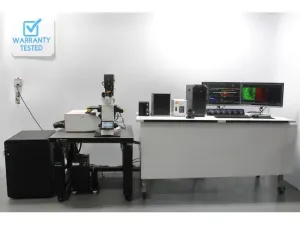
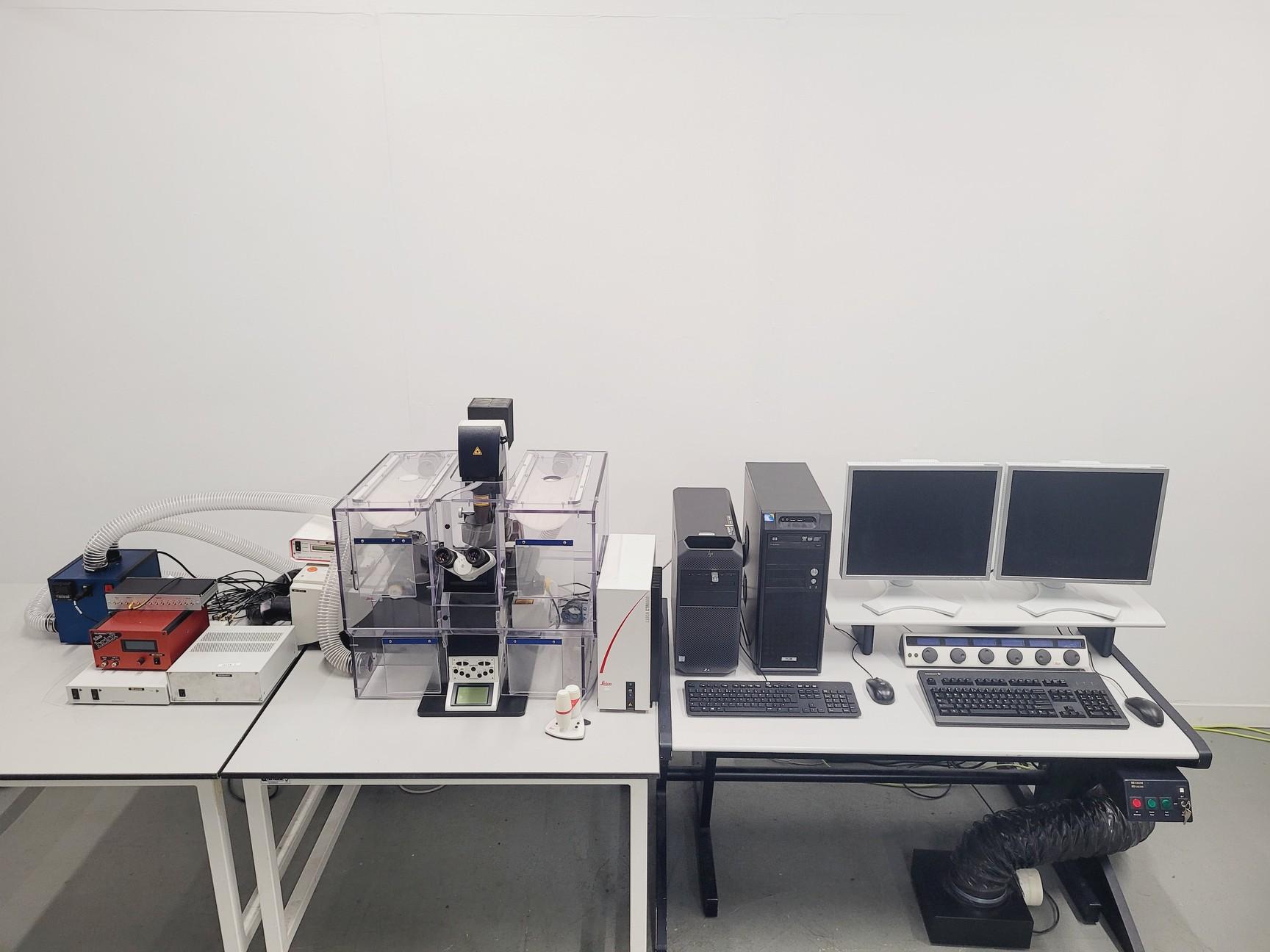
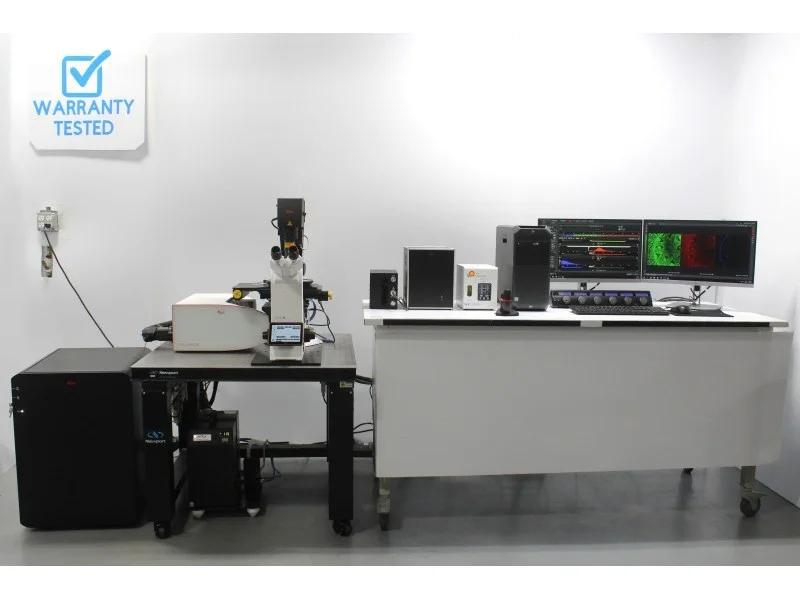
Inverted Leica DMi8 confocal microscope with Stellaris 5 scanning, AOBS, live-cell incubation, and motorized automation.
The Leica DMi8 Stellaris 5 is an inverted confocal laser scanning fluorescence microscope system configured for high-resolution live-cell imaging, quantitative fluorescence analysis, 3D microscopy, tissue imaging, and advanced biotechnology research workflows. The system combines brightfield, polarization, widefield fluorescence, and confocal fluorescence techniques.
The microscope includes a Leica LED 3 Light Engine by Lumencor, a Stellaris 5 white laser source covering 485–790 nm, and a 405 nm diode laser. The system supports software-controlled laser excitation, individual laser intensity control, sequential scanning, and multiparameter fluorescence imaging.
Included optical components include:
AOBS beam splitting replaces conventional dichroic beam management with an acousto-optical crystal. The configuration supports narrow transmission bandgaps of 2–6 nm, compared with approximately 20–80 nm for traditional systems, helping support spectral fluorescence imaging with reduced mechanical alignment requirements.
The listed objectives are:
The microscope can be configured for magnification from 100x to 630x when used with 10x eyepieces, subject to the selected objectives and system configuration.
The Stellaris 5 confocal scanning system provides variable image resolution from 16 × 16 to 2048 × 2048 pixels. Its field-of-view scanner enables electronically controlled panning and zooming, while the white laser and 405 nm diode laser support flexible excitation for multichannel fluorescence microscopy.
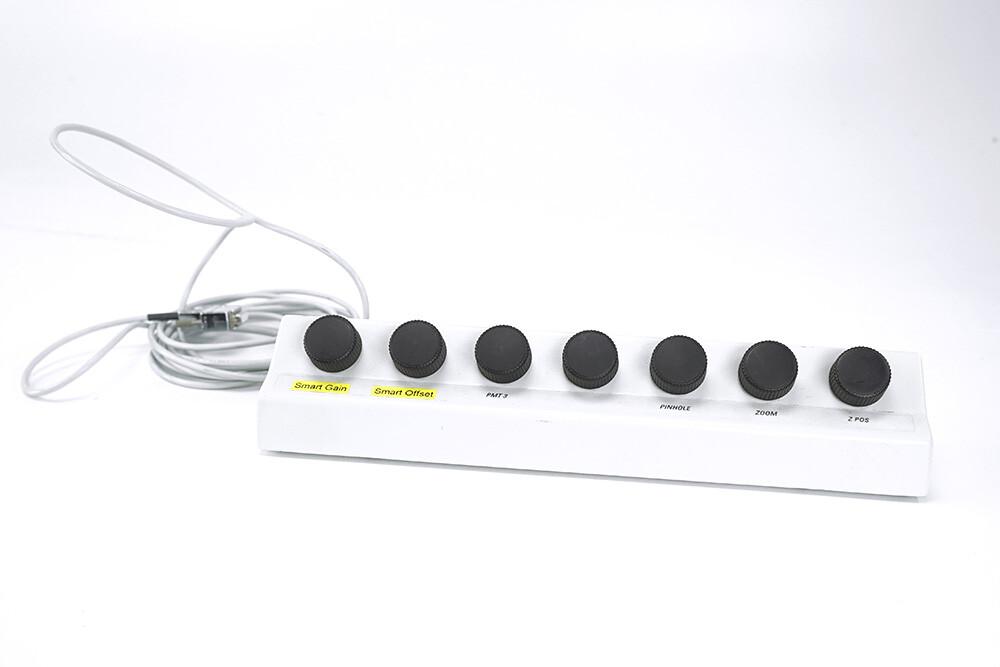
Installed automated functions include:
The system includes a desktop computer with Leica LAS X software and licenses for:
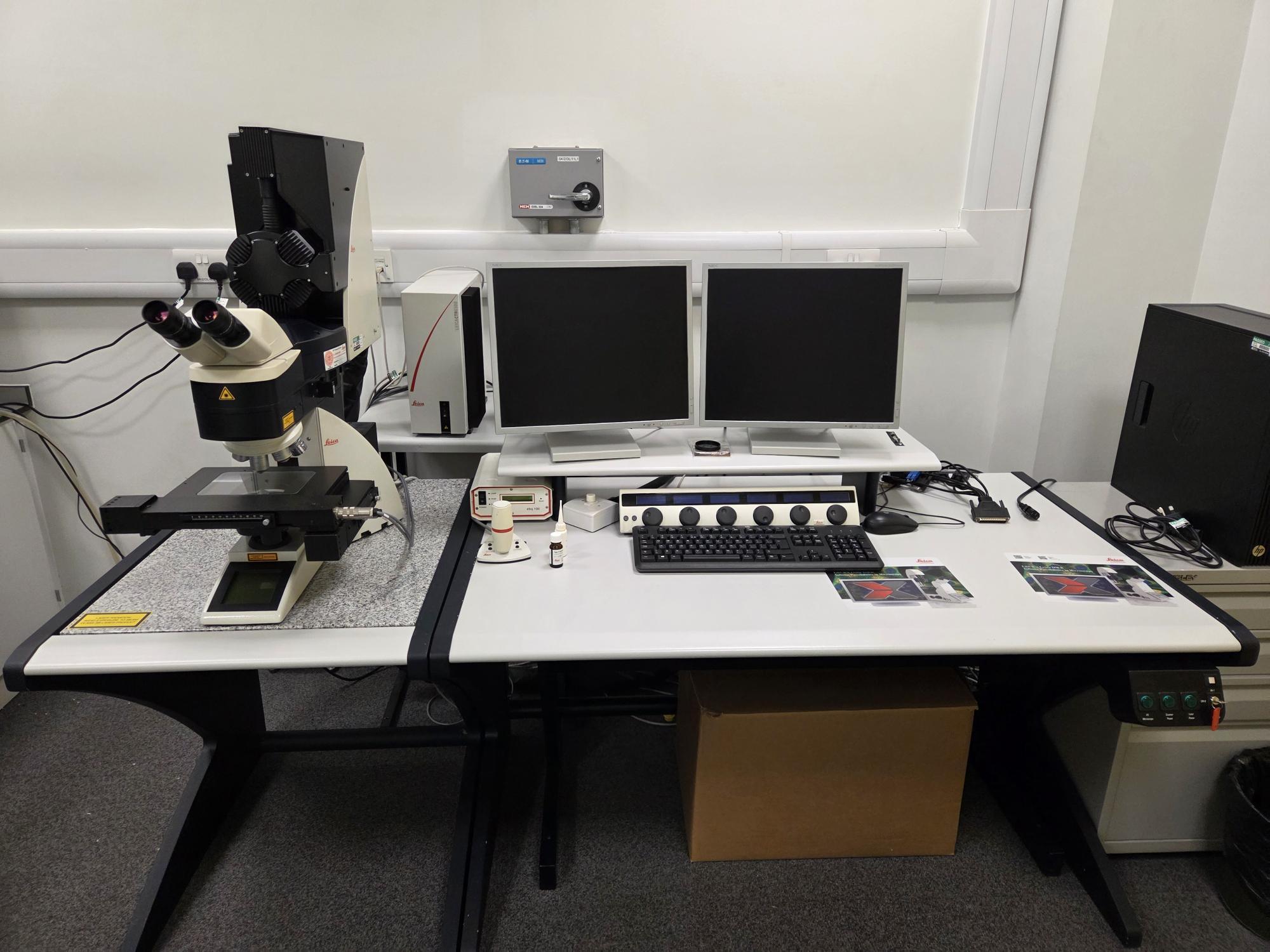
The imaging workflow supports Z-stack acquisition, 3D reconstruction, automated stitching, multidimensional imaging across time, Z, channels, and positions, live image visualization, deconvolution, and customizable acquisition protocols. Included accessories include two computer monitors, keyboard, mouse, power and communication cables, and coolant tubing.
This Leica confocal microscope is suited to live-cell imaging, long-term time-lapse experiments, subcellular biology, neuroscience, tissue analysis, biomarker localization, high-content screening, molecular diagnostics, gene-editing research, synthetic biology, and biopharmaceutical research pipelines. The system was made in 2022 and is supplied as a serviced, configurable pre-owned microscope system.
Lab equipment markets are fragmented. Buyers spend weeks calling distributors, comparing quotes, and verifying supplier reliability. Sellers struggle to reach global research labs.
We built Questpair to fix this. Every supplier on the platform is verified before listing. Every quote you receive comes from a real, vetted seller. AI prepares your case in minutes, then a real specialist takes over.
We're an independent team based in The Netherlands, working with research labs and procurement teams across Europe and worldwide.
With a service contract, ten to fifteen years is normal for most benchtop instruments. Detectors and pumps are the parts that wear first.
Yes. Every verified supplier states which service partners cover the instrument, and we list that alongside the offer.
Ask a scientist through the request button. Parts are often available even when the instrument itself is discontinued.
Two to six weeks, depending on refurbishment scope and whether calibration is included.
We ship to 38 countries. Crating and customs handling are quoted with the instrument.
Tell us what you need and a scientist finds it for you, usually within the hour.
Last updated 19 October 2026
The middle half of the 23 with a price runs from €1,110 to €15,533.