

Climate control
We personally find you the right used, refurbished and new climate control instruments & equipment from verified suppliers.
Climate control equipment is the class of laboratory instrumentation that holds temperature, humidity, or both within a defined set point, so that samples, reagents, and experiments sit in conditions that do not drift. It covers the thermostats that regulate a bath or chamber, the cabinets and enclosures that hold a controlled atmosphere around their contents, and the humidity generators that produce air at a known water content. On Questpair, 1829 listings sit in this category, offered by 22 verified suppliers and distributors across 9 countries. Of those, 88 percent are used and the rest new, so the market here is weighted heavily toward second-hand units rather than new laboratory stock.
Updated:
Climate control product list


Not the exact instrument you need?
Tell our scientists what you are after. We track it down, including off-market supply.
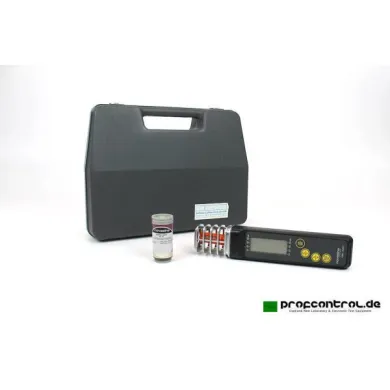
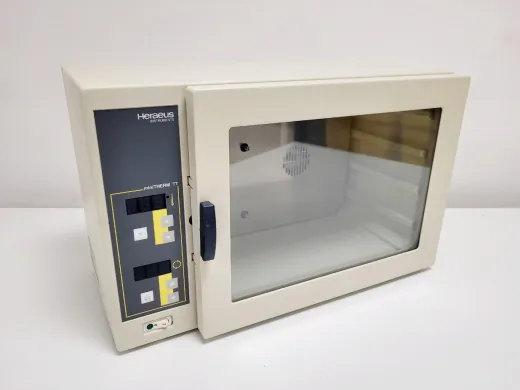
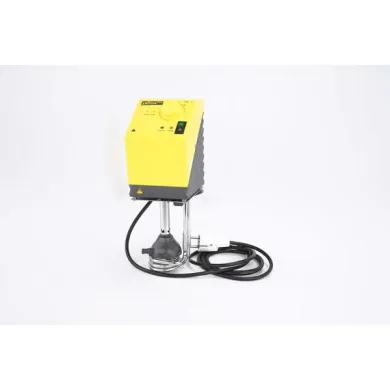
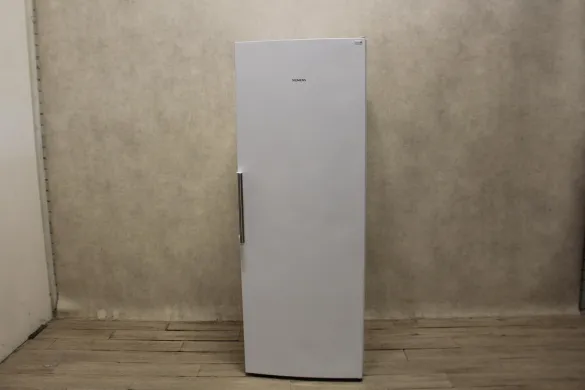
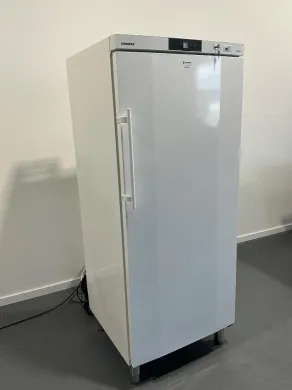
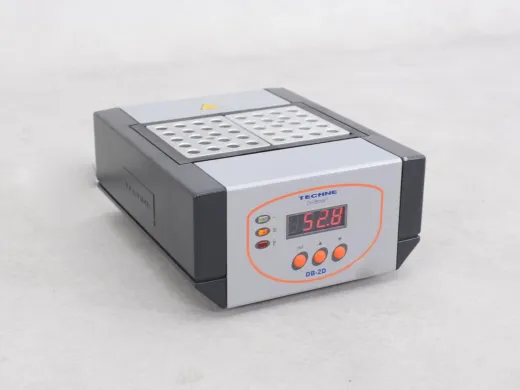
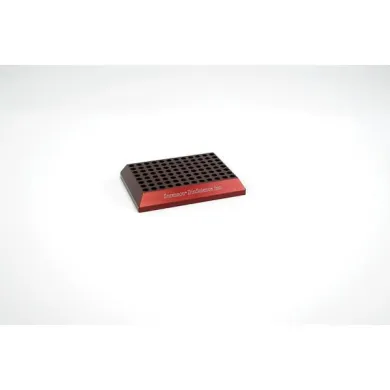
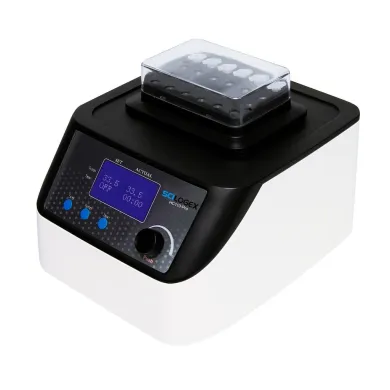
Techne Dri-Block DB-2D Block Thermostat
- Category
- Heating and cooling
- Brand
- Techne
- Suppliers
- 1 verified
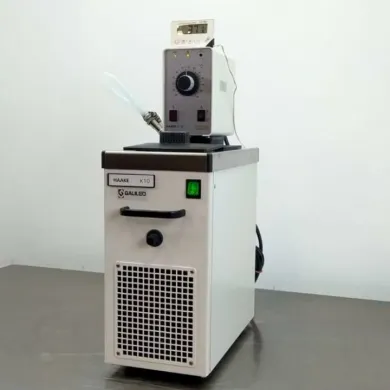
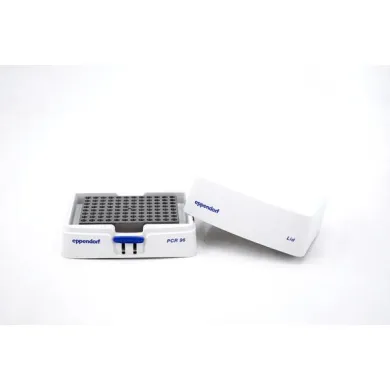
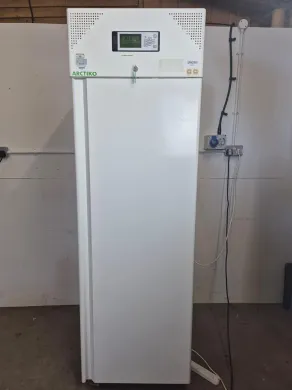
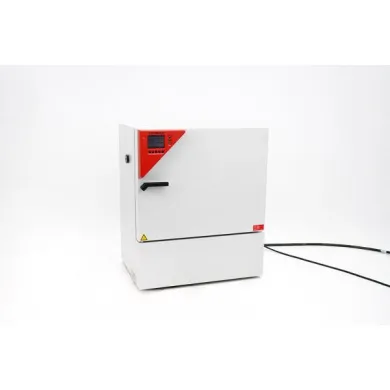
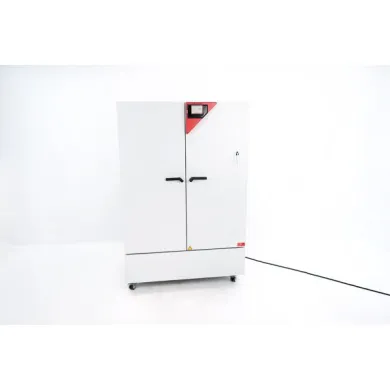
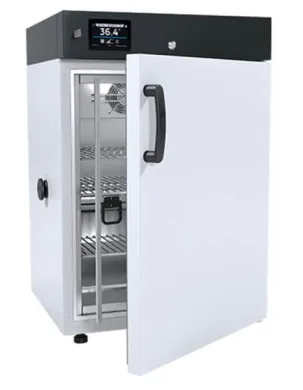
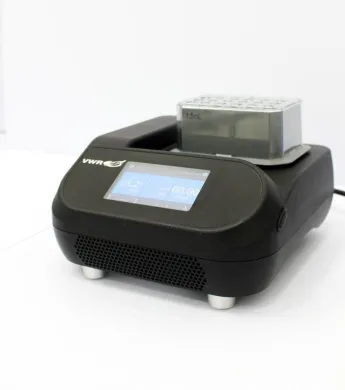
Not the exact instrument you need?
Tell our scientists what you are after. We track it down, including off-market supply.

Showing 1–40 of 731 listings
Show 40 more listingsBuying guide
The first number a buyer settles on is the temperature range and the stability inside it, because that is what the application dictates and everything else follows from it. A thermostat circulating a bath for routine sample conditioning works across a modest band and tolerates a tenth of a degree of wander; one feeding a reference cell or a calibration rig has to hold far tighter, and the control type, PID against bang-bang, becomes the specification that decides whether a unit is even a candidate. For a cabinet the question shifts to uniformity across the chamber volume rather than at a single probe, since a stable centre point means little if the corners drift. Read the stated stability as the figure at one sensor unless the datasheet says uniformity, and treat the two as separate claims.
Condition matters more here than on most equipment, because climate control units earn their value from parts that degrade with use. A compressor, a Peltier stack, a circulation pump, and the seals around a cabinet door all wear, and a used unit that held its set point for a decade may no longer. What to verify on a second-hand purchase is the service history of those wear parts, whether the unit has been recalibrated against a traceable reference, and whether the door gasket or bath insulation is intact. A listing that names its last calibration date is worth more than one that only quotes the original factory specification. Parts for these units can be sourced via Questpair, which affects how a buyer weighs an older model against a newer one.
The price band here is wide. Listings run from EUR 9 to EUR 44.167, with an average of EUR 2.309. The bottom of that band covers simple immersion thermostats and small accessories; the top covers walk-in enclosures and precision humidity systems. A buyer working to a fixed budget will find that refurbished and used units are listed for sale well below new equivalents, which is why the catalogue skews so far toward second-hand stock. The dominant brands here, Thermo Fisher Scientific, Thermo Scientific, VWR, LAUDA, Fisherbrand, sit across that whole spread, and their presence matters because a widely listed brand is easier to compare model against model and more likely to have parts and documentation available.
Types of Climate control
Which thermostats are listed?
A thermostat in this category is the active controller that drives a heating or cooling element to a set point and holds it there, whether as an immersion circulator dropped into a bath, a tabletop unit with its own reservoir, or a built-in regulator inside a larger instrument. Among the listings that specify a type, thermostats are the largest group, and they divide by the span they cover: heating-only units for work above ambient, refrigerated circulators that reach below it, and dual units that cross zero. What separates one from another for a buyer is the range, the stability at set point, and the pump capacity, since a thermostat feeding an external loop has to shift fluid as well as hold temperature. In life sciences these units stabilise water baths for enzyme assays and sample incubation, and the temperature control they provide underpins reproducible molecular biology work where a reaction's yield depends on holding a narrow band.
Climate controlled cabinets and enclosures
A climate controlled cabinet is an enclosed volume that holds a defined temperature, and often humidity, around whatever sits inside it, from a benchtop incubator to a walk-in enclosure. These differ from thermostats in that they condition a space rather than a fluid, so the specification that matters is uniformity across the chamber and how fast it recovers after the door opens. Buyers reach for them when a whole set of samples, plates, or cultures has to share one controlled atmosphere, and the choice between a compact unit and a large enclosure follows directly from the volume and the access the work needs. In biotechnology these enclosures run cell culture at a held temperature and humidity, provide the stable environment for protein crystallisation trials, and condition samples ahead of analysis, so a cabinet that holds its climate steady is often the quiet foundation under a genomics or proteomics workflow rather than the instrument that gets named.
Humidity generators
A humidity generator produces a stream of air at a known, controllable water content, which separates it from the two groups above: its output is the regulated variable itself, not a temperature holding a sample. These are the smallest group among the listings that specify a type, and a buyer looks at the humidity range the unit can produce, the accuracy of that figure, and the flow it can sustain. They serve calibration above all, providing the reference atmosphere against which humidity sensors and hygrometers are checked, and they also appear in materials testing where a specimen has to sit in air of a defined moisture level. Where the work is sensor calibration, a generator with a traceable output is the reference the rest of the measurement chain depends on.
Prices across these three groups run from EUR 9 to EUR 44.167. The catalogue is weighted toward second-hand stock, with 88 percent of the listings used, offered by 22 verified suppliers and distributors. Where a unit's calibration or service history is not stated, a buyer can contact Questpair, and specialists respond within an hour.
Frequently asked questions
What is climate control equipment?
It is the class of laboratory instrumentation that holds temperature, humidity, or both at a defined set point so that samples and experiments sit in conditions that do not drift. It covers thermostats that regulate a bath or chamber, cabinets that condition a controlled atmosphere, and humidity generators that produce air at a known water content.
What does climate control mean in a lab setting?
It means actively regulating the environment around a sample rather than letting it follow room conditions. A unit measures its set variable, drives a heating, cooling, or humidifying element, and corrects continuously to keep the figure inside a stated band.
How do climate control units work?
A sensor reads the current temperature or humidity, a controller compares that to the set point, and it drives a heating or cooling element, or a water source, to close the gap. Control type differs: a PID loop corrects proportionally for a tight hold, while a bang-bang controller switches full on or off and allows more wander.
What types of climate control equipment are there?
The listings split into three groups: thermostats that drive a bath or chamber to a set point, climate controlled cabinets and enclosures that condition a space, and humidity generators that output air at a known water content. Within thermostats the listed types include the laboratory refrigerator, laboratory freezer, biomedical freezer, sample storage refrigerator, refrigerated storage unit, and ultra-low temperature freezer.
What is climate control used for?
Thermostats stabilise water baths for enzyme assays and sample incubation; cabinets run cell culture or protein crystallisation at a held temperature and humidity; humidity generators provide a reference atmosphere for calibrating humidity sensors and for materials testing. The common thread is that a sample or reaction depends on conditions staying inside a narrow band.
How do I choose the right unit?
Start with the temperature or humidity range the application needs and the stability required inside it, because that decides which units are even candidates. For a thermostat weigh control type and pump capacity; for a cabinet weigh uniformity across the whole chamber volume, not just the figure at a single probe.
What is the difference between refurbished and used?
A used unit is sold in the condition it arrives, while a refurbished one has been checked and brought back toward working specification before listing. For either, the detail that matters most here is the service history of wear parts and whether the unit has been recalibrated against a traceable reference, so read the individual listing.
How much does climate control equipment cost?
Listings run from EUR 9 to EUR 44.167, with an average of EUR 2.309. The bottom of that band covers simple immersion thermostats and small accessories, and the top covers walk-in enclosures and precision humidity systems.
Which brands are listed in this category?
The brands that appear across these listings include Thermo Fisher Scientific, Thermo Scientific, VWR, LAUDA, and Fisherbrand. They sit across the full price spread rather than clustering at one end.
Is there a warranty on refurbished units?
A warranty is often possible and is arranged in consultation for the specific listing. Because terms are not set centrally, check the individual listing and ask before you buy.
Can I get parts for these units?
Parts can be sourced via Questpair. This matters most for climate control equipment because compressors, Peltier stacks, circulation pumps, and door seals are the wear items that decide an older unit's remaining value.
How long do climate control units last?
Lifespan depends on the wear parts rather than the electronics: a compressor, a Peltier stack, a circulation pump, and the seals around a cabinet door all degrade with use. A unit that held its set point for years may drift once those parts age, which is why a stated last calibration date tells you more than the original factory specification.
New or refurbished, which should I buy?
Used and refurbished units are listed at lower prices than new equivalents, which is why the catalogue skews toward second-hand stock. Where you have to weigh the two, compare the individual listing's condition and calibration history, and note that warranty is arranged in consultation for that specific unit.
Where can I buy climate control equipment?
On Questpair, 1829 listings in this category are offered by 22 verified suppliers and distributors across 9 countries. The split is 1610 used and 215 new.
What are the lead time and shipping like?
Lead time and shipping are set by the supplier holding the stock, since listings come from 22 separate verified suppliers and distributors across 9 countries. Check the individual listing, or contact Questpair and specialists respond within an hour.
How are these units calibrated and maintained?
Calibration checks the unit's reading against a traceable reference and matters more on second-hand stock, so a listing that names its last calibration date is worth more than one quoting only the factory specification. Questpair does not carry out servicing, but parts for maintenance can be sourced through it.
Which types are listed most, and who reaches for which?
Among listings that specify a type, thermostats are the largest group and humidity generators the smallest. Life science labs reach for thermostats to hold water baths and reactions; biotechnology work reaches for cabinets to condition cultures and crystallisation trials; calibration and materials testing reach for humidity generators as the reference atmosphere.
Which brands dominate the category, and what does that mean for a buyer?
Thermo Fisher Scientific, Thermo Scientific, VWR, LAUDA, and Fisherbrand appear across these listings and sit across the whole price spread. A brand that is widely listed is easier to compare model against model, and parts and documentation are more likely to be available for it.
What separates the cheapest units from the most expensive?
The bottom of the band covers simple immersion thermostats and small accessories; the top covers walk-in enclosures and precision humidity systems. Between them the differences are range, stability at set point, chamber volume and uniformity, and for thermostats the pump capacity that lets a unit feed an external loop.