
Promega equipment
We personally find you the right new, used & refurbished Promega instruments & equipment from verified suppliers
Promega is an American life science reagent and instrument manufacturer, founded in 1978 by William A. Linton in Madison, Wisconsin, originally under the name Biotec to supply restriction enzymes for biotechnology research. The company develops molecular biology reagents and kits, nucleic acid extraction systems, PCR and qPCR reagents, bioluminescent reporter and detection technology, and forensic human identification kits. Promega remains independently and privately held, with Eppendorf AG holding a minority equity stake of approximately 13.7 percent. On Questpair, Promega instruments are listed by verified suppliers and distributors across several European countries, with prices ranging from EUR 89 to EUR 17.836.
Updated:
Promega product list


Not the exact instrument you need?
Tell our scientists what you are after. We track it down, including off-market supply.
About Promega
Promega Corporation is an American life science reagent and instrument manufacturer founded in 1978 by William A. Linton in Madison, Wisconsin, originally under the name Biotec to supply restriction enzymes for biotechnology research. The company is headquartered in Madison, United States, and operates in the molecular biology and biotechnology field. Promega is independently and privately held with no corporate parent, though Eppendorf AG holds a minority equity stake of approximately 13.7 percent. Its work spans molecular biology reagents, nucleic acid extraction and purification, PCR and qPCR, bioluminescent reporter and detection systems, protein analysis, and forensic human identification. The company is known in molecular biology for its bioluminescence chemistry and its automated sample preparation instruments. On Questpair, Promega equipment is listed by verified suppliers and distributors across 5 countries.
Promega instrument and reagent lines
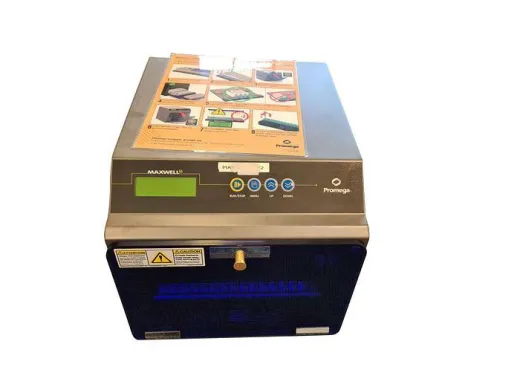
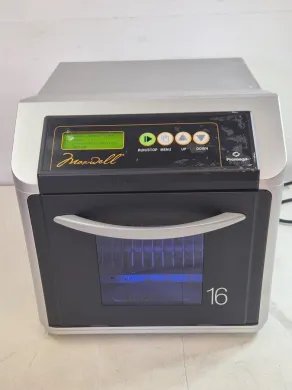
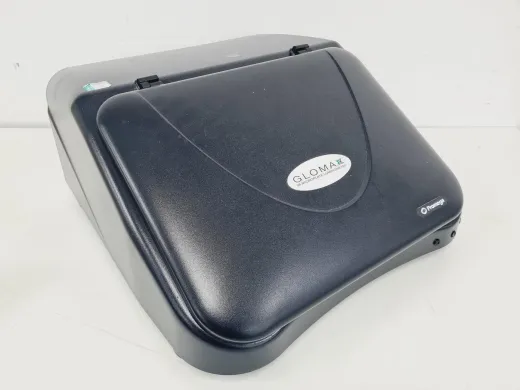
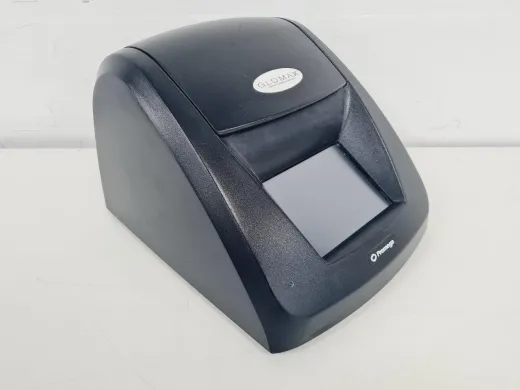
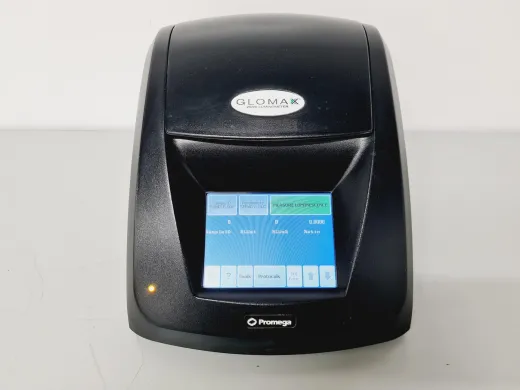
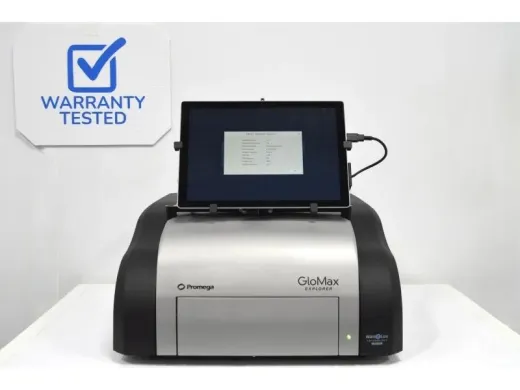
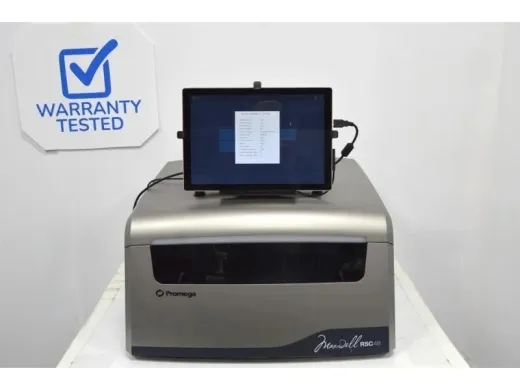
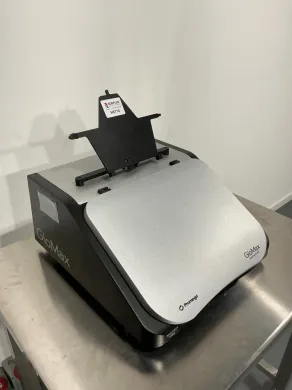
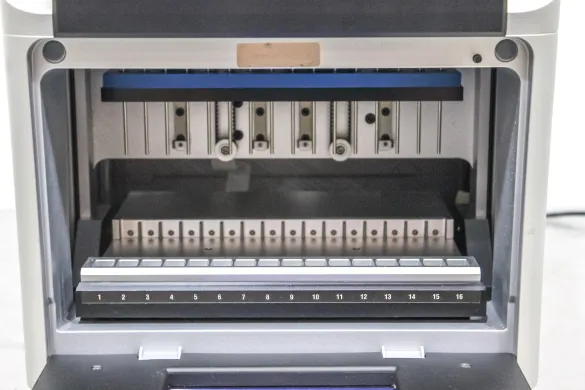
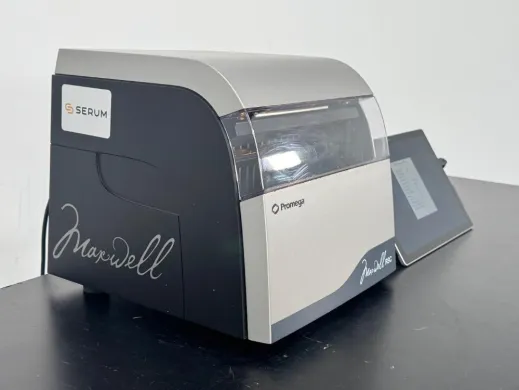
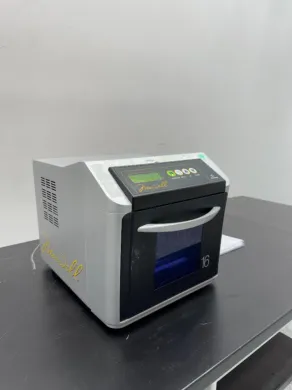
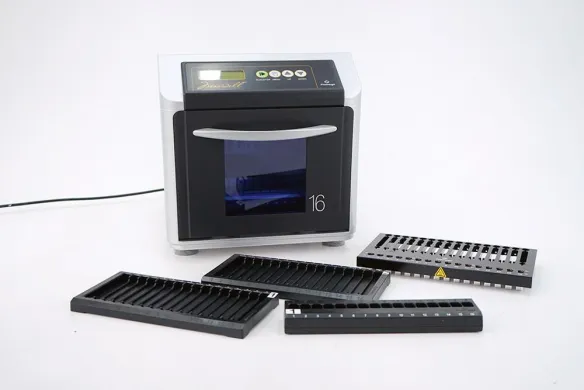
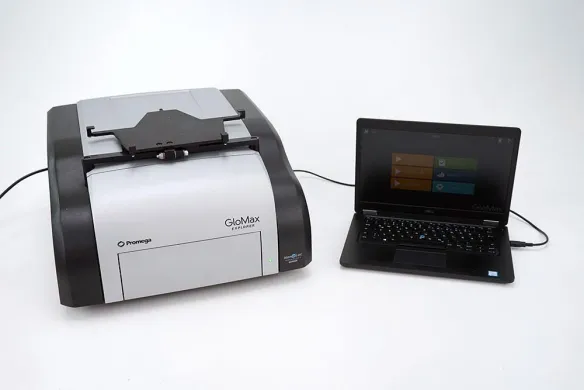
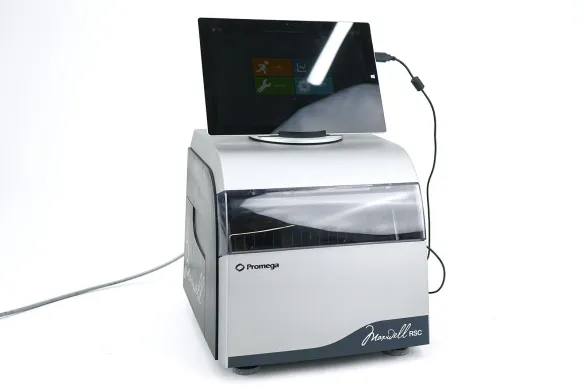
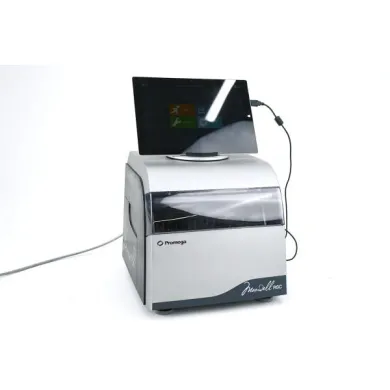
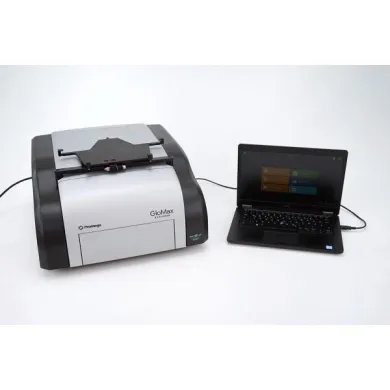
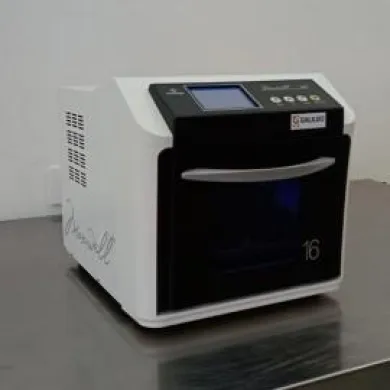
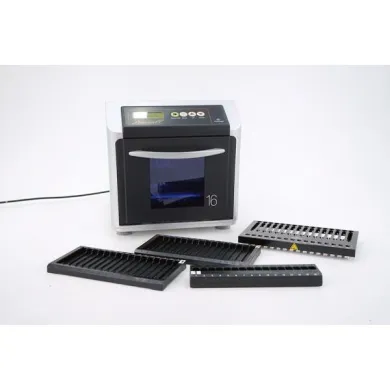
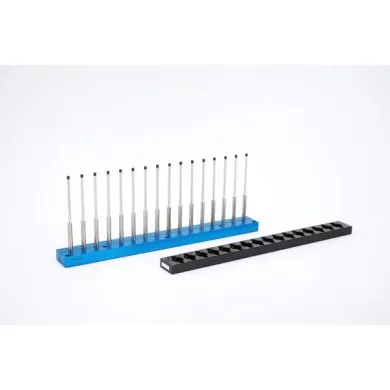
Promega's hardware falls into two main groups. The Maxwell and Maxprep automated nucleic acid extraction instruments handle DNA and RNA purification with minimal manual intervention, work that sits at the centre of molecular diagnostics and genomics sample preparation. These platforms automate the purification step that feeds downstream PCR, sequencing, and qPCR, so they are used wherever nucleic acid extraction has to be consistent across runs. The second group is detection hardware. The GloMax instruments perform bioluminescence imaging and plate-based luminescence measurement, the readout behind cell viability assays, apoptosis studies, and reporter gene experiments.
Around these instruments sits a reagent portfolio that defines much of what Promega is recognised for in molecular biology. NanoLuc luciferase reporter technology and the NanoBRET assays support kinase profiling and protein interaction work central to drug discovery and synthetic biology. HaloTag provides protein labeling and capture used in protein purification and cell imaging. GoTaq covers PCR and qPCR amplification, while Wizard and ReliaPrep chemistries handle DNA and RNA purification. CellTiter-Glo is a bioluminescent cell viability assay widely used in cell culture based screening. PowerPlex STR systems serve human identification and forensic genotyping. These reagent lines are consumable chemistry rather than listable hardware, but they explain why the instruments carry the reagent pairings they do.
The instruments also connect to the broader life sciences fields a professional would search within. Automated extraction underpins molecular diagnostics and biomanufacturing quality workflows, luminescence detection serves immunoassay and reporter-based screening, and the STR systems serve forensic genomics. A used GloMax or a used Maxwell therefore arrives with a documented place in these established workflows rather than as a standalone unit.
What is listed on Questpair?
The Questpair catalogue holds Promega equipment from 10 verified suppliers and distributors across 5 countries. Prices range from EUR 89 to EUR 17.836, with an average around EUR 3.806. That spread reflects the difference between smaller detection and imaging units and the larger automated extraction platforms. Condition is heavily weighted toward pre-owned stock: 98 percent of the listings are used. A buyer entering this catalogue is in nearly all cases evaluating a second-hand instrument, where used units are listed below the price of new equipment.
For documentation, a buyer can contact Questpair and specialists respond within one hour. Parts for Promega instruments can be sourced via Questpair. A warranty is often possible and is arranged in consultation for the specific listing, so the individual listing and its seller are the point of reference rather than a central policy. Because the catalogue is almost entirely used, the price difference against new stock is the main comparison the data supports; where that difference matters to a decision, the terms attached to a particular unit are set at the listing level.
Questpair review of Promega
Our take based on listings data and supplier feedback
Promega occupies a position that few laboratory suppliers hold: it sells both the reagents a protocol consumes and the instruments that run them. For a buyer looking at the second-hand market, the instruments are the relevant part, and the catalogue reflects that. The Maxwell and Maxprep automated nucleic acid extraction platforms are the clearest example. These sit at the benchtop end of automation, handling DNA and RNA purification from a modest number of samples without the footprint of a full liquid-handling deck. On the used market they carry a different economics than a consumable line, and a used Maxwell is priced below a new one, which is the single price claim the listing data supports.
The breadth of the range matters because it lets a lab consolidate. A molecular biology group running PCR on GoTaq reagents, purifying nucleic acid on ReliaPrep or Wizard chemistry, and reading out bioluminescence on a GloMax instrument is working inside one maker's ecosystem, where the detection chemistry and the instrument are designed against each other. NanoLuc luciferase reporter technology and the NanoBRET assays for kinase and protein interaction studies feed directly into that readout. For a buyer, the practical consequence is that an instrument found in the listings is likely to have a documented reagent pairing rather than an orphaned platform with no supported consumable.
The GloMax line is the instrument most directly tied to this chemistry. It performs bioluminescence imaging and plate-based luminescence detection, the measurement step behind CellTiter-Glo cell viability assays and the apoptosis and reporter work that runs on the same output. A used GloMax in the catalogue therefore arrives with a well-mapped set of applications, which shortens the work of confirming that a given unit fits an existing protocol.
The price spread in the listings is wide, running from EUR 89 to EUR 17.836, with an average around EUR 3.806. That range reflects the mix of what Promega sells under the instrument heading, from small detection and imaging units at the lower end to automated extraction platforms higher up. Condition is also skewed: 98 percent of the listings are used, so a buyer entering this catalogue is almost always evaluating a pre-owned unit rather than new stock.
Where the Promega catalogue is thinner is in the pure instrument count against the depth of the reagent portfolio. Much of what the company is known for, PowerPlex STR systems for human identification, HaloTag protein labeling, and the drug discovery assay chemistries, is reagent and kit chemistry rather than hardware, so it does not surface as listable equipment. A buyer should read the listings as an instrument subset of a much larger reagent business. For the automated extraction and luminescence detection hardware that does appear, the second-hand market offers a documented, reagent-supported platform at a used price.
**Automated extraction platforms available used**
The Maxwell and Maxprep automated nucleic acid extraction instruments appear in the listings, where a used unit is priced below the cost of a new one.
**Broad molecular biology range from one maker**
A single manufacturer covers PCR reagents, DNA and RNA purification kits, bioluminescent detection, and human identification systems, so a buyer can match several workflow stages to one brand.
**Reagent and instrument supply across Europe**
Promega equipment is listed by 10 verified suppliers and distributors in 5 countries, with prices running from EUR 89 to EUR 17.836.
Frequently asked questions
Where can I get manuals and documentation for Promega instruments?
Contact Questpair for documentation on a specific Promega unit, and specialists respond within one hour. Model numbers and series names should be confirmed against the actual listing you are looking at.
How much does a Promega instrument cost?
Across the Questpair catalogue, Promega listings run from EUR 89 to EUR 17.836, with an average around EUR 3.806. The spread reflects the gap between smaller detection and imaging units and the larger automated nucleic acid extraction platforms.
What's the difference between refurbished and used Promega equipment?
Both are pre-owned, with used units typically carrying fewer reconditioning steps than refurbished ones. On Questpair, used and refurbished Promega units are listed below the price of new equipment, and the exact condition is stated at the listing level.
Is there a warranty on a used Promega instrument?
A warranty is often possible and is arranged in consultation for the specific listing. The seller and the individual listing are the point of reference, since terms are not set centrally.
Are Promega instruments suitable for clinical and research use?
Promega's automated extraction platforms like Maxwell and Maxprep sit at the centre of molecular diagnostics and genomics sample prep, and GloMax luminescence hardware supports reporter and cell viability assays. Whether a given used unit meets a clinical or regulated requirement depends on its configuration and documentation, which you can request for the specific listing.
How long do Promega instruments last?
Automated extraction and plate-reading hardware has a long service life when maintained, which is why pre-owned units remain in use across molecular biology labs. Lifespan on a second-hand unit depends on usage history and condition, both of which are described at the listing level.
Can I still get parts for Promega instruments?
Parts for Promega instruments can be sourced via Questpair. Specify the model and the component you need when you make contact.
What are good alternatives to Promega extraction and detection instruments?
For automated nucleic acid purification, comparable platforms come from makers such as Thermo Fisher, Qiagen, and Roche; for plate-based luminescence and fluorescence reading, alternatives include instruments from BMG Labtech, BioTek, and Tecan. The right comparison depends on whether you need the extraction side or the detection side of Promega's hardware range.
What is the lead time on a Promega instrument?
Lead time depends on the individual seller and the location of the unit, since Questpair lists verified suppliers and distributors across 5 countries. The specific listing and its supplier give the dispatch timing for that unit.
What is the difference between parts and spares for these instruments?
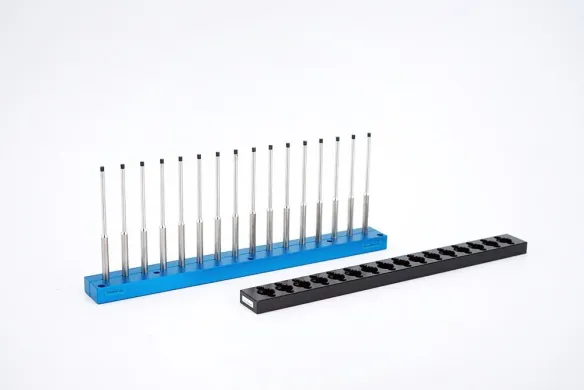
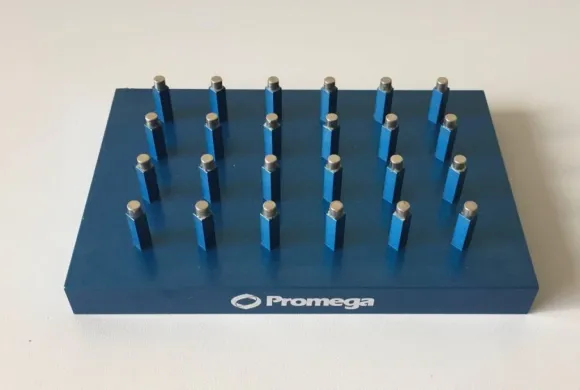
The terms are used interchangeably for replacement components such as magnetic rods, plates, and consumable hardware fittings. Both can be sourced via Questpair when you name the model and the component.
Do Promega instruments ship internationally?
Promega equipment on Questpair is listed by verified suppliers and distributors across 5 countries, so cross-border shipping within that network is possible. Shipping arrangements are set by the individual seller for the specific listing.
Which product lines does Promega make and how do they differ?
On the hardware side, the Maxwell and Maxprep lines automate DNA and RNA extraction, while the GloMax line handles bioluminescence imaging and plate-based luminescence measurement. The reagent side includes NanoLuc and NanoBRET for reporter and protein interaction work, HaloTag for protein labeling, GoTaq for PCR and qPCR, Wizard and ReliaPrep for purification chemistry, CellTiter-Glo for cell viability, and PowerPlex for forensic STR genotyping.
Which types of Promega instruments are listed on Questpair and in what condition?
The catalogue covers automated nucleic acid purification systems, magnetic particle processors, microplate readers, fluorescence plate readers, luminescence plate readers, and molecular biology automation equipment. Condition is weighted toward pre-owned stock, with 98 percent of the listings used.
What separates the cheapest Promega listings from the most expensive?
The lower end of the range is occupied by smaller detection and imaging units, while the higher end reflects the larger automated extraction platforms that handle full sample preparation. Condition also plays a part, since used and refurbished units are listed below new ones, and the whole catalogue runs from EUR 89 to EUR 17.836.
About Questpair
Questpair is the European marketplace for lab equipment, where AI-prepared cases and personal specialists guide every purchase. We work with 247 verified suppliers across 38 countries to find buyers the right new, used or refurbished instruments, with response within 1 hour and significant savings vs buying new.
Personal · Fast · Reliable · Affordable