
Chroma Technology equipment
We personally find you the right new, used & refurbished Chroma Technology instruments & equipment from verified suppliers
Chroma Technology Corp. is an American precision optical filter and optical coating manufacturer for life science instrumentation and biophotonics, founded in Brattleboro, Vermont, in May 1991 by six individuals as a 100 percent employee-owned company. The maker designs and produces optical interference filters, dichroic beamsplitters, reflective mirrors, and complete fluorescence filter sets for microscopy and scientific applications. Product lines run from the ET Series sputtered single-band sets through FISH, TIRF, FRET, and Raman configurations, alongside custom and OEM work. On Questpair, 56 Chroma items are available from 4 verified suppliers and distributors across 3 countries.
Updated:
Chroma Technology product list


Not the exact instrument you need?
Tell our scientists what you are after. We track it down, including off-market supply.
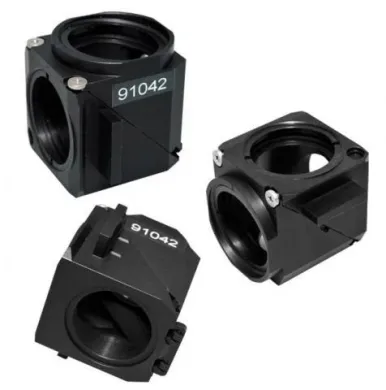
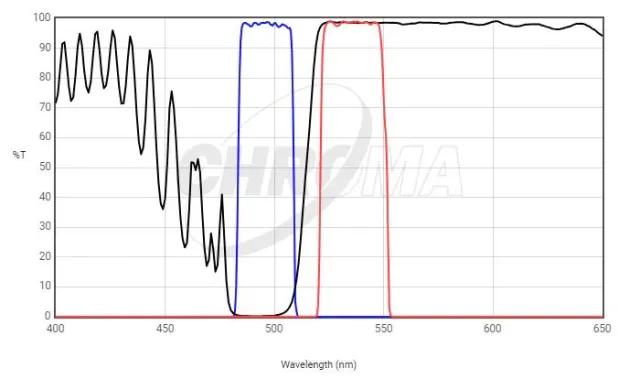
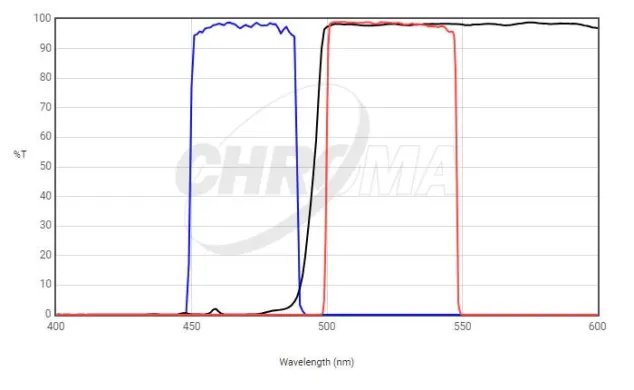
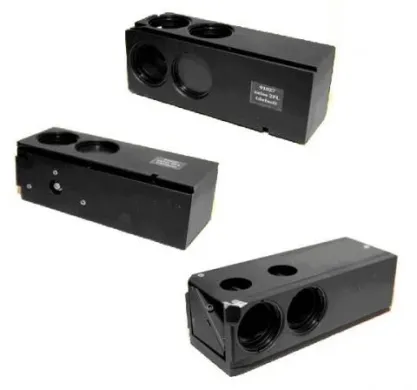
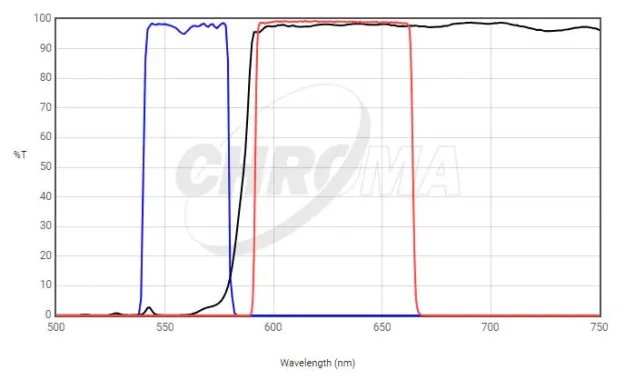
Not the exact instrument you need?
Tell our scientists what you are after. We track it down, including off-market supply.
Showing 1–40 of 60 listings
Show 20 more listingsAbout Chroma Technology
Chroma Technology Corp. is an American manufacturer of precision optical filters and optical coatings for life science instrumentation and biophotonics. The company was founded in Brattleboro, Vermont, in May 1991 by six individuals and is organised as a 100 percent employee-owned business. It is headquartered in Bellows Falls, Vermont, and as of 2026 it has no parent company and remains independent. Its output centres on optical interference filters, including bandpass, longpass, shortpass, notch rejection, and neutral density types, together with dichroic beamsplitters and reflective mirrors. These components are assembled into complete fluorescence filter sets, and the company also produces Raman and UV-VIS-NIR filters. Much of this optics work supports fluorescence microscopy, the technique at the core of modern cell imaging, where a filter set selects the excitation band, reflects it onto the sample, and passes only the emitted signal back to the detector. That same class of optics underpins work across molecular biology and genomics, from fluorescence in situ hybridisation in cytogenetics to the multi-colour imaging used in cell culture and live-cell studies.
Chroma filter series and product lines
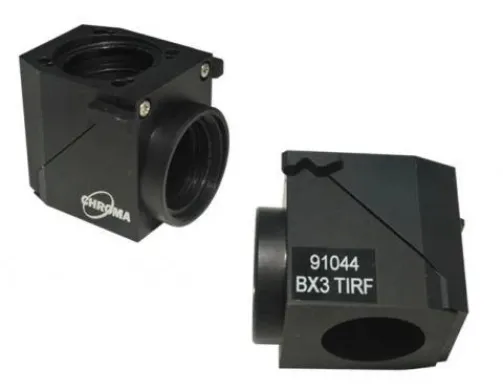
The catalogue is organised into named series, each tied to a construction method or an application. The ET Series, numbered in the 49000 range, consists of sputtered single-band filter sets built for demanding fluorescence work, where steep spectral edges and high transmission separate weak signals from background. The AT Series, the 39000 range, covers general-purpose filter sets for routine configurations. FISH filter sets sit in the 49300 Series and are configured for fluorescence in situ hybridisation, a core technique in molecular diagnostics and cytogenetic analysis. Dedicated TIRF sets serve total internal reflection fluorescence microscopy, used in single-molecule studies and membrane imaging. FRET sets support Förster resonance energy transfer measurements, which report on protein interactions and conformational change in molecular biology. Raman filter sets serve Raman spectroscopy, and the brightfield sets in the 33000 Series address non-fluorescent transmitted-light imaging and histology. Beyond the standard catalogue, the company produces custom and OEM filters, which are designed to a customer's spectral specification and often integrated directly into an instrument. For a buyer, the series number on a listing is the first piece of information: it signals the coating generation, the performance class, and the technique the set was built around, before any individual wavelength is checked.
Chroma optics on Questpair
On Questpair, 56 Chroma items are listed by 4 verified suppliers and distributors across 3 countries. The condition profile leans heavily toward the secondary market: 96 percent of the listings are used. Prices run from EUR 18 to EUR 10.652. The average listing price is EUR 943. That range reflects the variety of what appears under this brand, from a single filter or beamsplitter at the low end to a complete mounted multi-band set at the high end. Because Chroma optics are identified by series and part number, matching a listing to an existing instrument is a matter of confirming the specific set, and a wider distribution of suppliers improves the odds that a particular ET, AT, or FISH configuration is present. Where documentation for a specific part is needed, that can be requested through Questpair, and specialists respond within one hour. Parts can be sourced via Questpair as well. For a used optic, condition is a listing-level question rather than a brand-level one, and a warranty is often possible, arranged in consultation for the specific listing. Used and refurbished items are listed at lower prices than new ones, which is the practical reason the secondary market dominates this particular catalogue.
Questpair review of Chroma Technology
Our take based on listings data and supplier feedback
Chroma occupies a narrow, well-defined position in the instrumentation supply chain: it makes the spectral components that sit inside a fluorescence microscope rather than the microscope itself. That focus shapes what a buyer finds when evaluating the listed optics, and the three benefits above each reflect a different aspect of that focus.
The first is the mapping between a filter set and a named technique. Chroma does not sell its optics purely as bandpass or longpass components defined by edge wavelengths; it configures them as sets matched to a method. The FISH filter sets in the 49300 Series are built for fluorescence in situ hybridisation, where several fluorophores are imaged in sequence and crosstalk between channels has to be suppressed. The TIRF sets serve total internal reflection work, the FRET sets serve resonance energy transfer measurements, and the Raman sets serve Raman spectroscopy. For a buyer, this means a listing identified as a FISH or FRET set already carries information about the excitation and emission bands it was designed around, which narrows the matching problem to the instrument and the dyes in use. Molecular diagnostics and genomics labs running cytogenetic assays, and cell imaging groups doing live-cell microscopy, both lean on exactly this kind of method-specific optics.
The second benefit concerns construction. The ET Series, the 49000 Series, uses sputtered single-band coatings, which Chroma describes as hard-coated and specifies for steep transition slopes and high in-band transmission. In practice that construction is what separates a filter intended for weak-signal fluorescence from a general-purpose one. The AT Series, the 39000 Series, and the brightfield sets in the 33000 Series address less demanding or non-fluorescent applications. When a listing names its series, that series number tells a buyer which coating generation and which performance class they are looking at, rather than leaving spectroscopy performance to be inferred.
The third benefit is about the catalogue itself. These are secondary-market optics, and the condition split is pronounced: 96 percent of the listings are used. Prices run from EUR 18 to EUR 10.652. That spread reflects the difference between an individual filter or a single beamsplitter at the low end and a complete, mounted multi-band set at the high end. The supply is distributed across 4 verified suppliers and distributors in 3 countries, which matters for a buyer trying to match a specific part number: a wider supplier base raises the chance that a particular ET or FISH set appears at all. The average sits at EUR 943.
What this review does not resolve, because the data does not carry it, is the exact condition of any single optic. Interference filters age, and coatings can degrade with handling and exposure, so condition for a used filter is a listing-level question rather than a brand-level one. Where a buyer needs to confirm that, the individual listing is the reference point, and warranty on a specific unit is arranged in consultation. The brand-level picture is clear: a filter maker with a tight catalogue organised by technique and series, available here largely on the used market.
**Filters built for named fluorescence techniques**
Chroma manufactures dedicated filter sets for FISH, TIRF, FRET, and Raman, so the listed optics map directly to a specific imaging method rather than to a generic wavelength range.
**Sputtered coatings across the ET Series**
The 49000 Series uses hard-coated sputtered single-band construction, which Chroma specifies for steep spectral edges and high transmission in demanding fluorescence work.
**A used-dominated catalogue across suppliers**
On Questpair, 96 percent of the listings are used, drawn from 4 verified suppliers and distributors in 3 countries.
Frequently asked questions
Where can I find manuals or spectral data for a Chroma filter set?
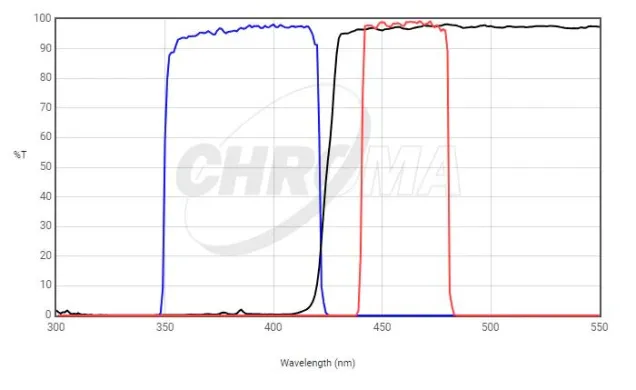
Documentation for a specific Chroma part can be requested through Questpair, and specialists respond within one hour. Because Chroma optics are identified by series and part number, naming the exact set helps locate the correct spectral specification.
How much does a Chroma filter cost?
On Questpair, prices range from EUR 18 to EUR 10.652, with an average of EUR 943. A single filter or beamsplitter sits at the low end, while a complete mounted multi-band set sits at the high end.
What is the difference between refurbished and used Chroma optics?
Both are secondary-market items, and condition is described at the level of the individual listing rather than across the brand. Used and refurbished items are listed at lower prices than new ones, so checking the specific listing for its stated condition is the practical step.
Is there a warranty on Chroma filters bought here?
A warranty is often possible and is arranged in consultation for the specific listing. Terms are not set centrally, so they depend on the individual item and supplier.
Are Chroma filter sets suitable for clinical and research use?
Chroma produces optics for life science instrumentation and biophotonics, including FISH sets used in cytogenetic analysis and molecular diagnostics, and ET and FRET sets used in molecular biology and live-cell studies. Whether a given listing fits a particular application depends on confirming the series and the specific wavelengths against your instrument.
How long do Chroma optical filters last?
Interference filters and coatings have no moving parts, so longevity depends on handling, storage, and exposure to high light intensities rather than on a fixed service interval. On a used item, condition is a listing-level question, and inspecting the coating and mount matters more than age alone.
Can I get individual parts or replacement filters?
Individual filters, beamsplitters, and other parts can be sourced via Questpair, and many listings are single components rather than complete sets. Confirming the series and part number against your existing set is the way to match a replacement.
What are the alternatives to Chroma filter sets?
Alternatives exist among other optical filter and coating manufacturers, and the right one depends on the technique and the instrument the set feeds. The practical comparison is the spectral specification: excitation band, emission band, dichroic edge, and transmission, matched to the detector and light source rather than to a brand name.
How soon can I get a Chroma filter after ordering?
Lead time depends on the individual listing and supplier, since stock and location vary across 4 verified suppliers and distributors in 3 countries. A specific delivery estimate can be confirmed through Questpair for the listing you are considering.
What is the difference between a part and a spare for Chroma optics?
In this catalogue the terms overlap: a single filter, beamsplitter, or mirror can serve as a working component or as a replacement for a damaged one in an existing set. Both are matched by series and part number, so the distinction is about how you intend to use the item rather than a different product.
Do suppliers ship Chroma filters internationally?
Chroma items are listed by verified suppliers and distributors across 3 countries, so cross-border shipping is available depending on the supplier. Shipping arrangements are confirmed per listing through Questpair.
What product lines does Chroma make and how do they differ?
The catalogue is organised by named series: the ET Series (49000) uses sputtered single-band construction for demanding fluorescence work, the AT Series (39000) covers general-purpose configurations, FISH sets (49300) target fluorescence in situ hybridisation, and the brightfield sets (33000) address transmitted-light imaging. Dedicated TIRF, FRET, and Raman sets serve their named techniques, and custom or OEM filters are built to a specific spectral specification. The series number signals coating generation, performance class, and the technique the set was built around.
Which Chroma products are actually listed here and in what condition?
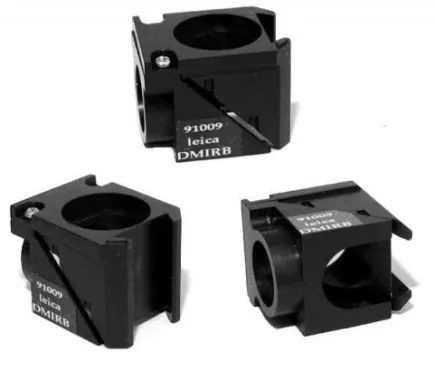
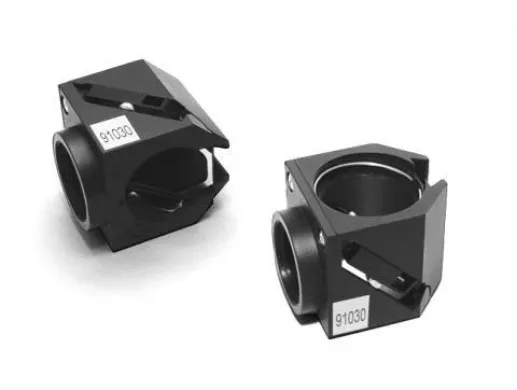
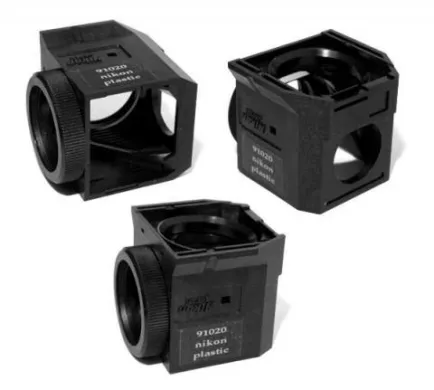
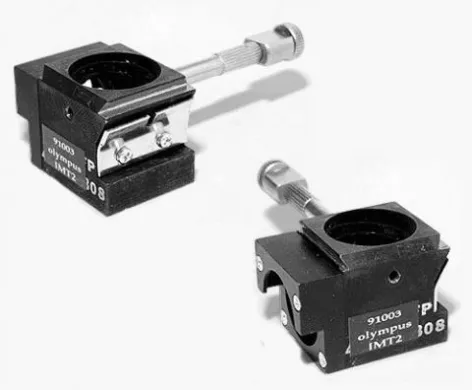
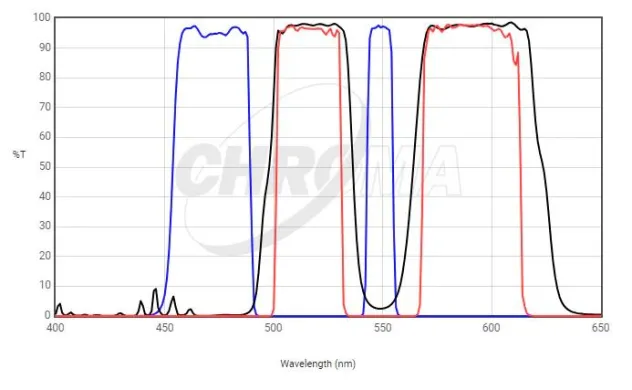
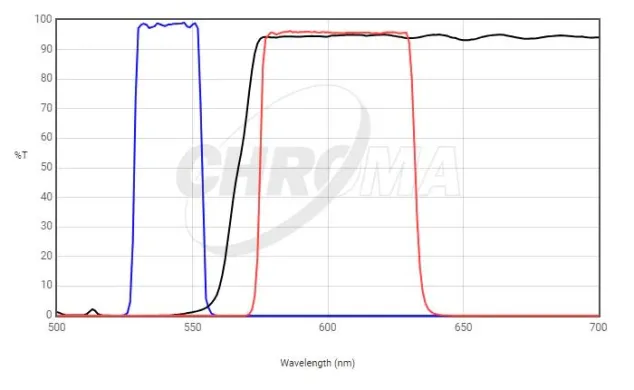
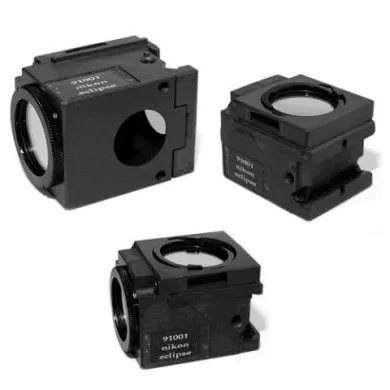
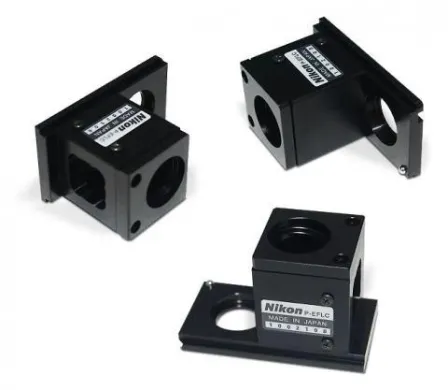
The items on Questpair include fluorescence filter sets, microscope filter holders, emission filters, excitation filters, fluorescence filters, and interference filters. The condition profile leans toward the secondary market, with 96 percent of listings used, and the exact state is described on each individual listing.
Why are some Chroma listings so much cheaper than others?
The spread from EUR 18 to EUR 10.652 tracks what the listing contains: a single filter or beamsplitter sits at the low end, while a complete mounted multi-band set sits at the high end. Condition also plays a part, since used and refurbished items are listed at lower prices than new ones.
About Questpair
Questpair is the European marketplace for lab equipment, where AI-prepared cases and personal specialists guide every purchase. We work with 247 verified suppliers across 38 countries to find buyers the right new, used or refurbished instruments, with response within 1 hour and significant savings vs buying new.
Personal · Fast · Reliable · Affordable