
Andor equipment
We personally find you the right new, used & refurbished Andor instruments & equipment from verified suppliers
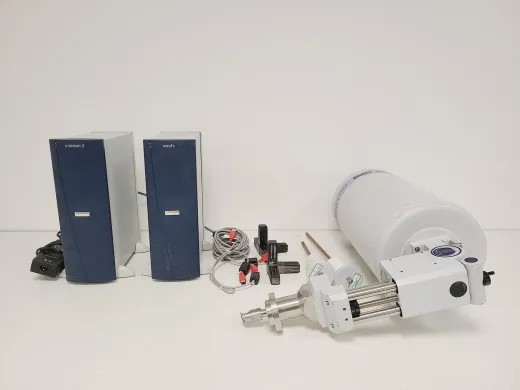
Andor is a British scientific imaging equipment manufacturer that designs cameras, spectrographs and microscopy systems for low-light and high-speed detection. The company was spun out of the Physics Department at Queen's University Belfast in 1989 by Dr. Hugh Cormican, Dr. Donal Denvir and Mike Pringle, and has been part of Oxford Instruments since December 2013. Its product families include the iXon EMCCD and Zyla sCMOS camera series, the Shamrock and Kymera spectrographs, and the Dragonfly confocal system. On Questpair, 60 used Andor items are available from 9 verified suppliers and distributors across 5 countries.
Updated:
Andor product list


Not the exact instrument you need?
Tell our scientists what you are after. We track it down, including off-market supply.
About Andor
Andor is a British scientific imaging equipment manufacturer based in Belfast, Northern Ireland. It was spun out of the Physics Department at Queen's University Belfast in 1989 by Dr. Hugh Cormican, Dr. Donal Denvir and Mike Pringle, originally to commercialise advanced digital camera technology for scientific use. Since December 2013 the company has been part of Oxford Instruments. Its work centres on scientific cameras, spectroscopy solutions, spectrographs and microscopy systems, with a consistent emphasis on detecting faint or fast-changing light. The product range runs from single detector cameras to complete confocal imaging platforms. On Questpair, used Andor equipment is listed by verified suppliers and distributors across several countries.
Andor camera and spectrograph product lines
Andor's cameras split along the sensor technology they use. The iXon EMCCD series applies electron multiplication for low-light detection, while the Zyla sCMOS series is built around scientific CMOS sensors for speed and wide fields of view. The iKon large CCD series and the Newton CCD and EMCCD cameras cover larger-format detection, and the iDus line is purpose-built for spectroscopy. On the spectrograph side, the Shamrock and Kymera families provide the dispersing optics that pair with these detector cameras. The Dragonfly confocal microscopy system sits at the other end of the range as a complete imaging instrument.
These are the instruments at the heart of several life sciences techniques. The Dragonfly platform and the sCMOS cameras do cell imaging and live-cell microscopy, recording fast biological events in fluorescently labelled cells where frame rate matters as much as sensitivity. Electron-multiplying cameras such as the iXon are the detectors behind single-molecule fluorescence imaging, a method in molecular biology that watches individual labelled molecules rather than a population average. The spectroscopy cameras and the Shamrock and Kymera spectrographs serve Raman spectroscopy and fluorescence spectroscopy, techniques used in molecular diagnostics and in protein and small-molecule characterisation. Scientific CMOS imaging is also used for high-content screening, where large numbers of cell samples are imaged and analysed in genomics and proteomics workflows. Confocal fluorescence microscopy and single-molecule detection are the long-running applications for this class of detector, and they are the ones that recur across the published literature in which Andor cameras appear.
Used Andor equipment on Questpair
The Questpair catalogue for Andor is entirely used stock. 100 percent of the listings are used, so every item is offered below the price of its new equivalent. Prices run from EUR 71 to EUR 13.377, a wide band that reflects the gap between a compact spectroscopy detector and a full imaging system. The average listing price sits at EUR 3.076. The stock comes from 9 verified suppliers and distributors spread across 5 countries, with 60 items listed in total.
Because the supplier base is modest, the mix of available product families changes over time rather than staying fixed, so the catalogue is best read as a current snapshot. A buyer who knows which detector architecture the work calls for, EMCCD for photon-starved detection, sCMOS for speed and field of view, or a spectroscopy camera paired with a Shamrock or Kymera spectrograph, will navigate the listings faster than one browsing by brand alone. Where a listing raises a question about a specific configuration, parts can be sourced via Questpair, and a warranty is often possible and arranged in consultation for that particular unit. Specialists respond to documentation and manual requests within the hour.
Questpair review of Andor
Our take based on listings data and supplier feedback
Andor equipment occupies a specific niche: detection where photons are scarce, timing is tight, or both. The three strengths that matter on a marketplace listing follow from that focus, and the Questpair catalogue reflects it in the mix of items on offer.
The first is the breadth of detector architecture. Andor does not build a single sensor and badge it for every field. The iXon series uses electron-multiplying CCD technology, which amplifies signal before readout and suits single-molecule work and other photon-starved applications. The Zyla line uses scientific CMOS sensors, built for frame rate and field of view rather than extreme sensitivity. The iKon and Newton families cover large-format CCD and EMCCD detection, and the iDus cameras are built for spectroscopy. A lab choosing from the listed stock is therefore choosing an architecture to fit a measurement, not forcing one sensor across unrelated experiments. That distinction is why the same maker appears in astronomy, in Raman spectroscopy and in live-cell microscopy.
The second strength is that spectroscopy and microscopy sit under the same roof. The Shamrock and Kymera spectrographs are designed to pair with Andor's own detector cameras, and the Dragonfly confocal platform is a complete imaging system rather than a component. For a buyer, sourcing a spectrograph and its detector from one manufacturer removes a set of coupling and software questions that arise when parts come from different makers. The Questpair catalogue carries items across these families, so the single-maker route is available on the used market as well as new.
The third point is condition and price, and here the data is unambiguous. 100 percent of the listings are used. There is no new Andor stock in the current catalogue, which means every unit is priced below its new-market equivalent. Prices run from EUR 71 to EUR 13.377. That spread is wide because the catalogue holds both small spectroscopy detectors and complete imaging systems, and the average sits at EUR 3.076. A buyer weighing a used Andor camera against a new one is weighing a lower price against the usual used-market considerations; warranty on any given unit is arranged in consultation for that specific listing rather than set centrally.
What the catalogue does not tell you is as worth noting as what it does. The listed stock is drawn from 9 verified suppliers and distributors across 5 countries, which is a modest supplier base, so availability of any one product family will vary over time. A buyer after a specific iXon model or a particular Shamrock configuration should treat the catalogue as a snapshot rather than a standing inventory. For spectroscopy detectors at the lower price end, turnover tends to be quicker; for complete systems such as Dragonfly, listings are rarer and move slowly. The practical reading is that Andor on the used market rewards a buyer who knows which detector architecture the work needs before browsing, because the range is broad enough that an unfocused search returns instruments built for quite different problems.
**Imaging depth across detector types**
Andor's listed range spans EMCCD, sCMOS and CCD detector families, so a buyer can match camera architecture to an experiment rather than retrofit one sensor to every job.
**Spectroscopy and microscopy in one maker**
The catalogue carries both Shamrock and Kymera spectrographs and the Dragonfly confocal platform, which lets a lab source detector, spectrograph and imaging system from a single manufacturer.
**Used stock below new pricing**
Every Andor listing on Questpair is a used unit, priced below the equivalent new instrument, with 60 items drawn from 9 verified suppliers and distributors.
Frequently asked questions
Where can I find manuals and documentation for Andor cameras and spectrographs?
You can request documentation and manuals through Questpair, and specialists respond within an hour. Tell them the exact model and configuration so the material matches the unit you are looking at.
How much does used Andor equipment cost?
On Questpair, used Andor listings range from EUR 71 to EUR 13.377, with an average of EUR 3.076. The spread reflects the difference between a compact spectroscopy detector and a complete confocal imaging system.
What's the difference between refurbished and used Andor units?
Both refurbished and used Andor units are listed below the price of a new equivalent, which is the clear distinction when comparing them. Check the individual listing for the stated condition of that specific unit.
Is there a warranty on used Andor equipment?
A warranty is often possible and is arranged in consultation for the specific listing. Terms depend on the individual unit rather than a fixed policy.
Are Andor cameras suitable for clinical and research use?
Andor builds scientific cameras, spectrographs and microscopy systems for low-light and high-speed detection, used in single-molecule fluorescence imaging, live-cell microscopy, Raman and fluorescence spectroscopy, and high-content screening. Those applications sit in molecular biology, molecular diagnostics and genomics or proteomics workflows.
How long does Andor imaging equipment last?
Scientific cameras and spectrographs can remain in service for many years when maintained, which is why used units continue to circulate. Sensor cooling, shutter cycles and intended use affect how long a given unit stays viable, so condition matters more than age alone.
Can I get parts for Andor cameras and spectrographs?
Parts can be sourced via Questpair. Name the model and the component when you enquire so the right part is identified for your unit.
What are the alternatives to Andor scientific cameras?
Alternatives depend on which detector architecture your work needs: EMCCD for photon-starved detection, sCMOS for speed and wide field of view, or a spectroscopy camera paired with a spectrograph. Other scientific imaging makers offer comparable sensor classes, so match the technology to the technique before comparing brands.
How long does delivery take for Andor equipment?
Lead time depends on the supplier and the specific unit, since stock comes from 9 verified suppliers and distributors across 5 countries. The listing or the supplier can confirm availability for the item you want.
What's the difference between parts and spares when sourcing for Andor cameras?
In practice the two terms describe the same thing: individual components sourced to repair or complete a unit. Both can be sourced via Questpair when you specify the model and the component needed.
Can Andor equipment be shipped internationally?
The suppliers and distributors listed span 5 countries, so cross-border shipping is common. Confirm shipping arrangements and destinations with the supplier for the specific listing.
Which Andor product lines exist and how do they differ?
Andor cameras divide by sensor technology: the iXon EMCCD series uses electron multiplication for low-light work, the Zyla sCMOS series is built for speed and wide fields of view, while the iKon large CCD and Newton CCD and EMCCD lines cover larger formats and the iDus line is purpose-built for spectroscopy. The Shamrock and Kymera spectrographs provide the dispersing optics that pair with those detectors, and the Dragonfly confocal microscopy system is a complete imaging instrument.
Which Andor instruments are actually listed here and in what condition?
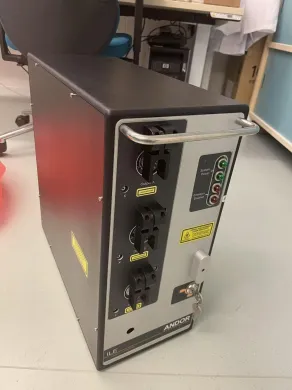
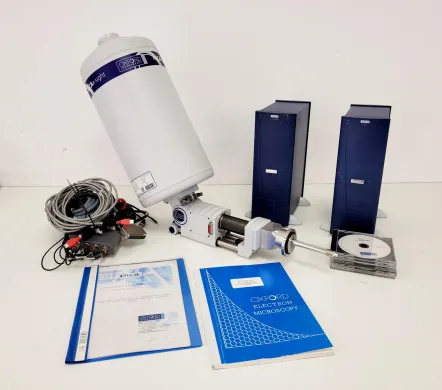
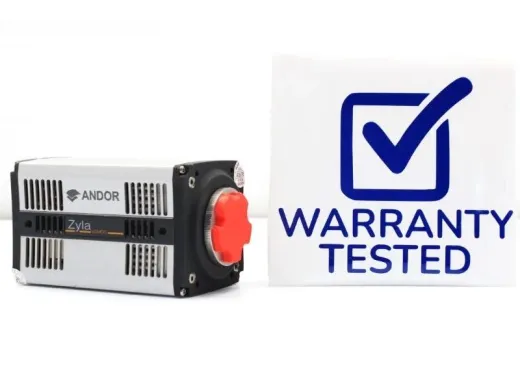
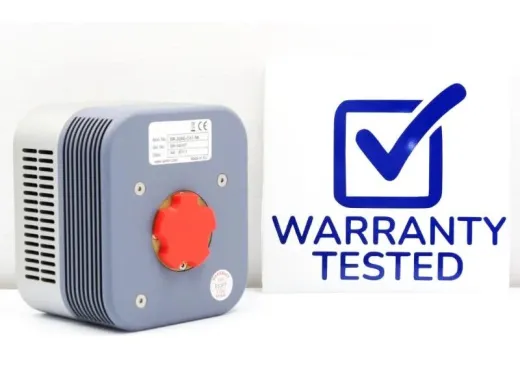
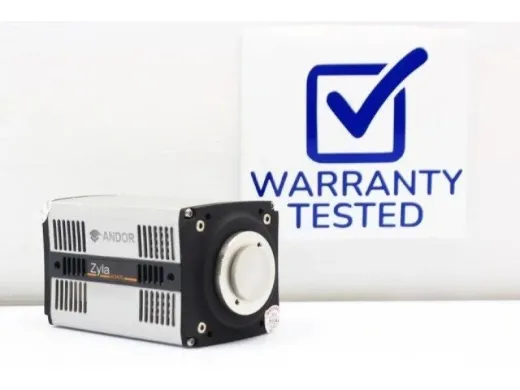
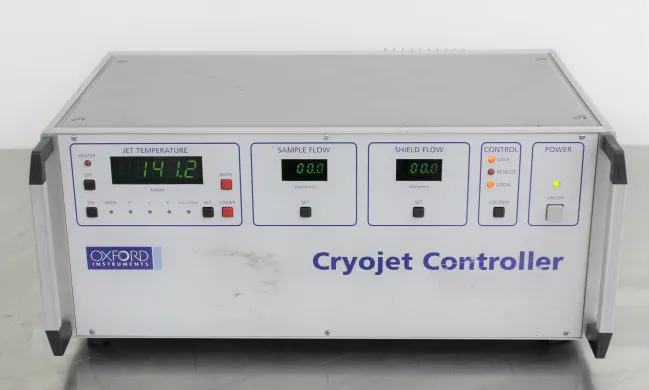
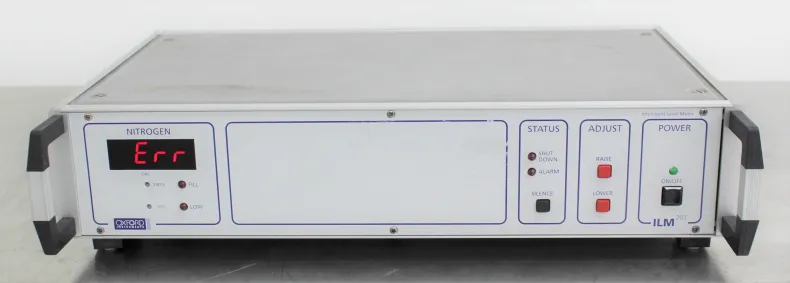
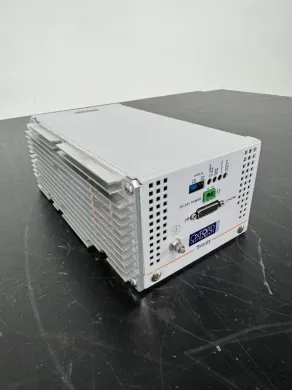
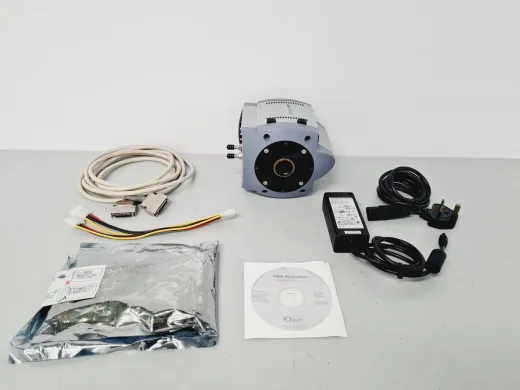
The Questpair catalogue holds 60 Andor items, and 100 percent are used, so every item is offered below its new price. Listed types include fluorescence imaging cameras, scientific imaging cameras, live cell imaging cameras, fluorescence microscopy cameras, monochrome CCD microscope cameras and power amplifiers; because the supplier base is modest, the mix shifts over time.
What separates the cheapest Andor listings from the most expensive ones?
The low end of the range, near EUR 71, is typically a compact single detector such as a spectroscopy camera, while the high end toward EUR 13.377 is a complete imaging platform like the Dragonfly confocal system. Detector format, sensor technology and whether a listing is a standalone camera or a full system drive the gap.
About Questpair
Questpair is the European marketplace for lab equipment, where AI-prepared cases and personal specialists guide every purchase. We work with 247 verified suppliers across 38 countries to find buyers the right new, used or refurbished instruments, with response within 1 hour and significant savings vs buying new.
Personal · Fast · Reliable · Affordable