Sold
Our specialists can find you another one, the same model or a close equivalent, and send you a quote.
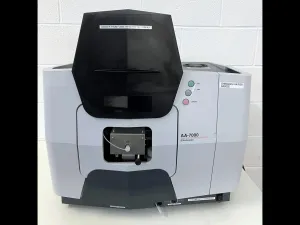
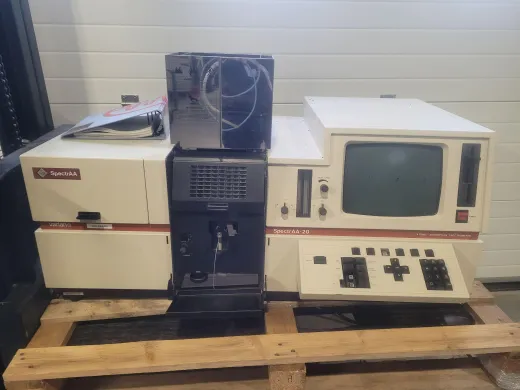
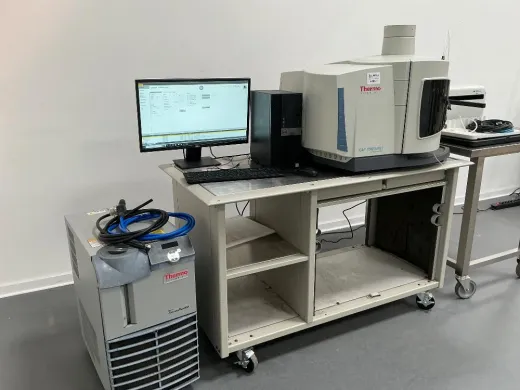
Atomic absorption spectrometer with 185–900 nm range, 3D double-beam optics, and multi-lamp turret for metal analysis.
The Shimadzu AA-7000 Atomic Absorption Spectrometer utilizes advanced *3D double-beam optics* to enable precise measurement of metal element concentrations across a wide wavelength range of 185 to 900 nm, covering ultraviolet, visible, and near-infrared spectra. Featuring a 6-lamp turret with simultaneous dual-lamp operation—one lamp for measurement and one warming up—this design enhances throughput in analytical workflows.
The spectrometer includes a photomultiplier tube detector and multiple selectable bandwidth settings (0.2, 0.7, 1.3, and 2.0 nm) to optimize sensitivity and resolution depending on sample requirements. Safety mechanisms such as a vibration sensor and gas leak detector ensure reliable operation under varying laboratory conditions.
Measuring approximately 63 x 71 x 72 cm, the AA-7000 comes supplied with an assortment of cathode lamps, making it suitable for diverse elemental analysis applications. This instrument is widely used in environmental monitoring, pharmaceutical quality control, food safety testing, and molecular diagnostics, emphasizing its role in biotechnology research including bioprocessing and biomanufacturing pipelines where trace metal quantification is critical.
Key features critical for molecular biology researchers and clinical diagnostics professionals include:
This atomic absorption spectrometer is essential for laboratories requiring reliable, high-sensitivity metal quantification, supporting workflows in gene editing and synthetic biology where elemental purity impacts experimental outcomes.
Lab equipment markets are fragmented. Buyers spend weeks calling distributors, comparing quotes, and verifying supplier reliability. Sellers struggle to reach global research labs.
We built Questpair to fix this. Every supplier on the platform is verified before listing. Every quote you receive comes from a real, vetted seller. AI prepares your case in minutes, then a real specialist takes over.
We're an independent team based in The Netherlands, working with research labs and procurement teams across Europe and worldwide.
With a service contract, ten to fifteen years is normal for most benchtop instruments. Detectors and pumps are the parts that wear first.
Often, yes. Verified suppliers frequently work with service partners converting the instrument. If applicable, we can list servicing options alongside the offer.
Ask a scientist through the request button. Parts are often available even when the instrument itself is discontinued.
Two to six weeks, depending on refurbishment scope and whether calibration is included.
We ship to 38 countries. Crating and customs handling are quoted with the instrument.
Tell us what you need and a scientist finds it for you, usually within the hour.
Last updated 4 September 2026