From€15,000excl. VAT
In stock
Can't find what you're looking for?
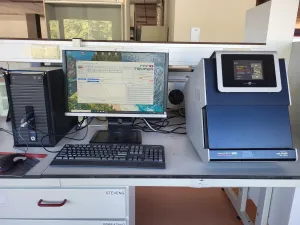
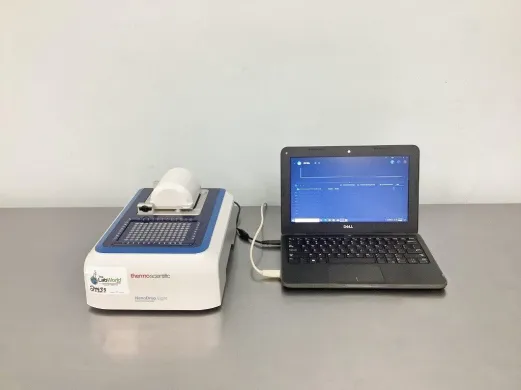
NanoTemper Monolith NT.115 Pico MicroScale Thermophoresis System for red fluorescence binding analysis with PC, software and capillary trays.
The NanoTemper Monolith NT.115 Pico MicroScale Thermophoresis system is an MST instrument for biomolecular interaction analysis in solution. It measures binding events in glass capillaries without surface immobilization. Applications include protein interactions, small molecule binding, antibody and antigen studies, nucleic acid interactions, enzyme assays, buffer screening and biophysical assay development.
The system includes a Windows 10 PC with NanoTemper NTControl V2.1.31 for instrument control and measurement acquisition. MO.Affinity Analysis software evaluates MST data, generates binding curves and determines binding affinities. Two NT.115 capillary trays, NT.115 capillaries, labeling reagents, BSA, Tween-20, MST buffer and control buffers are included. The capillary trays support the instrument's capillary-based measurement format.
The unit is used and was manufactured in March 2014. An external 12 V DC power supply is required.
This used MicroScale Thermophoresis system performs sensitive analysis of biomolecular interactions in solution. MST measurements take place in glass capillaries and do not require surface immobilization.
The NT.115 Pico uses red fluorescence detection for labels such as NT-647, Alexa Fluor 647, Cy5 and compatible dyes. This configuration supports binding measurements where the interaction is tracked through a fluorescently labeled molecule.
The instrument measures up to 16 capillaries per run, with approximately 4 to 5 µL of sample per capillary. The stated affinity range extends from pM to mM, depending on the assay, sample and fluorophore. Temperature control from approximately 22 to 45 degrees C supports measurements across different assay conditions.
Lab equipment markets are fragmented. Buyers spend weeks calling distributors, comparing quotes, and verifying supplier reliability. Sellers struggle to reach global research labs.
We built Questpair to fix this. Every supplier on the platform is verified before listing. Every quote you receive comes from a real, vetted seller. AI prepares your case in minutes, then a real specialist takes over.
We're an independent team based in The Netherlands, working with research labs and procurement teams across Europe and worldwide.
With a service contract, ten to fifteen years is normal for most benchtop instruments. Detectors and pumps are the parts that wear first.
Often, yes. Verified suppliers frequently work with service partners converting the instrument. If applicable, we can list servicing options alongside the offer.
Ask a scientist through the request button. Parts are often available even when the instrument itself is discontinued.
Two to six weeks, depending on refurbishment scope and whether calibration is included.
We ship to 38 countries. Crating and customs handling are quoted with the instrument.
Tell us what you need and a scientist finds it for you, usually within the hour.
Last updated 6 November 2026
€15,000 sits above most optical detectors here. The middle half of the 400 with a price runs from €284 to €5,167.