Price on request
In stock
Can't find what you're looking for?
Pre-Owned
Multimode microplate reader for absorbance, fluorescence, and luminescence assays with automated plate handling.
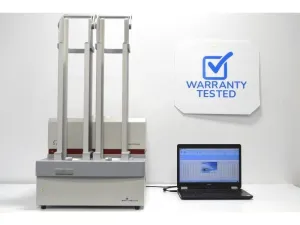
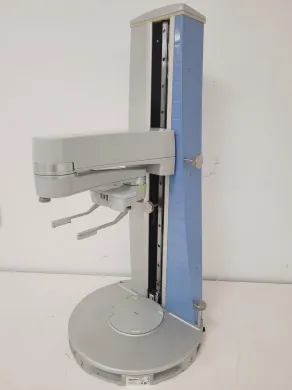
The BMG Labtech FLUOstar Omega is a multimode microplate reader configured for absorbance, fluorescence intensity, and luminescence measurements. Its top- and bottom-reading optics support diverse assay formats used in high-throughput screening, drug discovery, biotechnology, molecular biology, and clinical research.
Installed fluorescence filters include emission filters at 460 nm, 520 nm, 590–10 nm, and 620–10 nm, along with excitation filters at 355 nm, 485–12 nm, 544 nm, 560–10 nm, and 584 nm.
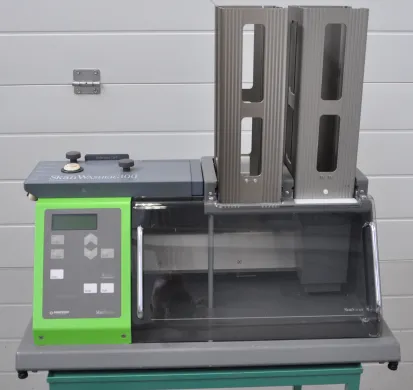
The system includes a BMG Labtech Stacker III with two microplate carriers for automated handling and unattended processing of multiple plates. It supports all microplate formats up to 384-well and is suitable for endpoint and kinetic measurements.
The included computer and software support instrument control and data acquisition. Testing confirmed power-on operation, system initialization, software communication, plate carrier movement, Stacker III positioning, incubation performance, fluorescence, time-resolved fluorescence, luminescence, absorbance, and injector functionality.
This pre-owned multimode microplate reader is suited to fluorescence-based assays, ELISA, luminescence reporter assays, cell viability and cytotoxicity studies, kinetic enzyme analysis, nucleic acid and protein quantification, molecular diagnostics, and biopharmaceutical research workflows.
Lab equipment markets are fragmented. Buyers spend weeks calling distributors, comparing quotes, and verifying supplier reliability. Sellers struggle to reach global research labs.
We built Questpair to fix this. Every supplier on the platform is verified before listing. Every quote you receive comes from a real, vetted seller. AI prepares your case in minutes, then a real specialist takes over.
We're an independent team based in The Netherlands, working with research labs and procurement teams across Europe and worldwide.
With a service contract, ten to fifteen years is normal for most benchtop instruments. Detectors and pumps are the parts that wear first.
Often, yes. Verified suppliers frequently work with service partners converting the instrument. If applicable, we can list servicing options alongside the offer.
Ask a scientist through the request button. Parts are often available even when the instrument itself is discontinued.
Two to six weeks, depending on refurbishment scope and whether calibration is included.
We ship to 38 countries. Crating and customs handling are quoted with the instrument.
Tell us what you need and a scientist finds it for you, usually within the hour.
Last updated 6 November 2026
The middle half of the 78 with a price runs from €539 to €2,919.
8 other listings of this model are available.