
BMG Labtech equipment
We personally find you the right new, used & refurbished BMG Labtech instruments & equipment from verified suppliers
BMG LABTECH is a German manufacturer of life science microplate reader instruments, founded by physicist Dr. Bela Gurath in Offenburg, Germany, as a small engineering office working on microplate reading and handling components. The company is privately owned and now operates from Ortenberg, Germany. Its product range covers fluorescence readers, luminescence readers, absorbance readers, multi-mode readers and nephelometers, with named lines including the CLARIOstar, PHERAstar FSX, NEPHELOstar Plus and the Omega series. On Questpair, 95 used BMG LABTECH instruments are listed by verified suppliers and distributors across 6 countries.
Updated:
BMG Labtech product list
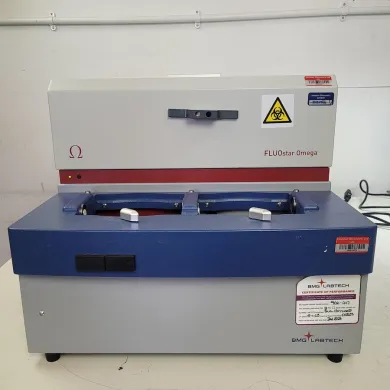
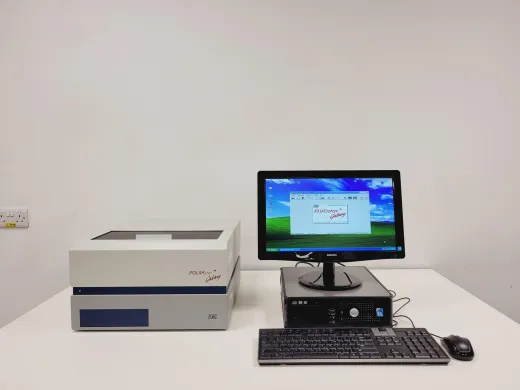
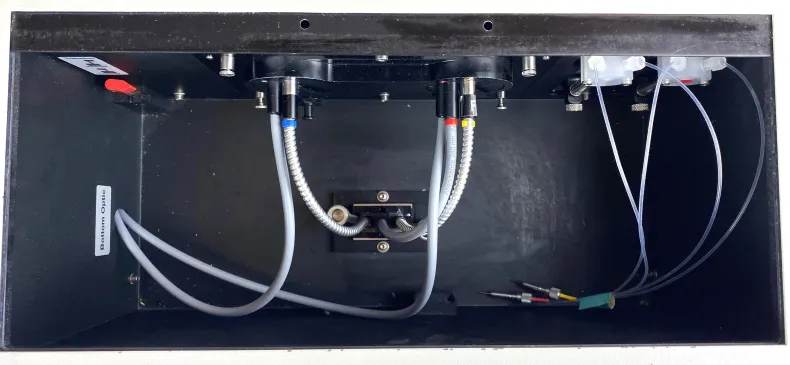
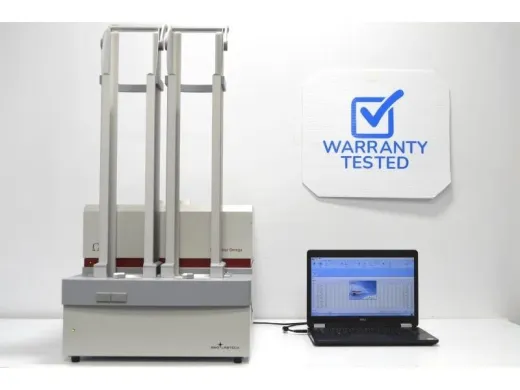


Not the exact instrument you need?
Tell our scientists what you are after. We track it down, including off-market supply.
Not the exact instrument you need?
Tell our scientists what you are after. We track it down, including off-market supply.
Showing 1–40 of 86 listings
Show 40 more listingsAbout BMG Labtech
BMG LABTECH is a German manufacturer of life science microplate reader instruments. The company was founded by physicist Dr. Bela Gurath in Offenburg, Germany, initially as a small engineering office focused on microplate reading and handling components. It is privately owned, with no parent company, and is based in Ortenberg, Germany. Its primary categories are microplate readers, fluorescence readers, luminescence readers, absorbance readers, multi-mode readers and nephelometers. Named product lines include the CLARIOstar, the PHERAstar FSX, the NEPHELOstar Plus and the Omega series. The equipment reads signal from samples held in microtitre plates, which is the standard sample format across much of modern bioscience. On Questpair, the current listings for this maker are all used instruments.
Microplate photometry is the work these instruments do, and it underpins a large part of day-to-day molecular biology and cell biology. A fluorescence reader quantifies fluorescent reporters and labelled probes; a luminescence reader measures light output from reactions such as luciferase reporter assays and ATP-based viability tests; an absorbance reader records optical density for protein and nucleic acid quantification and for colorimetric enzyme assays. Readers of this class are also used for cell culture analysis, high-throughput screening, immunoassay readout, and enzyme kinetics, where the same plate format lets a lab process dozens or hundreds of wells in one run. The multi-mode platforms combine these detection modes so that a single instrument serves genomics, proteomics and drug discovery workflows that would otherwise need separate dedicated units. The NEPHELOstar line measures light scattering rather than direct optical signal, a technique used for solubility and aggregation studies in formulation and compound characterisation.
BMG LABTECH product lines on the second-hand market
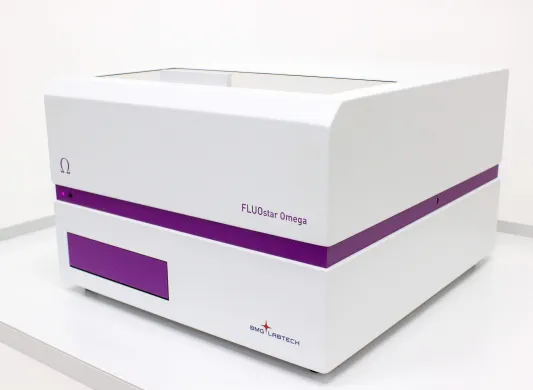
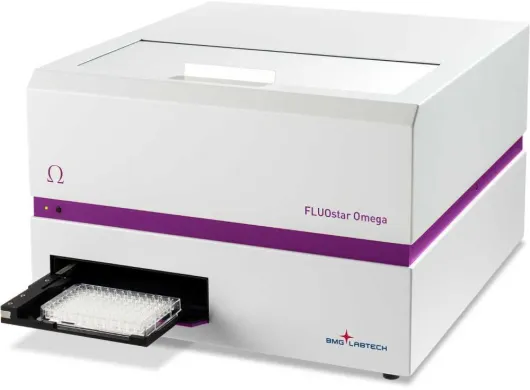
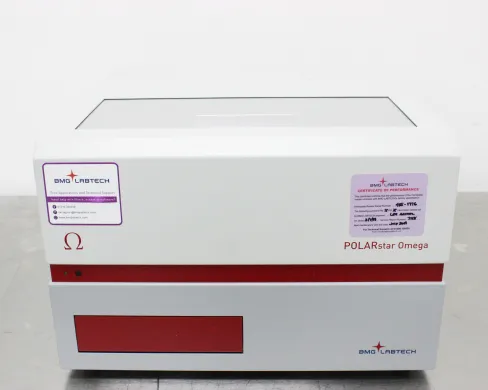
The named families each occupy a distinct point in the range. The Omega series covers single-mode and multi-mode configurations and is a common entry into the brand for a general-purpose laboratory. The CLARIOstar is a mid-range multi-mode platform combining filter and monochromator-based detection, which suits labs that need flexible wavelength selection across several assay types. The PHERAstar FSX sits at the high-sensitivity, high-throughput end, built for screening applications where speed and detection limits matter most. The NEPHELOstar Plus is the nephelometer in the range, reading turbidity and scatter rather than absorbance or emission. When reviewing the Questpair listings, it is worth identifying which of these families a unit belongs to, since the detection modules fitted to a given instrument determine which assays it can actually run.
BMG LABTECH readers on Questpair
Questpair lists 95 used instruments from this maker, offered by 12 verified suppliers and distributors across 6 countries. Prices range from EUR 200 to EUR 55.958, with an average of roughly EUR 9.206. 100 percent of the listings are used. Because condition on a plate reader turns on optics, detectors and the detection modules fitted, the detail that matters is held in the individual listing rather than in a brand-level summary. Parts can be sourced via Questpair, and manuals or documentation can be requested by contacting Questpair, where specialists respond within one hour. A warranty is often possible and is arranged in consultation for the specific listing, so a buyer weighing one used reader against another should treat each unit on its own terms and read the listed configuration closely before deciding.
Questpair review of BMG Labtech
Our take based on listings data and supplier feedback
BMG LABTECH occupies a focused position in laboratory instrumentation: rather than a broad analytical catalogue, the company builds microplate readers and the detection systems around them. For a buyer working through the Questpair listings, that focus is the first thing to weigh. The instruments cluster around a small number of well-defined families, which makes like-for-like comparison more straightforward than it is for makers whose plate readers are one line among many.
The breadth of detection modes is the clearest reason to look here. Fluorescence intensity, luminescence, absorbance and more specialised readouts such as nephelometry each have a dedicated place in the range, and the multi-mode platforms fold several of those into a single instrument. A laboratory running an assay that reads optical density one week and a luminescent reporter the next can consolidate onto one unit instead of maintaining two. Microplate photometry of this kind sits behind a large share of routine quantitative work in molecular biology and cell biology, from enzyme kinetics to reporter gene assays and cell viability measurement, so a reader that covers several modes earns its bench space. Among the listings that specify a model, the Omega series and the CLARIOstar appear as mid-range multi-mode options, while the PHERAstar FSX sits at the high-throughput, high-sensitivity end used in screening work.
Price is the second consideration, and here the spread is wide. Listings run from EUR 200 to EUR 55.958, with an average around EUR 9.206. That range reflects the distance between a basic absorbance reader and a fully loaded screening platform, so the figure that matters is the price of the specific configuration, not the catalogue average. A buyer should match the detection modes they actually need against the model rather than reading the top of the range as a proxy for quality.
Condition is the third. Every current listing is used: 100 percent of the listings are used. These instruments depend on optics, filters or monochromators, and detector performance, so condition on a plate reader is not a cosmetic question. A buyer evaluating a used unit should establish which detection modules are fitted, whether the filter set or monochromator covers their wavelengths, and what software version the instrument runs, since assay protocols are often tied to a particular control package. Where recalibration or validation matters for a regulated workflow, that is a question for the individual listing.
The supply side is reasonably diverse for a single-focus brand. The 95 listings come from 12 verified suppliers and distributors spread across 6 countries, which gives a buyer more than one route to a given model and some room to compare condition and configuration before committing. Warranty is not uniform across used instruments and is arranged in consultation for the specific listing, so a buyer should treat each unit on its own terms rather than assuming a blanket standard.
**Microplate readers across every detection mode**
The Questpair catalogue lists fluorescence, luminescence and absorbance instruments from this maker, so a lab replacing a single-mode reader or standardising on one platform can compare detection modes within one brand.
**Price range that spans basic to high-end systems**
Listings run from EUR 200 to EUR 55.958, covering entry-level absorbance units through to high-throughput multi-mode platforms such as the PHERAstar FSX.
**Used instruments from a spread of verified suppliers**
All current listings are second-hand, offered by 12 verified suppliers and distributors across 6 countries, which widens the pool a buyer can draw on for a given model.
Frequently asked questions
Where can I find manuals and documentation for a BMG Labtech reader?
You can request documentation for a specific listing through Questpair, and specialists respond within one hour. The manual that applies depends on the exact model and installed modules, so identify the unit first.
How much does a used BMG Labtech plate reader cost?
Listed prices range from EUR 200 to EUR 55.958, with an average around EUR 9.206. Single-mode absorbance units sit at the low end, while multi-mode systems with monochromators and injectors sit at the high end.
What's the difference between refurbished and used BMG Labtech readers?
Both are offered below the price of new units on Questpair. A used unit is sold in its existing state, while a refurbished one has been reconditioned; the specific condition and what was done is stated per listing.
Is there a warranty on a used BMG Labtech reader?
A warranty is often possible and is arranged in consultation for the specific listing. Terms are not set centrally, so the individual listing is where that detail is confirmed.
Are BMG Labtech readers suitable for clinical and research use?
These instruments do the detection step of plate-based assays used in molecular biology, cell biology, and molecular diagnostics, covering ELISA readouts, nucleic acid quantification, reporter-gene work, and viability tests. Whether a given unit fits a clinical workflow depends on its fitted optics and detection modes, which the listing specifies.
How long do BMG Labtech plate readers last?
A microplate reader's working life depends on use, maintenance, and the condition of its optics, lamp, and injectors rather than a fixed figure. The listing describes the state of the specific unit, which is what matters for an individual purchase.
Can I still get parts for a BMG Labtech reader?
Parts can be sourced via Questpair. Because configurations differ between units of the same line, identifying the exact model and installed modules helps match the correct part.
What are the alternatives to a BMG Labtech reader?
Alternatives depend on the detection modes you need: a single-mode absorbance reader for ELISA, a fluorescence or luminescence reader for labelled assays, or a multi-mode reader for several of these in one unit. The Questpair catalogue lists microplate readers from other makers in the same classes, so match by assay type and plate format rather than by brand.
How long does delivery take for a used BMG Labtech reader?
Lead time depends on the supplier and the unit's location, since listings come from verified suppliers and distributors across 6 countries. The specific listing and supplier give the accurate timeframe for that unit.
What is the difference between parts and spares for these readers?
In practice the terms overlap: both refer to components such as filters, lamps, detectors, or injectors used to repair or complete an instrument. Parts can be sourced via Questpair, and the exact part depends on the model and its fitted modules.
Can a BMG Labtech reader be shipped internationally?
Listings come from verified suppliers and distributors across 6 countries, so cross-border shipping is common. Shipping terms are set by the supplier on the individual listing.
Which product lines does BMG Labtech make and how do they differ?
The CLARIOstar is a multi-mode platform combining monochromators and filters for absorbance, fluorescence, and luminescence; the PHERAstar FSX is built for high-throughput screening on 384-well and higher-density plates; the NEPHELOstar Plus is a dedicated nephelometer reading light scatter. The Omega series spans single-mode and multi-mode configurations, so two Omega units under related names can differ considerably in capability.
Which BMG Labtech instrument types are listed here and in what condition?
The catalogue covers microplate readers, fluorescence microplate readers, luminescence readers, multi-mode microplate readers, luminescence microplate readers, and absorbance microplate readers. Across the brand 100 percent of the 95 listings are used, with the rest including refurbished units; each listing states its own condition.
What separates the cheapest BMG Labtech listings from the most expensive?
The price spread tracks detection capability rather than brand or age. Single-mode absorbance units sit at the low end, and multi-mode systems with monochromators and injectors sit at the high end, so the fitted optics and installed modules on a listing matter more than the model name alone.
About Questpair
Questpair is the European marketplace for lab equipment, where AI-prepared cases and personal specialists guide every purchase. We work with 247 verified suppliers across 38 countries to find buyers the right new, used or refurbished instruments, with response within 1 hour and significant savings vs buying new.
Personal · Fast · Reliable · Affordable