53k+ listingsShips to NLResponse within one hour+31 73 711 4717info@questpair.com
Procurable · sourced on request

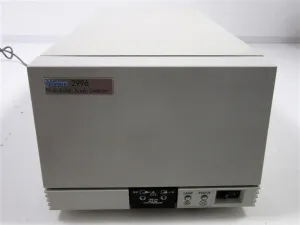
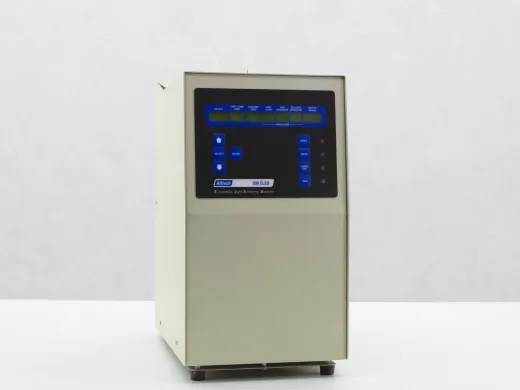
Waters 2996

UsedWatersHPLC detectorsNetherlands
Procurable

Not in stock, available to order through our sourcing team

Not in stock, but we can get it for you

We source this model through our supplier network. Request a quote and we'll come back within one hour.

  1. Request a quote
  2. We confirm price and lead time
  3. You approve, we ship to you
Linearity Range
5% over -0.1 to 2.0 AU
Spectral Resolution
1.2 nm per photodiode
Baseline Noise
5 x 10^-5 AU peak-to-peak
Drift
1 x 10^-3 AU/hour at 254 nm (after warmup)
Wavelength Accuracy
±1 nm
Availability
Procurable
Lead time
Confirmed with your quote
All 24 specifications
  • Ships to NL
  • Response within 1 hour
  • Warranty available. Buy without worry
  • Support from a scientist

Specifications 24

Brands
Waters
New/Used
Used
Linearity Range
5% over -0.1 to 2.0 AU
Spectral Resolution
1.2 nm per photodiode
Baseline Noise
5 x 10^-5 AU peak-to-peak
Drift
1 x 10^-3 AU/hour at 254 nm (after warmup)
Wavelength Accuracy
±1 nm
Wavelength Range
190 to 800 nm
Operating Temperature
4 to 40 °C
Operating Humidity
20 to 80% non-condensing
Maximum Pressure
6.89 MPa
Flow Cell Path Length (Standard)
10 mm
Flow Cell Path Length (Semi-Preparative)
3 mm
Flow Cell Path Length (Microbore)
6 mm
Flow Cell Path Length (Inert)
10 mm
Dimensions (W x D x H)
292 x 610 x 222 mm
Weight
14.3 kg
Electrical Requirements (Low Trigger)
< 1.8 V
Electrical Requirements (High Trigger)
> 3.0 V
Electrical Requirements (Protected Voltage)
±30 V
Electrical Requirements (Minimum Pulse Width)
20 ms
Electrical Requirements (Maximum Current)
5 mA
Availability
Procurable
Lead time
Confirmed with your quote

Product description

High-sensitivity PDA detector for liquid chromatography with enhanced spectral and chromatographic detection.

The Waters 2996 Photodiode Array (PDA) Detector is a high-performance instrument designed to enhance chromatographic and spectral sensitivity in both analytical and preparative liquid chromatography applications. This detector is particularly valuable in the biotechnology sector, where precise detection and quantification of trace impurities are critical.

Key features include:

  • Maximum chromatographic sensitivity: Enables unprecedented detection and quantification of trace impurities, essential for ensuring product purity in biopharmaceutical production.
  • Optimised spectral sensitivity: Utilises Waters' purity algorithms for definitive compound identification and co-elution detection, facilitating accurate analysis in molecular diagnostics.
  • Superior linearity range: Defined by a fixed optical bandpass, ensuring consistent performance across a wide range of analyte concentrations.
  • Simplified optics: Designed for reliability and ease of maintenance, reducing downtime in high-throughput bioprocessing environments.
  • Compliance-ready: Meets FDA Electronic Records and Electronic Signatures Rule requirements, supporting regulatory compliance in clinical diagnostics.
  • Start-up diagnostics: Ensures detector performance prior to use, enhancing reliability in critical applications such as gene editing research.

The Waters 2996 PDA Detector is widely utilised in biotechnology fields, including synthetic biology, molecular diagnostics, and biomanufacturing. It is commonly employed in university laboratories, biomedical research centres, and clinical environments. Since its introduction, this detector has remained a trusted tool in laboratories, underscoring its enduring relevance in the scientific community.

Why Questpair exists

Lab equipment markets are fragmented. Buyers spend weeks calling distributors, comparing quotes, and verifying supplier reliability. Sellers struggle to reach global research labs.

We built Questpair to fix this. Every supplier on the platform is verified before listing. Every quote you receive comes from a real, vetted seller. AI prepares your case in minutes, then a real specialist takes over.

We're an independent team based in The Netherlands, working with research labs and procurement teams across Europe and worldwide.

Frequently asked questions

How long does laboratory equipment typically last?

With a service contract, ten to fifteen years is normal for most benchtop instruments. Detectors and pumps are the parts that wear first.

Can I get service for older equipment?

Often, yes. Verified suppliers frequently work with service partners converting the instrument. If applicable, we can list servicing options alongside the offer.

Where can I buy parts?

Ask a scientist through the request button. Parts are often available even when the instrument itself is discontinued.

What is the typical lead time for refurbished equipment?

Two to six weeks, depending on refurbishment scope and whether calibration is included.

Does laboratory equipment ship internationally?

We ship to 38 countries. Crating and customs handling are quoted with the instrument.

Reply in one hour

Can't find the exact configuration?

Tell us what you need and a scientist finds it for you, usually within the hour.

Last updated 3 November 2026