58k+ listingsShips to NLResponse within one hour+31 73 711 4717info@questpair.com

Molecular Devices AquaMax 2000/4000 Automated Microplate Washer for 96- and 384-Well Plates

Price on request

In stock

Can't find what you're looking for?

Shaking Speed
3 Speeds up to 600 sec. max.
Dispensing Volume
10 – 400 µl/well
Wash Times 96w
Single cycle, 300 µl/well, 11 sec; three cycles, 300 µl, 26 sec.
Wash Times 384w
Single cycle, 100 µl/well, 12 sec; three cycles, 100 µl, 28 sec.
Fast Wash Times (Optimized for Speed)
96-well wash head, 300 µl/well, three cycles, 14 sec; 384-well wash head, 100 µl/well, three cycles, 16 sec
All 15 specifications
  • Ships to NL
  • Response within 1 hour
  • Warranty available. Buy without worry
  • Support from a scientist

Specifications 15

Brands
Molecular Devices
New/Used
Used
Shaking Speed
3 Speeds up to 600 sec. max.
Dispensing Volume
10 – 400 µl/well
Wash Times 96w
Single cycle, 300 µl/well, 11 sec; three cycles, 300 µl, 26 sec.
Wash Times 384w
Single cycle, 100 µl/well, 12 sec; three cycles, 100 µl, 28 sec.
Fast Wash Times (Optimized for Speed)
96-well wash head, 300 µl/well, three cycles, 14 sec; 384-well wash head, 100 µl/well, three cycles, 16 sec
Precision
96-well: < or = 4% CV at 300 µl; 384-well: < or = 3% CV at 100 µl
Process time with integrated, optional StakMax Microplate Stacker (Fast Wash, 96 Wash Head, 300 µL/well, three cycles)
< 13 min. for 20 plates
Compatible Microplates
SBS-conforming 96- and 384-well; flat, U- or V-bottom plates
Residual volume, 96 ≤ 5 µL
Residual volume, 384 ≤ 2 µL
Dimensions
21x19x9”
Weight
43 lbs
Power
100-240v, 50/60hz, 1.75a

Product description

Automated microplate washer with touchscreen control for 96- and 384-well plates, ideal for ELISA and cell-based assays.

The Molecular Devices AquaMax 2000 and AquaMax 4000 are automated microplate washers designed for precise and repeatable washing of SBS-standard 96- and 384-well microplates, compatible with flat, U-, and V-bottom formats. Both models feature onboard touchscreen control and integrated fluidics, enabling standalone operation without external PC or vacuum requirements, critical for streamlined workflows in molecular diagnostics, immunoassays, and bioprocessing laboratories.

Key technical features include:

  • Support for interchangeable 96- and 384-well wash heads, optimizing versatility for diverse assay formats.
  • The AquaMax 2000 offers two fluid inlets and two aspiration rates (Fast and Gentle), suitable for standard ELISA and biochemical applications.
  • The AquaMax 4000 enhances fluid handling with four fluid inlets and five aspiration rates, providing detailed control essential for sensitive cell-based assays and synthetic biology workflows.
  • Washing precision achieves ≤4% CV for 96-well at 300 µL and ≤3% CV for 384-well at 100 µL, ensuring high reproducibility in molecular cloning and biomanufacturing processes.
  • Integrated shaking with three speed settings up to 600 seconds improves washing efficiency and assay consistency.
  • Fast wash cycles reduce throughput time significantly, supporting high-throughput screening pipelines in biomedical and biotechnology research.
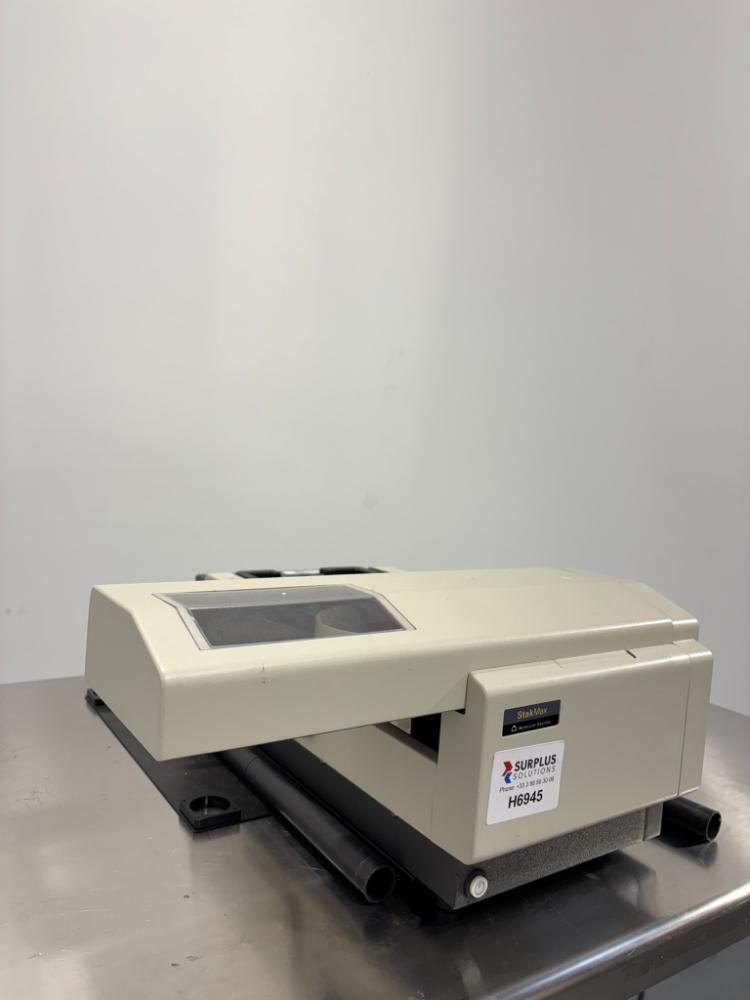
  • Compatible with the StakMax Microplate Stacker and third-party robotic systems via USB interface, enabling automation in large-scale clinical diagnostics and bioprocessing environments.

Both AquaMax models support critical washing applications such as ELISA, immunoassays, biochemical assays, and cell-based plate washing by providing controlled dispense and aspiration functions. This makes them widely adopted in biotechnology research, live-cell imaging preparation, and molecular diagnostics workflows, where contamination-free, reproducible washing protocols are essential.

The compact dimensions (21 x 19 x 9 inches) and 43 lbs weight allow easy integration into benchtop laboratory setups specializing in fluorescence analysis, neuroimaging sample prep, and synthetic biology. Operating voltage is 100-240V with 50/60 Hz compatibility, suitable for global laboratory environments.

This platform is essential for laboratories requiring reliable, flexible microplate washing solutions tailored to complex assay requirements found in biopharmaceutical production pipelines and gene editing research.

Why Questpair exists

Lab equipment markets are fragmented. Buyers spend weeks calling distributors, comparing quotes, and verifying supplier reliability. Sellers struggle to reach global research labs.

We built Questpair to fix this. Every supplier on the platform is verified before listing. Every quote you receive comes from a real, vetted seller. AI prepares your case in minutes, then a real specialist takes over.

We're an independent team based in The Netherlands, working with research labs and procurement teams across Europe and worldwide.

Frequently asked questions

How long does laboratory equipment typically last?

With a service contract, ten to fifteen years is normal for most benchtop instruments. Detectors and pumps are the parts that wear first.

Can I get service for older equipment?

Yes. Every verified supplier states which service partners cover the instrument, and we list that alongside the offer.

Where can I buy parts?

Ask a scientist through the request button. Parts are often available even when the instrument itself is discontinued.

What is the typical lead time for refurbished equipment?

Two to six weeks, depending on refurbishment scope and whether calibration is included.

Does laboratory equipment ship internationally?

We ship to 38 countries. Crating and customs handling are quoted with the instrument.

Reply in one hour

Can't find the exact configuration?

Tell us what you need and a scientist finds it for you, usually within the hour.

Last updated 19 October 2026