58k+ listingsShips to NLResponse within one hour+31 73 711 4717info@questpair.com
Procurable · sourced on request

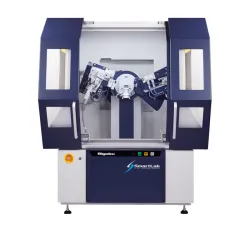
Rigaku SmartLab

UsedRigakuOpticsNetherlands
Procurable

Not in stock, available to order through our sourcing team

Not in stock, but we can get it for you

We source this model through our supplier network. Request a quote and we'll come back within one hour.

  1. Request a quote
  2. We confirm price and lead time
  3. You approve, we ship to you
X-ray source
9 kW rotating anode X-ray source
Power supply
1-phase, 200-230 V, 50/60 Hz, 40 A or 3-phase, 200 V, 50/60 Hz, 30 A (sealed tube); 3-phase, 200 V, 50/60 Hz, 60 A (rotating anode)
Detector
HyPix-3000 high energy resolution 2D HPAD detector
Optics
Cross Beam Optics (CBO-Auto) with automated switching between reflection and transmission modes
Measurement modes
0D, 1D, and 2D
Availability
Procurable
Lead time
Confirmed with your quote
All 14 specifications
  • Ships to NL
  • Response within 1 hour
  • Warranty available. Buy without worry
  • Support from a scientist

Specifications 14

Brands
Rigaku
New/Used
Used
X-ray source
9 kW rotating anode X-ray source
Power supply
1-phase, 200-230 V, 50/60 Hz, 40 A or 3-phase, 200 V, 50/60 Hz, 30 A (sealed tube); 3-phase, 200 V, 50/60 Hz, 60 A (rotating anode)
Detector
HyPix-3000 high energy resolution 2D HPAD detector
Optics
Cross Beam Optics (CBO-Auto) with automated switching between reflection and transmission modes
Measurement modes
0D, 1D, and 2D
Software
SmartLab Studio II with User Guidance for step-by-step assistance
Goniometer
Five-axis goniometer with in-plane diffraction arm
Sample types
Powder, bulk, and thin film samples
Dimensions
1300 x 1880 x 1300 mm
Weight
750 kg (sealed tube), 850 kg (rotating anode)
Availability
Procurable
Lead time
Confirmed with your quote

Product description

Advanced XRD with 9 kW rotating anode, HyPix-3000 detector, five-axis goniometer, and Cross Beam Optics for versatile structural analysis.

Rigaku SmartLab is an advanced, multipurpose X-ray diffractometer (XRD) designed to deliver high-resolution structural analysis across a diverse range of materials.

Key features include:

  • High-flux 9 kW rotating anode X-ray source: Ensures rapid data collection with minimal background noise.
  • HyPix-3000 detector: Supports 0D, 1D, and 2D measurement modes, facilitating comprehensive analysis without the need to switch detectors.
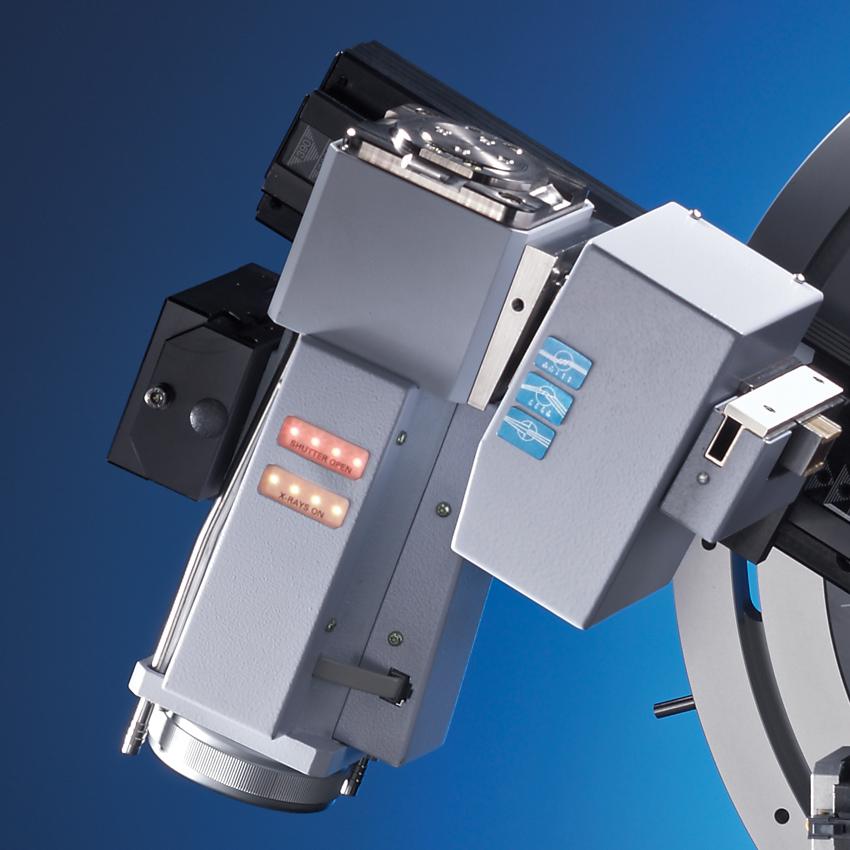
  • Cross Beam Optics (CBO-Auto): Allows automated switching between reflection and transmission modes, enhancing experimental flexibility.
  • SmartLab Studio II software with User Guidance: Provides step-by-step assistance, simplifying complex experimental setups.
  • Five-axis goniometer with in-plane diffraction arm: Enables precise measurements of lattice planes perpendicular to the sample surface.

This instrument is widely utilised in:

  • Materials science: For phase identification, crystallinity assessment, and structural refinement.
  • Nanotechnology: To characterise nanoscale materials and thin films.
  • Pharmaceutical research: For polymorph screening and quality control of active pharmaceutical ingredients.
  • Chemical engineering: To analyse catalysts and reaction products.

Commonly found in:

  • University laboratories: Supporting academic research and education.
  • Biomedical research centres: Facilitating studies on biomaterials and pharmaceuticals.
  • Industrial R&D facilities: Aiding in the development and quality control of new materials.

First introduced in 2006, the Rigaku SmartLab has undergone continuous advancements, with the latest model released in 2018, ensuring its ongoing relevance in cutting-edge research.

Why Questpair exists

Lab equipment markets are fragmented. Buyers spend weeks calling distributors, comparing quotes, and verifying supplier reliability. Sellers struggle to reach global research labs.

We built Questpair to fix this. Every supplier on the platform is verified before listing. Every quote you receive comes from a real, vetted seller. AI prepares your case in minutes, then a real specialist takes over.

We're an independent team based in The Netherlands, working with research labs and procurement teams across Europe and worldwide.

Frequently asked questions

How long does laboratory equipment typically last?

With a service contract, ten to fifteen years is normal for most benchtop instruments. Detectors and pumps are the parts that wear first.

Can I get service for older equipment?

Yes. Every verified supplier states which service partners cover the instrument, and we list that alongside the offer.

Where can I buy parts?

Ask a scientist through the request button. Parts are often available even when the instrument itself is discontinued.

What is the typical lead time for refurbished equipment?

Two to six weeks, depending on refurbishment scope and whether calibration is included.

Does laboratory equipment ship internationally?

We ship to 38 countries. Crating and customs handling are quoted with the instrument.

Reply in one hour

Can't find the exact configuration?

Tell us what you need and a scientist finds it for you, usually within the hour.

Last updated 19 October 2026