Not in stock, available to order through our sourcing team
We source this model through our supplier network. Request a quote and we'll come back within one hour.
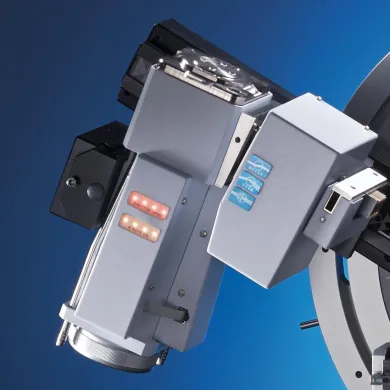
Advanced XRD system with Cross Beam Optics, automated alignment, and high-speed data acquisition for versatile sample analysis.
The Rigaku Ultima IV is a state-of-the-art X-ray diffraction (XRD) system designed for rapid and versatile analysis of various sample types, including powders, thin films, and solid membranes. Incorporating Rigaku's patented Cross Beam Optics (CBO) technology, this diffractometer offers user-selectable parallel and focusing geometries without the need for reconfiguration, enhancing both performance and flexibility.
This instrument is widely employed in various scientific fields, including materials science, chemistry, geology, and biotechnology. In the biotechnology sector, the Ultima IV is instrumental in structural analysis of biomaterials, characterisation of pharmaceutical compounds, and investigation of biopolymer crystallinity, making it essential for bioprocessing and biomanufacturing applications.
Commonly found in university laboratories, biomedical research centres, and industrial R&D facilities, the Ultima IV has been a reliable tool for researchers since its release. Its enduring relevance is attributed to its adaptability and precision, catering to the evolving needs of scientific exploration.
Lab equipment markets are fragmented. Buyers spend weeks calling distributors, comparing quotes, and verifying supplier reliability. Sellers struggle to reach global research labs.
We built Questpair to fix this. Every supplier on the platform is verified before listing. Every quote you receive comes from a real, vetted seller. AI prepares your case in minutes, then a real specialist takes over.
We're an independent team based in The Netherlands, working with research labs and procurement teams across Europe and worldwide.
With a service contract, ten to fifteen years is normal for most benchtop instruments. Detectors and pumps are the parts that wear first.
Often, yes. Verified suppliers frequently work with service partners converting the instrument. If applicable, we can list servicing options alongside the offer.
Ask a scientist through the request button. Parts are often available even when the instrument itself is discontinued.
Two to six weeks, depending on refurbishment scope and whether calibration is included.
We ship to 38 countries. Crating and customs handling are quoted with the instrument.
Tell us what you need and a scientist finds it for you, usually within the hour.
Last updated 4 November 2026