€539excl. VAT
In stock
Can't find what you're looking for?
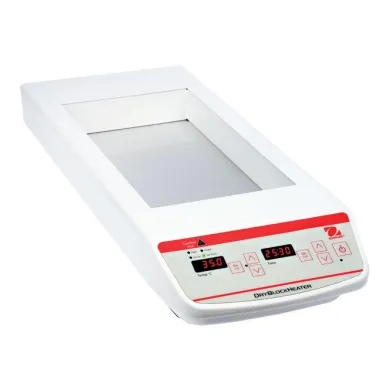
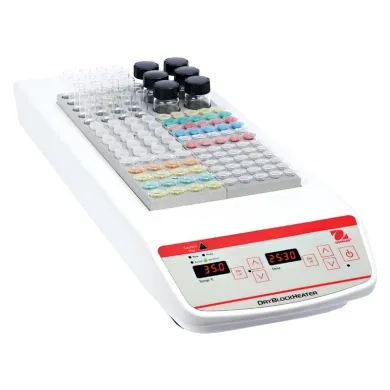
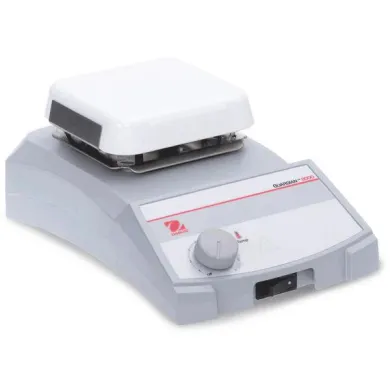
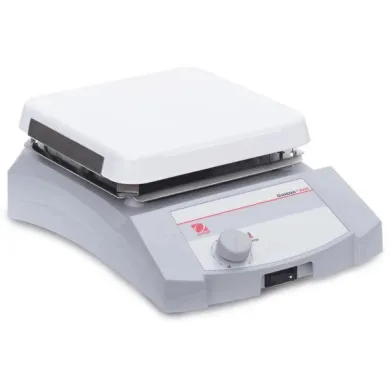
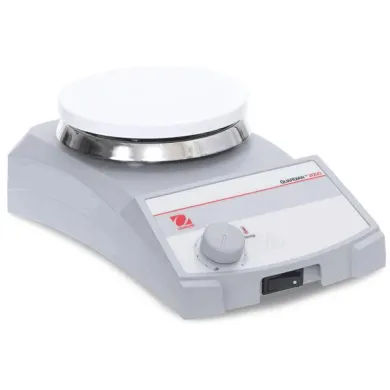
Efficient dry block heater with precise temperature control for laboratory applications.
The Ohaus HB2AL is a versatile dry block heater designed for consistent daily laboratory use. Ideal for applications necessitating precise temperature stability, it accommodates two modular blocks with a selection of 40 options. Its design ensures close contact between the block and tubes, maximizing heat retention for optimal heating efficiency.
Available in both analog and digital models, it offers a range of temperature settings. Analog versions serve as an economical alternative with temperature ranges from +5°C above ambient to 100°C for low, and 75°C to 150°C for high settings, managed via twin temperature knobs. Digital models deliver repeatable results from 5°C above ambient to 120°C, featuring intuitively designed touchpad controls and LED displays for temperature and time, coupled with an audible alarm.
Its exceptional temperature uniformity and thermal stability are complemented by a unique single point calibration function in the digital models, ensuring accurate temperature readings.
Ideal for a wide array of applications, including culture incubation, enzymatic reactions, immunoassays, melting/boiling point determinations, isothermal incubation, and nucleic acid denaturation.
Constructed with durable painted steel, it includes a support bar attachment and a detachable three-wire cable with a plug. While analog models require an external thermometer, digital versions offer advanced control through keypads and alarms for enhanced operational efficiency.
Lab equipment markets are fragmented. Buyers spend weeks calling distributors, comparing quotes, and verifying supplier reliability. Sellers struggle to reach global research labs.
We built Questpair to fix this. Every supplier on the platform is verified before listing. Every quote you receive comes from a real, vetted seller. AI prepares your case in minutes, then a real specialist takes over.
We're an independent team based in The Netherlands, working with research labs and procurement teams across Europe and worldwide.
With a service contract, ten to fifteen years is normal for most benchtop instruments. Detectors and pumps are the parts that wear first.
Often, yes. Verified suppliers frequently work with service partners converting the instrument. If applicable, we can list servicing options alongside the offer.
Ask a scientist through the request button. Parts are often available even when the instrument itself is discontinued.
Two to six weeks, depending on refurbishment scope and whether calibration is included.
We ship to 38 countries. Crating and customs handling are quoted with the instrument.
Tell us what you need and a scientist finds it for you, usually within the hour.
Last updated 24 October 2026
€539 sits in the middle range heating and cooling here. The middle half of the 1,352 with a price runs from €79 to €2,687.
3 other listings of this model are available.