58k+ listingsShips to NLResponse within one hour+31 73 711 4717info@questpair.com

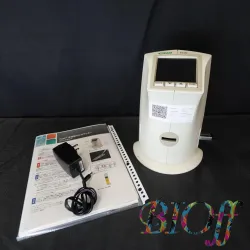
Bio-Rad TC20 Automated Cell Counter Model 1450101J1

Price on request

In stock

Can't find what you're looking for?

Brands
Bio-Rad
New/Used
Used
  • Ships to NL
  • Response within 1 hour
  • Warranty available. Buy without worry
  • Support from a scientist

Product description

Automated cell counter with autofocus and advanced algorithms, counts mammalian cells in 30s, USB data export.

The Bio-Rad TC20 Automated Cell Counter (Model 1450101J1) is a precision benchtop cell counting system designed for rapid and accurate quantification of mammalian cells, widely applied in biotechnology and molecular biology research. Featuring an innovative autofocus mechanism and sophisticated cell counting algorithms, this unit delivers results within 30 seconds, making it essential for workflows in bioprocessing, molecular diagnostics, and synthetic biology.

Key Technical Features:

  • Counts cells within a concentration range of 5 x 10^4 to 1 x 10^7 cells/ml, with an optimal range of 1 x 10^5 to 5 x 10^6 cells/ml, accommodating diverse sample types.
  • Supports cell diameters from 6 to 50 micrometers, enabling accurate sizing for various mammalian cell lines.
  • Requires only 10 microliters of sample volume, facilitating efficient use of precious biological materials in gene editing and biomanufacturing pipelines.
  • Incorporates gate function based on cell size, enabling selective cell population analysis critical in live-cell imaging and fluorescence analysis applications.
  • Provides data storage for up to 100 counts with convenient data export via USB memory and printer connectivity, streamlining data management for molecular biology researchers.
  • Integrated dilution calculator and cell imaging capabilities enhance experimental accuracy and record-keeping in clinical diagnostics and synthetic biology research environments.

Physical Specifications:

  • Compact design with dimensions of 19 cm width, 15 cm depth, and 25.4 cm height, and a lightweight profile of 2.2 kg (excluding external power supply), ensuring easy integration into laboratory benches.

Usage Notes:

  • Designed exclusively for research purposes; not intended for medical or diagnostic use.
  • Sold as a used unit with as-is condition; performance may not fully match that of new equipment; verification recommended prior to purchase.

This automated cell counter is widely adopted in biotechnology labs for its efficiency and accuracy, playing a critical role in molecular cloning workflows, tissue culture quantification, and biopharmaceutical production pipelines.

Why Questpair exists

Lab equipment markets are fragmented. Buyers spend weeks calling distributors, comparing quotes, and verifying supplier reliability. Sellers struggle to reach global research labs.

We built Questpair to fix this. Every supplier on the platform is verified before listing. Every quote you receive comes from a real, vetted seller. AI prepares your case in minutes, then a real specialist takes over.

We're an independent team based in The Netherlands, working with research labs and procurement teams across Europe and worldwide.

Frequently asked questions

How long does laboratory equipment typically last?

With a service contract, ten to fifteen years is normal for most benchtop instruments. Detectors and pumps are the parts that wear first.

Can I get service for older equipment?

Yes. Every verified supplier states which service partners cover the instrument, and we list that alongside the offer.

Where can I buy parts?

Ask a scientist through the request button. Parts are often available even when the instrument itself is discontinued.

What is the typical lead time for refurbished equipment?

Two to six weeks, depending on refurbishment scope and whether calibration is included.

Does laboratory equipment ship internationally?

We ship to 38 countries. Crating and customs handling are quoted with the instrument.

Reply in one hour

Can't find the exact configuration?

Tell us what you need and a scientist finds it for you, usually within the hour.

Last updated 19 October 2026