Price on request
In stock
Can't find what you're looking for?
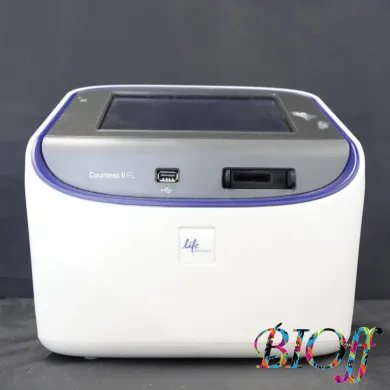
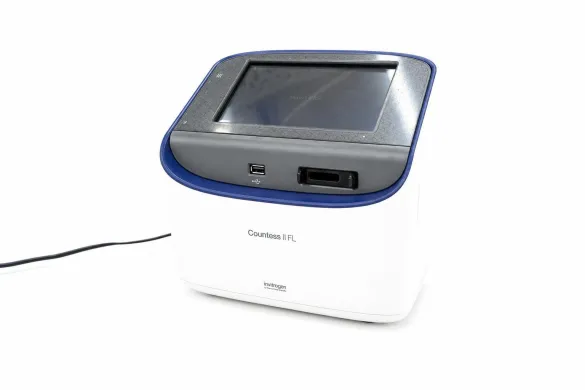
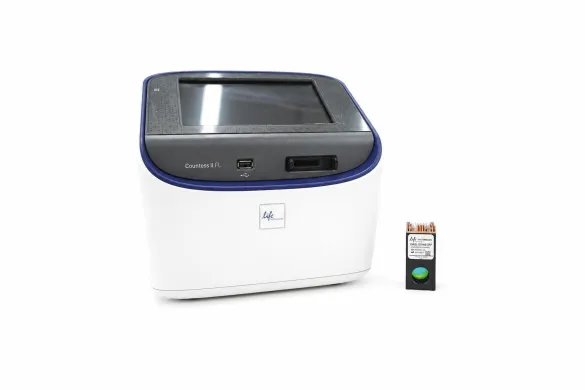
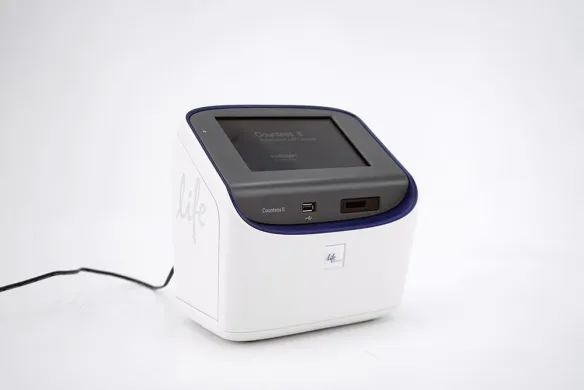
Automated cell counter using brightfield imaging with autofocus for 4–60 µm cell sizing and viability detection.
The Thermo Fisher Scientific Countess II Automated Cell Counter delivers precise, rapid single-channel cell counting and viability analysis, critical for biotechnological and molecular biology workflows. Utilizing advanced brightfield digital imaging with a 5-megapixel camera and 2.5× optical magnification, it reliably detects cells sized from 4 to 60 µm and assesses viability in cells ranging 7–60 µm.
Key features include:
This compact, lightweight (11 lbs) instrument operates on 100–240 VAC power and includes a user-friendly touchscreen controller, facilitating easy operation in cell culture labs, bioprocessing facilities, and molecular diagnostics environments. The Countess II plays a pivotal role in enhancing workflow efficiency in gene editing, synthetic biology, and biomanufacturing, offering reliable performance widely adopted in fluorescence analysis and live-cell imaging preparatory processes.
Designed for scientists, researchers, and medical professionals, this automated counter replaces manual counting, reduces operator variability, and supports critical applications such as cell viability testing essential for molecular cloning workflows and biopharmaceutical production pipelines.
Lab equipment markets are fragmented. Buyers spend weeks calling distributors, comparing quotes, and verifying supplier reliability. Sellers struggle to reach global research labs.
We built Questpair to fix this. Every supplier on the platform is verified before listing. Every quote you receive comes from a real, vetted seller. AI prepares your case in minutes, then a real specialist takes over.
We're an independent team based in The Netherlands, working with research labs and procurement teams across Europe and worldwide.
With a service contract, ten to fifteen years is normal for most benchtop instruments. Detectors and pumps are the parts that wear first.
Often, yes. Verified suppliers frequently work with service partners converting the instrument. If applicable, we can list servicing options alongside the offer.
Ask a scientist through the request button. Parts are often available even when the instrument itself is discontinued.
Two to six weeks, depending on refurbishment scope and whether calibration is included.
We ship to 38 countries. Crating and customs handling are quoted with the instrument.
Tell us what you need and a scientist finds it for you, usually within the hour.
Last updated 4 November 2026
The middle half of the 80 with a price runs from €1,250 to €7,759.