51k+ listingsShips to NLResponse within one hour+31 73 711 4717info@questpair.com
Procurable · sourced on request

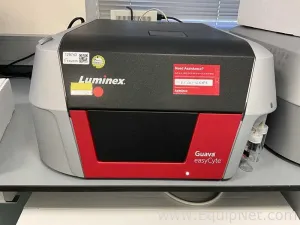
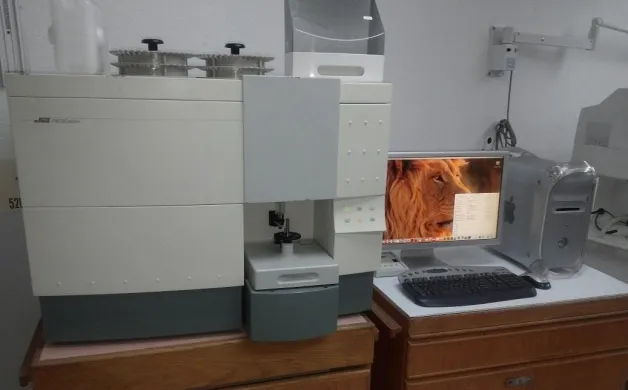
Luminex Corporation Guava EasyCyte

UsedLuminex CorporationFlow cytometersNetherlands
Procurable

Not in stock, available to order through our sourcing team

Not in stock, but we can get it for you

We source this model through our supplier network. Request a quote and we'll come back within one hour.

  1. Request a quote
  2. We confirm price and lead time
  3. You approve, we ship to you
Operating Temperature Range
16°C to 35°C
Operating Humidity Range
10% to 90% relative humidity (non-condensing)
Power Supply
100–240 VAC, 50/60 Hz
Power Consumption
120 W
Laser Configuration
Up to 3 lasers (405 nm, 488 nm, 640 nm)
Availability
Procurable
Lead time
Confirmed with your quote
All 20 specifications
  • Ships to NL
  • Response within 1 hour
  • Warranty available. Buy without worry
  • Support from a scientist

Specifications 20

Brands
Luminex Corporation
New/Used
Used
Dimensions
450.1 mm x 222 mm x 445 mm
Weight
32.4 kg
Operating Temperature Range
16°C to 35°C
Operating Humidity Range
10% to 90% relative humidity (non-condensing)
Power Supply
100–240 VAC, 50/60 Hz
Power Consumption
120 W
Laser Configuration
Up to 3 lasers (405 nm, 488 nm, 640 nm)
Detection Parameters
Up to 14 parameters
Detection Range
0.2 µm to 60 µm
Sample Flow Rate
7 µL/min to 72 µL/min
Sample Volume Requirement
2–5 µL
Dead Volume for 96-Well Microplate
50 µL
Dead Volume for 0.5 mL Microcentrifuge Tubes
75 µL
Waste Generation
Typically <40 mL in 8 hours of continuous use
Compatible Sample Formats
Single tubes, 96-well plates, 384-well plates
Data Output Formats
Flow Cytometry Standard (FCS) 3.0 format, CSV format
Availability
Procurable
Lead time
Confirmed with your quote

Product description

Compact benchtop flow cytometer with up to 3 lasers, 14 parameters, and sheath fluid–free microcapillary design.

The Guava® easyCyte™ 6397 is a compact, benchtop flow cytometer designed to deliver high-performance, multiparametric cell analysis with exceptional flexibility and ease of use. Utilising innovative microcapillary flow cytometry technology, this instrument eliminates the need for sheath fluid, reducing waste and simplifying maintenance. Its intuitive software and versatile optical configurations make it an ideal choice for a wide range of applications in biotechnology and life sciences research.

Key features:

  • Up to 3 lasers and 14 parameters: Provides a high degree of flexibility for complex assays.
  • Microcapillary fluidics design: Eliminates sheath fluid, reducing waste and maintenance.
  • Direct absolute counting: Combines microcapillary technology with a positive displacement syringe pump for precise cell enumeration.
  • Intuitive software interface: Simplifies data analysis, including cell health assessments.
  • Detection range of 0.2 to 60 µm: Facilitates evaluation of a broad variety of samples.
  • High-throughput capability: Automated sample loading for up to 96 samples, enabling walkaway acquisition.

The Guava easyCyte 6397 is widely used in biotechnology fields such as cell biology, immunology, and molecular biology. It is commonly employed in university laboratories, biomedical research centres, and biopharmaceutical companies for applications including apoptosis assays, cell cycle analysis, and immunophenotyping. First introduced over 20 years ago, the easyCyte series has continually evolved, with the 6397 model representing the latest advancements in flow cytometry technology.

Why Questpair exists

Lab equipment markets are fragmented. Buyers spend weeks calling distributors, comparing quotes, and verifying supplier reliability. Sellers struggle to reach global research labs.

We built Questpair to fix this. Every supplier on the platform is verified before listing. Every quote you receive comes from a real, vetted seller. AI prepares your case in minutes, then a real specialist takes over.

We're an independent team based in The Netherlands, working with research labs and procurement teams across Europe and worldwide.

Frequently asked questions

How long does laboratory equipment typically last?

With a service contract, ten to fifteen years is normal for most benchtop instruments. Detectors and pumps are the parts that wear first.

Can I get service for older equipment?

Often, yes. Verified suppliers frequently work with service partners converting the instrument. If applicable, we can list servicing options alongside the offer.

Where can I buy parts?

Ask a scientist through the request button. Parts are often available even when the instrument itself is discontinued.

What is the typical lead time for refurbished equipment?

Two to six weeks, depending on refurbishment scope and whether calibration is included.

Does laboratory equipment ship internationally?

We ship to 38 countries. Crating and customs handling are quoted with the instrument.

Reply in one hour

Can't find the exact configuration?

Tell us what you need and a scientist finds it for you, usually within the hour.

Last updated 10 November 2026