Price on request
In stock
Can't find what you're looking for?
Pre-Owned
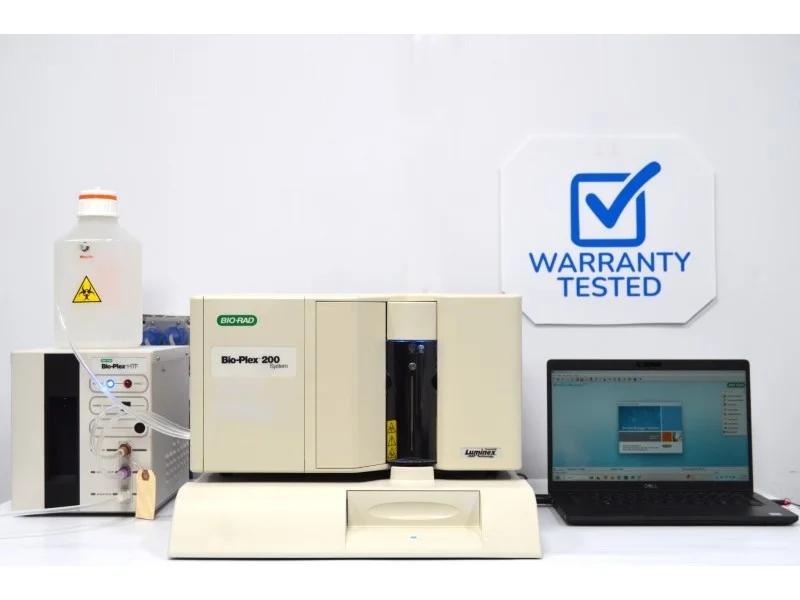
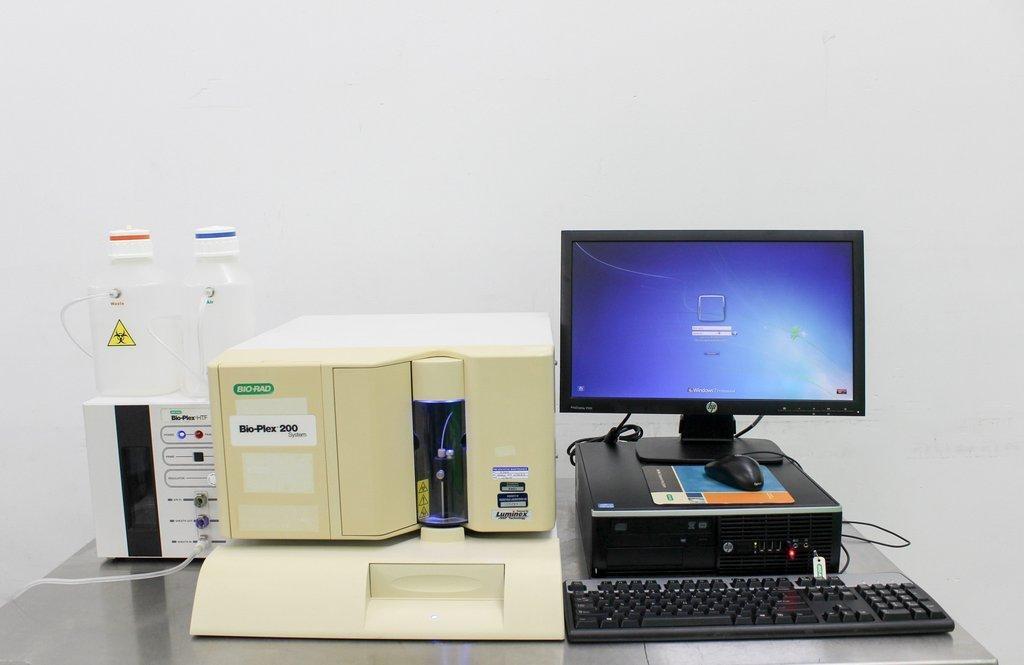
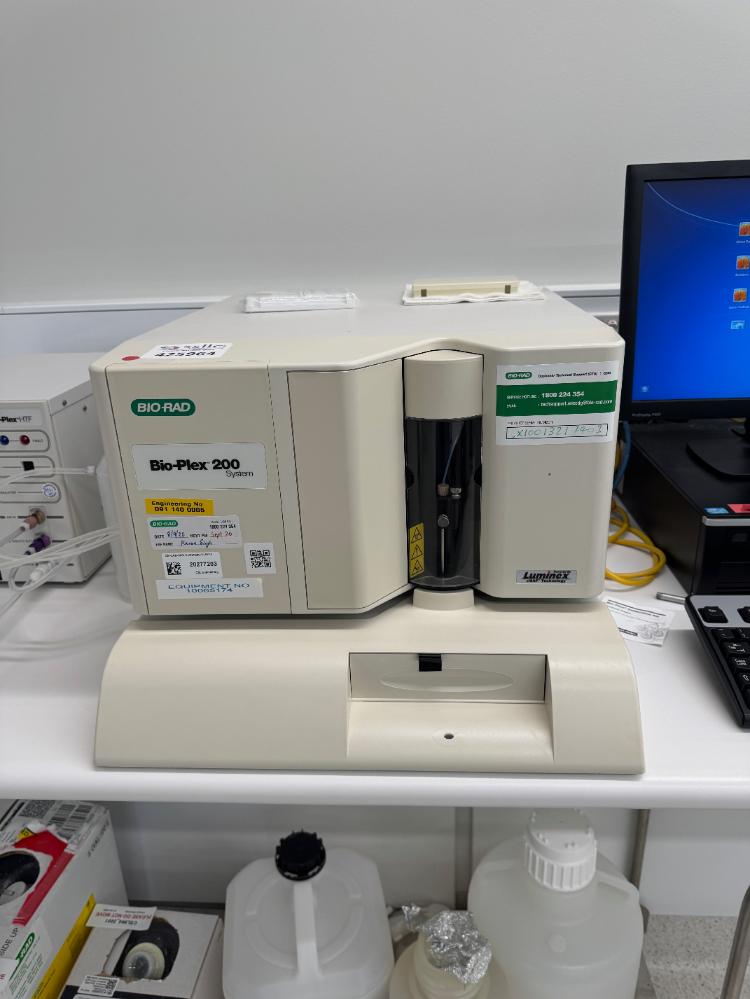
Dual-laser Bio-Plex 200 Suspension Array System enables multiplex protein biomarker quantification with high-throughput HTF module.
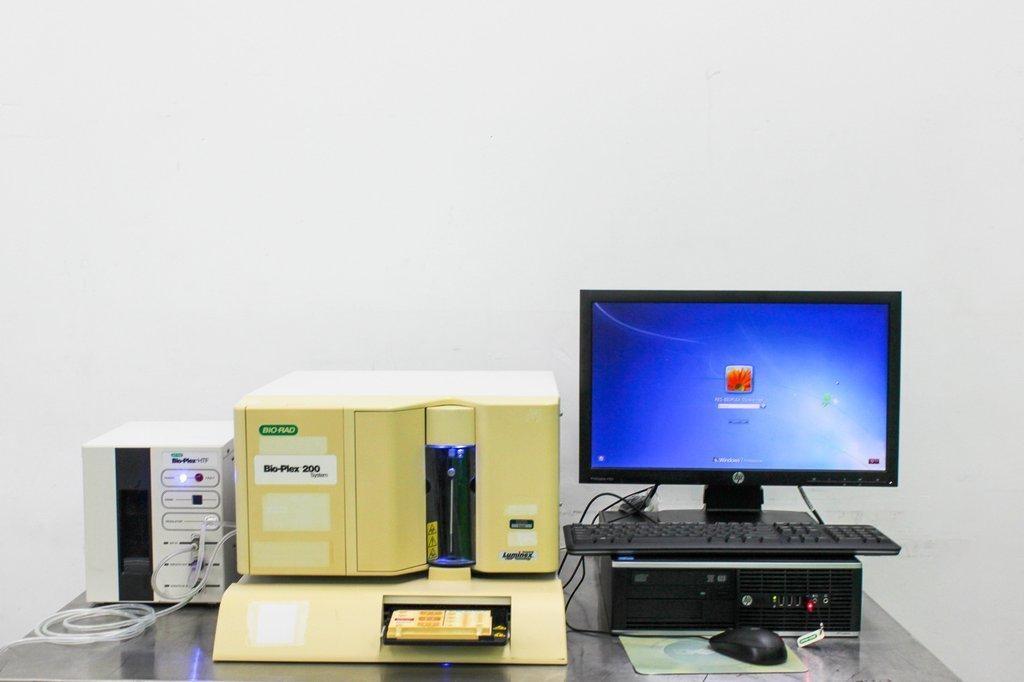
The Bio-Rad Bio-Plex 200 w/ HTF Suspension Array System Analyzer Unit 2 is a bead-based flow cytometry platform designed for multiplex biomarker detection in mid-throughput research workflows. Integrating the HTF (High Throughput Fluidics) sheath delivery system and an XYP microplate stage, this benchtop suspension array analyzer supports simultaneous quantification of up to 100 analytes per sample using diverse bead types including MagPlexC, MicroPlex, LumAvidin, and xTAG.
Key technical specifications include:
The system operates with BioPlex Manager software version 6.2 offering robust data interpretation for diverse assay formats widely adopted in biotechnology fields such as cytokine profiling, vaccine development, autoimmune disease research, cancer biomarker discovery, infectious disease diagnostics, and pharmacokinetics. This suspension array analyzer is critical for multiplex quantification workflows essential in molecular cloning, gene expression analysis, and synthetic biology research.
The instrument has been fully serviced and calibrated including pneumatic pump tuning, laser alignment, fluidics cleaning, and quality control verification with standardized particles to ensure reproducible coefficient of variations (CVs) across channels. It undergoes stringent fluidics system decontamination and functional testing of optical and detector components to guarantee signal fidelity and sensitivity.
This compact and reliable multiplex biomarker detection platform enhances laboratory throughput and flexibility, fitting seamlessly into biotechnology and biomedical engineering environments. It is widely chosen in molecular diagnostics and biomanufacturing pipelines for its automation, quantitative accuracy, and broad assay compatibility.
Primary keywords: Bio-Plex 200 Suspension Array Analyzer, bead-based flow cytometry, multiplex biomarker detection, HTF high-throughput system. Long-tail biotechnology phrases: critical in biopharmaceutical production pipelines, essential for molecular cloning workflows, widely adopted in synthetic biology research, quantitative protein analysis for molecular diagnostics.
Lab equipment markets are fragmented. Buyers spend weeks calling distributors, comparing quotes, and verifying supplier reliability. Sellers struggle to reach global research labs.
We built Questpair to fix this. Every supplier on the platform is verified before listing. Every quote you receive comes from a real, vetted seller. AI prepares your case in minutes, then a real specialist takes over.
We're an independent team based in The Netherlands, working with research labs and procurement teams across Europe and worldwide.
With a service contract, ten to fifteen years is normal for most benchtop instruments. Detectors and pumps are the parts that wear first.
Yes. Every verified supplier states which service partners cover the instrument, and we list that alongside the offer.
Ask a scientist through the request button. Parts are often available even when the instrument itself is discontinued.
Two to six weeks, depending on refurbishment scope and whether calibration is included.
We ship to 38 countries. Crating and customs handling are quoted with the instrument.
Tell us what you need and a scientist finds it for you, usually within the hour.
Last updated 19 October 2026
The middle half of the 89 with a price runs from €71 to €10,257.
1 other listing of this model is available.