From€13,500excl. VAT
In stock
Can't find what you're looking for?
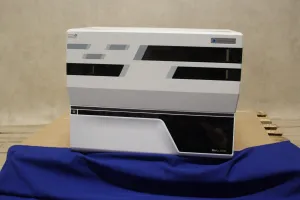
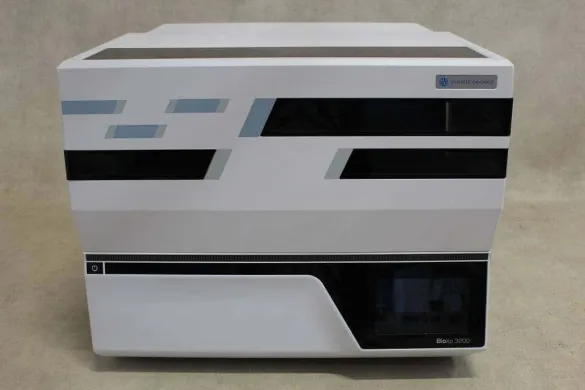
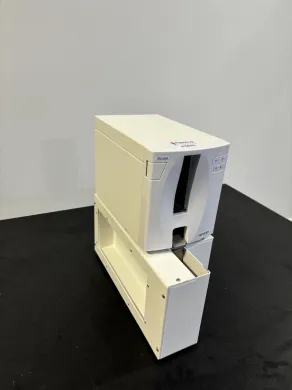
Synthetic Genomics BioXP 3200 DNA printer system synthesizes up to 32 DNA fragments from oligonucleotide pools for synthetic biology research.
The Synthetic Genomics BioXP 3200 DNA printer system is used for synthetic biology research and development involving synthetic genomes and genome parts. It synthesizes linear DNA fragments from custom-designed oligonucleotide pools and reagents.
The system supports up to 32 Tiles, Degenerate Library Tiles or Clones in a 96 well plate format. Tile and Clone sizes range from 350 to 1,800 bp, while Degenerate Library Tiles are recommended at 300 to 800 bp.
This BioXP 3200 is a used unit. The source does not provide testing, service history or included accessory details.
The BioXP 3200 produces linear DNA fragments from custom-designed oligonucleotide pools and reagents. The resulting material supports offline sequencing quality control, assembly into larger fragments, cloning into vectors with compatible ends and other downstream research applications.
The 350 to 1,800 bp Tile and Clone range covers fragments intended for offline sequencing quality control, further assembly into larger fragments and cloning into vectors with compatible ends. Degenerate Library Tiles use a recommended 300 to 800 bp range for library-based designs.
The system supports 1 to 32 reactions in a 96 well plate format. Tile and Clone GC complexity limits vary by fragment size, while Degenerate Library Tiles support IUPAC code residues and a 20 to 70% GC range within the recommended size range.
Lab equipment markets are fragmented. Buyers spend weeks calling distributors, comparing quotes, and verifying supplier reliability. Sellers struggle to reach global research labs.
We built Questpair to fix this. Every supplier on the platform is verified before listing. Every quote you receive comes from a real, vetted seller. AI prepares your case in minutes, then a real specialist takes over.
We're an independent team based in The Netherlands, working with research labs and procurement teams across Europe and worldwide.
With a service contract, ten to fifteen years is normal for most benchtop instruments. Detectors and pumps are the parts that wear first.
Often, yes. Verified suppliers frequently work with service partners converting the instrument. If applicable, we can list servicing options alongside the offer.
Ask a scientist through the request button. Parts are often available even when the instrument itself is discontinued.
Two to six weeks, depending on refurbishment scope and whether calibration is included.
We ship to 38 countries. Crating and customs handling are quoted with the instrument.
Tell us what you need and a scientist finds it for you, usually within the hour.
Last updated 28 November 2026
Questpair lists 140 similar items in Printers.