

Labeling
We personally find you the right used, refurbished and new labeling instruments & equipment from verified suppliers.
Labeling equipment is the class of instruments and consumables that mark laboratory samples, containers and slides with identifiers a reader or a scanner can resolve. The category covers printers, applicators and the label stock they run on, from barcode and cryogenic labels to the hardware that prints and places them. New, used and refurbished units are listed across the Questpair catalogue, and of the current listings 98 percent are used. Prices range from EUR 17 to EUR 29.701, which spans a hand-held label roll at one end and a fully integrated print-and-apply line at the other. The listings come from 18 verified suppliers and distributors across 10 countries.
Updated:
Labeling product list


Not the exact instrument you need?
Tell our scientists what you are after. We track it down, including off-market supply.
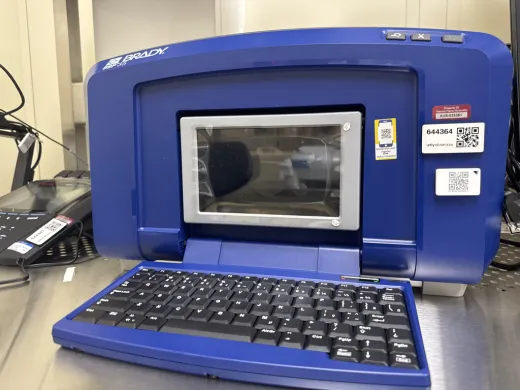
Not the exact instrument you need?
Tell our scientists what you are after. We track it down, including off-market supply.
Showing 1–40 of 172 listings
Show 40 more listingsBuying guide
What settles a labeling purchase first is the surface the label has to survive on, because that governs everything downstream. A label for a cryovial going into liquid nitrogen is a different product from one for a reagent bottle on a bench, and the printer that handles cryogenic and chemical-resistant stock is not the same machine as a general office-grade unit. Decide the hardest condition a label will face in your workflow, autoclave, solvent wash, deep freeze, long archival, and read the printer specification against that before anything else. A thermal transfer printer with the right ribbon chemistry holds up where a direct thermal unit fades within months.
Throughput and format come next. A small lab marking a few hundred vials a week is served by a desktop printer; a biobank or a production line needs continuous-feed or print-and-apply hardware with the duty cycle to match. Check the resolution in dots per inch against the smallest label you will print, because a 25 by 6 millimetre cryo label with a barcode demands more than a shipping label does. Software and connectivity matter here too: confirm the unit speaks the format your LIMS or inventory system exports, and that driver support still exists for an older model.
On a used unit, the print head is the component that decides whether the price is a bargain or a liability. Print heads wear with every pass and are the most common failure point, so ask for the recorded print count or an age estimate, and inspect a sample print for dropped pixels or banding. Rollers, the ribbon drive and the label sensor are worth checking as well. Parts for the common platforms can be sourced via Questpair, and a warranty is often possible, arranged in consultation for the specific listing.
Where price is concerned, the band here is wide. The cost of a basic desktop label printer sits near the floor of the range, while an integrated applicator or a high-resolution industrial system reaches the top. For a lab working to a fixed budget, the used market is where most of the affordable stock sits, since units listed for sale second-hand carry lower prices than new. The brands that dominate the listings, Zebra, Zebra Technologies Corporation, Brady, Brady Worldwide, Inc., Brother, hold the middle and upper part of that band, and their ubiquity is itself a buying argument: parts are available, ribbons are standard, and one model compares cleanly against another.
Types of Labeling
Labelling equipment
Labelling equipment covers the hardware that prints a label and, in many cases, applies it to a container. Among the listings that specify a type, this is the larger group by a wide margin, built mostly of thermal transfer and direct thermal printers alongside print-and-apply systems and hand-held applicators. What separates a thermal transfer unit from a direct thermal one is permanence: the first melts resin or wax from a ribbon onto the label and survives solvents, abrasion and cold, while the second darkens heat-sensitive stock and suits shorter-lived marks. A buyer reaches for thermal transfer when the label must outlast the sample and for direct thermal when speed and ribbon-free running matter more. In molecular biology and genomics workflows, this equipment prints the barcoded cryogenic labels that track samples through cell culture, sample storage and automated plate handling, and it is also used for slide labelling in histology where a durable, legible mark has to stay readable after fixation and staining.
Labels
Labels are the consumable the hardware consumes: the die-cut stock, the ribbons and the pre-printed sheets that carry the actual mark. This is the smaller group in the catalogue, and the distinction that matters within it is the adhesive and face material rather than the printer. Cryogenic labels use a cold-temperature adhesive that grips a frosted vial at minus 196 degrees; chemical-resistant labels use a polymer face and a solvent-proof topcoat; paper labels serve routine, room-temperature marking where longevity is not the concern. A buyer chooses the label stock to match the storage condition first and the printer second, since a mismatched adhesive peels regardless of how good the print is. In life sciences work these labels are the physical index for proteomics and immunoassay sample sets, and they are also used across microbiology to mark plates and broth tubes through incubation and refrigeration. The price of label stock sits at the low end of the category; the printers that run it account for the upper reach of the range.
Frequently asked questions
What is labeling equipment?
It is the class of instruments and consumables that mark laboratory samples, containers and slides with identifiers a reader or scanner can resolve. The category covers printers, applicators and the label stock they run on, from barcode and cryogenic labels to the hardware that prints and places them.
What does labeling mean in a lab context?
Labeling means applying a machine-readable or human-readable identifier to a sample, vial, slide or container so it can be tracked through storage, handling and analysis. In practice it spans the printer, the applicator and the adhesive stock that carries the mark.
How do label printers work?
Thermal transfer printers melt resin or wax from a ribbon onto the label, which survives solvents, abrasion and cold, while direct thermal printers darken heat-sensitive stock without a ribbon and suit shorter-lived marks. Print-and-apply systems add an applicator that places the printed label onto a container automatically.
What types of labeling equipment are there?
Among the listings that specify a type, the common ones are industrial label printer, barcode printer, thermal transfer printer, label printer, desktop label printer and direct thermal printer. The consumable side covers die-cut stock, ribbons and pre-printed sheets, including cryogenic, chemical-resistant and paper labels.
What is labeling equipment used for?
It prints and applies the barcoded cryogenic labels that track samples through cell culture, sample storage and automated plate handling, and it marks slides in histology where the label has to stay readable after fixation and staining. In microbiology it marks plates and broth tubes through incubation and refrigeration.
How do I choose a label printer?
Start with the hardest condition a label will face, autoclave, solvent wash, deep freeze or long archival, and read the printer specification against that. Then check throughput, label format and resolution in dots per inch against the smallest label you print, and confirm the unit speaks the format your LIMS or inventory system exports.
What is the difference between refurbished and used labeling equipment?
A used unit is sold as it comes off its previous workflow, while a refurbished unit has been checked and brought back toward working condition before listing. Both are listed at lower prices than new, and the specific condition is stated on the individual listing.
How much does labeling equipment cost?
Across the catalogue prices range from EUR 17 to EUR 29.701, with an average around EUR 1.106. Label stock sits at the low end, a basic desktop printer near the floor, and an integrated applicator or high-resolution industrial system at the top.
Which brands come up most in this category?
Zebra, Zebra Technologies Corporation, Brady, Brady Worldwide, Inc. and Brother appear across the listings. They hold the middle and upper part of the price band, and their ubiquity means parts are available, ribbons are standard, and one model compares cleanly against another.
Is a warranty available on a refurbished unit?
A warranty is often possible and is arranged in consultation for the specific listing. The terms depend on the unit and the supplier rather than being set centrally.
Can I get parts for a label printer?
Parts for the common platforms can be sourced via Questpair. The print head is the component most worth asking about, since it wears with every pass and is the most common failure point.
How long does a label printer last?
Lifespan is governed largely by the print head, which wears with every pass, so the recorded print count or an age estimate tells you more than the model year. Rollers, the ribbon drive and the label sensor also wear and are worth checking on an older machine.
Should I buy new or refurbished?
Used and refurbished units are listed at lower prices than new, so the used market is where most affordable stock sits for a lab working to a fixed budget. On a second-hand printer, inspect a sample print for dropped pixels or banding and ask for the print count before deciding.
Where can I buy labeling equipment?
The listings come from verified suppliers and distributors across 10 countries, gathered in the Questpair catalogue. New, used and refurbished units appear side by side so you can compare condition and price directly.
What are the lead time and shipping like?
Lead time and shipping depend on the individual supplier and the unit's location, since listings come from 18 suppliers across several countries. The specific timing is set by the seller on the listing you are considering.
What calibration and maintenance does a label printer need?
Routine maintenance centres on cleaning the print head, checking the ribbon drive and rollers, and confirming the label sensor reads the gap or mark correctly. Print quality is verified by inspecting output for dropped pixels or banding, which signals a worn head.
Which types are listed most, and who reaches for which?
Printers are the larger group by a wide margin, built mostly of thermal transfer and direct thermal units alongside print-and-apply systems and hand-held applicators. A buyer reaches for thermal transfer when the label must outlast the sample, and for direct thermal when speed and ribbon-free running matter more.
What does it mean for a buyer that Zebra and Brady dominate the listings?
Their presence means parts are available, ribbons are standard, and one model compares cleanly against another, which lowers the risk on a used purchase. It also means the mid and upper price band is built from machines a buyer can cross-check against alternatives rather than one-off models.
What separates the bottom of the price band from the top?
At the bottom sit label stock and basic desktop printers for routine, room-temperature marking at low volume. At the top are high-resolution industrial systems and integrated print-and-apply lines with the duty cycle for a biobank or production line and the ribbon chemistry for cryogenic and chemical-resistant stock.