
Keyence equipment
We personally find you the right new, used & refurbished Keyence instruments & equipment from verified suppliers
Keyence Corporation is a Japanese industrial automation and inspection equipment manufacturer whose range covers sensors, measuring instruments, vision systems, laser markers and digital microscopes for manufacturing and research. The company was incorporated on 27 May 1974 as Lead Electric Co., Ltd. in Osaka, Japan, founded by Takemitsu Takizaki, and took the Keyence name in 1986. It is an independent publicly listed company on the Tokyo Stock Exchange under code 6861, with notable product families including the VHX digital microscopes, the BZ-X fluorescence microscopes and the VK-X 3D laser scanning confocal systems. On Questpair, 57 used Keyence items are listed by verified suppliers and distributors.
Updated:
Keyence product list


Not the exact instrument you need?
Tell our scientists what you are after. We track it down, including off-market supply.
About Keyence
Keyence Corporation is a Japanese manufacturer of industrial automation and inspection equipment, a range that spans sensors, measuring instruments, machine vision systems, laser markers and digital microscopes for both manufacturing and research. The company was incorporated on 27 May 1974 as Lead Electric Co., Ltd. in Osaka, Japan, founded by Takemitsu Takizaki with an early focus on photoelectric sensors and industrial automation control products. It adopted the Keyence Corporation name in 1986. The firm is independent, with no parent company, and is publicly listed on the Tokyo Stock Exchange under code 6861. Its instruments are known for an integrated, closed-system design in which optics, controller and software ship as one unit. On Questpair, these systems are listed by verified suppliers and distributors across several countries.
Keyence product lines on Questpair
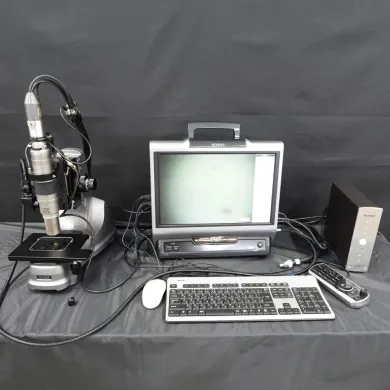
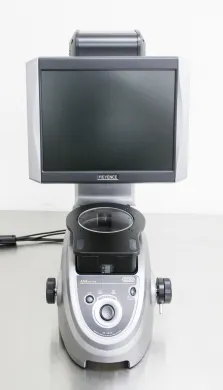
The Keyence catalogue separates into a few recognisable families, each built for a different task. The VHX Series digital microscopes are the general-purpose imaging and documentation instruments, used for inspection, failure analysis and sample measurement where a large depth of field and quick operation matter more than a traditional eyepiece setup. Alongside them sit the VK-X Series 3D laser scanning confocal microscopes, which measure surface profile, roughness and step height without contact, a form of optical metrology that reads three-dimensional structure from reflected laser light.
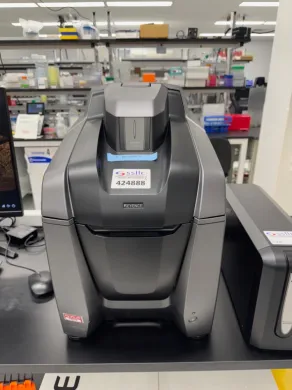
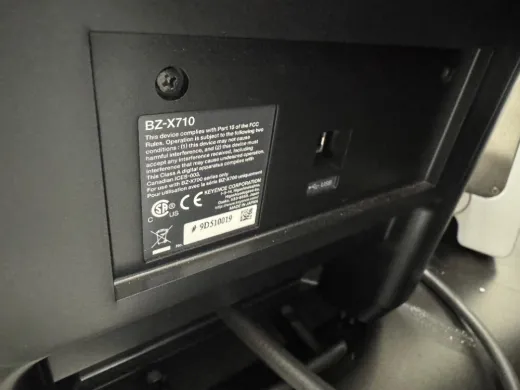
For life sciences work, the BZ-X Series all-in-one fluorescence microscopes bring imaging into a sealed, light-proof enclosure. These are fluorescence microscopy systems built for cell imaging and tissue analysis, and they are also used for live cell culture observation and for work in molecular biology where fluorescent labelling locates a target inside a sample. The BC-1000 Series automated colony counters belong to the same corner of the catalogue, automating a counting step that recurs throughout microbiology; they are also used in quality control screening where colony-forming units have to be tallied consistently. The EA-300 Series laser-based elemental analyser adds compositional measurement to that group.
The measurement and marking lines round out the range. The IM Series instant measurement systems capture multiple dimensions of a part in a single image-based reading, the XM Series handheld CMM brings coordinate measurement to parts too large or awkward for a fixed stage, and the MK Series continuous inkjet printers and laser coders mark products on a line. These are production-floor instruments rather than bench science tools, but they appear in the catalogue because the maker is one company.
Across all of these families the common thread is integration. A Keyence instrument arrives as a complete unit with its own controller and software, which is why a buyer assessing a used listing should read closely for completeness rather than assuming a bare body can be fitted out later.
What is listed on Questpair?
The Questpair catalogue holds 57 Keyence items, offered by 6 verified suppliers and distributors across 4 countries. Every one of them is pre-owned: 100 percent of the listings are used. Prices run from EUR 107 to EUR 31.213. The average sits near EUR 5.331, and that gap between the two ends reflects how wide the range is, from a single sensor or code reader at the low end to a fully configured confocal profiling system at the top.
Because these are closed-architecture instruments, the value of a used listing turns on what ships with it. Where a buyer needs supporting manuals or documentation, Questpair can be contacted and specialists respond within the hour. Parts can be sourced via Questpair, and a warranty is often possible, arranged in consultation for the specific listing. Comparing a used unit against a new one here comes down mainly to price, since the used examples are listed below new, and a buyer weighing the two should read the individual listing for its configuration and condition.
Questpair review of Keyence
Our take based on listings data and supplier feedback
Keyence occupies an unusual position for a laboratory buyer, because the company built its reputation in industrial automation and only later carried that engineering into the imaging instruments that draw research interest. The result is a catalogue of microscopes and profiling systems designed around ease of operation rather than modular optical benches, and that design choice shapes what a buyer finds on the second-hand market.
The first thing worth weighing is imaging depth across one maker. The Questpair listings bring together several distinct families under a single name, and a buyer who already runs one Keyence instrument can compare neighbouring classes without leaving the catalogue. The VHX digital microscopes handle general inspection and documentation, the BZ-X all-in-one fluorescence systems address biological imaging in a sealed enclosure, and the VK-X 3D laser scanning confocal instruments measure surface form at sub-micron scales. These three answer very different questions, and seeing them listed together makes the trade-off between them easier to judge than scanning separate vendor sites would. Where a catalogue mixes classes like this, the buyer's own application, whether that is colony counting, surface metrology or cell imaging, decides which family is the right one, not a ranking.
The second consideration is supply breadth. Offers come from 6 verified suppliers and distributors spread across 4 countries, which matters more for this maker than for most. Keyence instruments are closed systems, so a given VHX or IM series unit is harder to substitute part-for-part than an open-frame microscope would be, and having the same model available from more than one source gives a buyer some room to compare condition and configuration before committing. That breadth is not unlimited, and a specialised line such as the XM handheld CMM or the EA-300 elemental analyser will naturally appear less often than a mainstream digital microscope.
The third point is the condition profile, and here the catalogue is unambiguous. 100 percent of the listings are used. Prices run from EUR 107 to EUR 31.213, with an average near EUR 5.331, a spread that reflects the distance between an entry-level sensor or code reader and a fully configured confocal profiling system. For a closed-architecture instrument, pre-owned condition carries a specific weight: the buyer is acquiring not just optics but an integrated controller, software and often a dedicated display, so the completeness of a listing matters as much as its headline price. A unit sold with its original console and imaging software is a different proposition from a bare body, and the price spread above captures some of that difference.
Taken together, the Keyence listings suit a buyer who values an integrated, operator-friendly instrument and is prepared to assess each used unit on its completeness rather than its component parts. Warranty on any individual item is arranged in consultation for that specific listing, and parts can be sourced via Questpair.
**Imaging depth across one catalogue**
The Questpair listings span digital microscopes, fluorescence systems and 3D laser scanning confocal instruments from a single maker, letting a buyer compare the VHX, BZ-X and VK-X families side by side.
**Instruments carried from several suppliers**
Listings come from 6 verified suppliers and distributors across 4 countries, so a given VHX or IM series unit can often be matched against more than one offer.
**Entirely pre-owned pricing**
100 percent of the listings are used, with individual prices running from EUR 107 to EUR 31.213 and an average around EUR 5.331.
Frequently asked questions
Where can I get manuals and documentation for Keyence instruments?
Because these are closed-architecture systems where the software and controller ship with the body, matching documentation to a specific listing matters. Contact Questpair for manuals or documentation and specialists respond within the hour.
How much does Keyence equipment cost on Questpair?
Listed prices range from EUR 107 to EUR 31.213, with the average near EUR 5.331. The spread reflects the difference between a single sensor or code reader and a fully configured confocal profiling system.
What's the difference between refurbished and used Keyence units?
A refurbished unit has been checked and brought back to working condition, while a used unit is sold in its existing state. Read the individual listing for its stated condition and what ships with it, since completeness drives value on these integrated systems.
Is a warranty included?
A warranty is often possible and is arranged in consultation for the specific listing. Terms are not set centrally, so check the listing you are interested in.
Are Keyence instruments suitable for clinical or research work?
The BZ-X Series all-in-one fluorescence microscopes are built for cell imaging, tissue analysis and live cell culture observation, and the BC-1000 Series automated colony counters handle microbiology and quality control screening. These are research and laboratory instruments; whether a given unit fits a regulated clinical setting depends on the model and its configuration.
How long do Keyence instruments last?
Lifespan depends on the instrument class and how heavily it has been used. Because a Keyence unit is an integrated package of optics, controller and software, continued use depends on all parts of that package remaining functional, so check the listing for completeness and condition.
Can I still get parts for Keyence equipment?
Parts can be sourced via Questpair. Given the closed-system design, confirm which components a listing needs before purchase rather than assuming a bare body can be fitted out later.
What are the alternatives to Keyence for microscopy and metrology?
For digital and fluorescence microscopy, alternatives come from makers of inverted and upright microscope systems; for 3D surface profiling, from optical profilometer and confocal metrology makers; for machine vision and sensors, from industrial automation suppliers. What separates Keyence is the integrated single-unit design where optics, controller and software ship together, so compare on whether an open or a closed architecture suits your work.
What's the lead time on a used Keyence unit?
Lead time depends on the individual supplier and the item's location. Listings come from 6 verified suppliers and distributors across 4 countries, so timing varies with the specific listing.
What is the difference between parts and spares when buying Keyence equipment?
In practice the terms overlap: both refer to components used to repair or complete an instrument, whether a replacement controller, a cable or an optical element. Parts can be sourced via Questpair for the listing you are considering.
Do suppliers ship Keyence equipment internationally?
Suppliers are spread across 4 countries, so international shipping is often possible. Confirm shipping terms and destination with the individual supplier for the listing.
Which Keyence product lines are there and how do they differ?
The VHX Series are general-purpose digital microscopes for imaging and inspection, the VK-X Series are 3D laser scanning confocal microscopes for non-contact surface metrology, and the BZ-X Series are sealed all-in-one fluorescence microscopes for life sciences. The measurement and marking side includes the IM Series instant measurement systems, the XM Series handheld CMM, the BC-1000 Series automated colony counters, the EA-300 Series laser-based elemental analyser and the MK Series inkjet printers and laser coders.
Which types of Keyence instruments are actually listed here and in what condition?
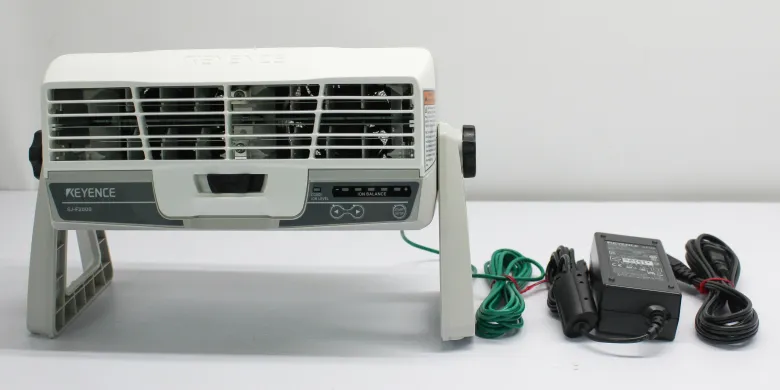
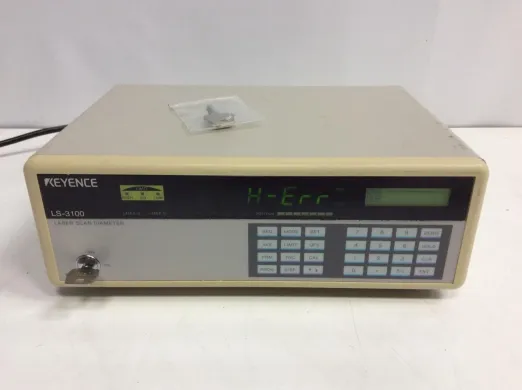
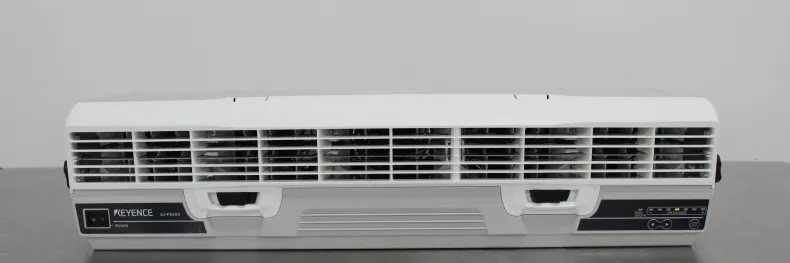
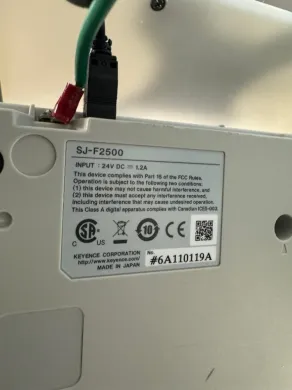
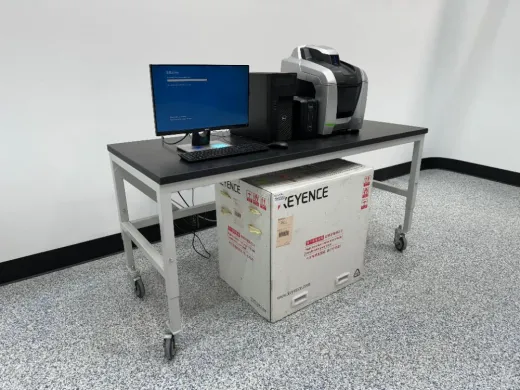
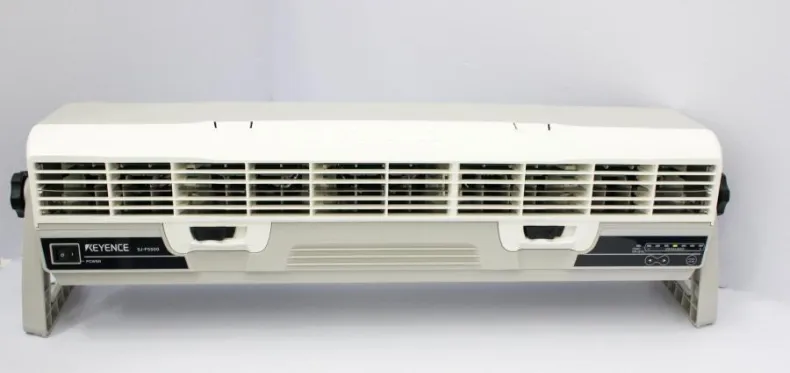
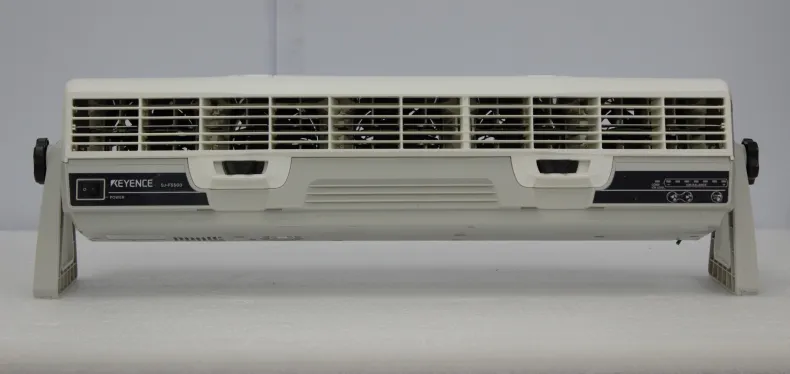
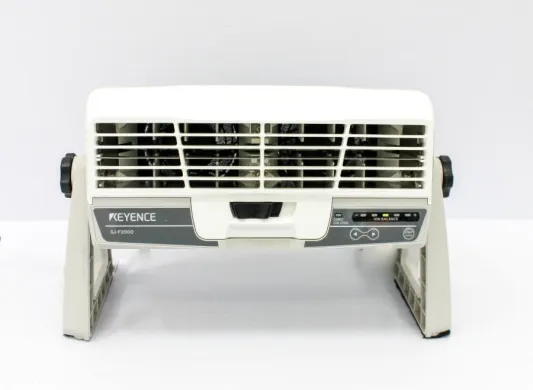
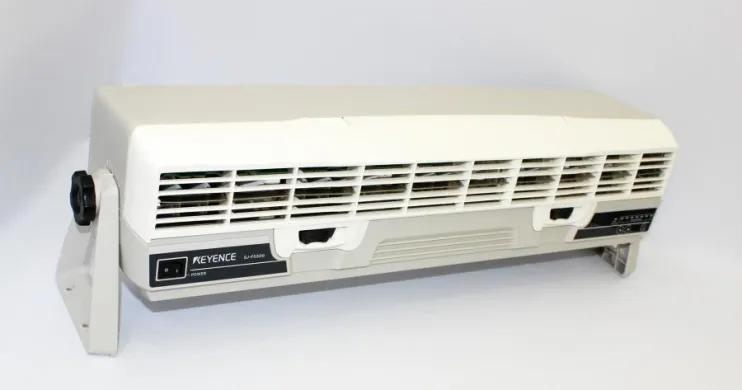
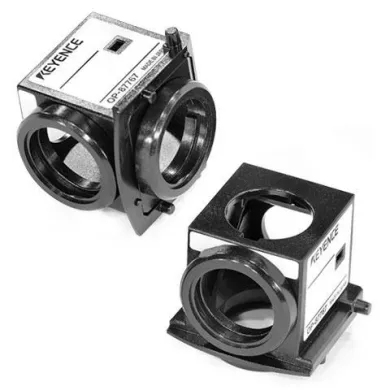
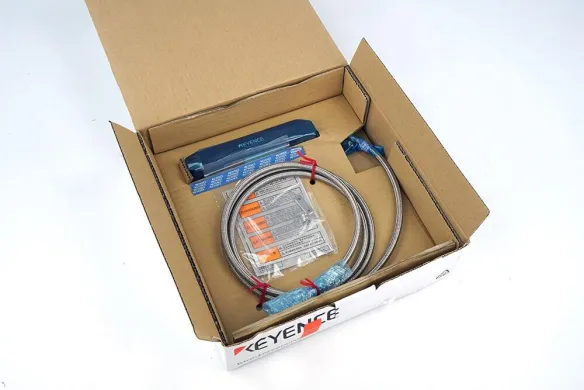
The catalogue currently holds items such as ionizing air blowers, static eliminator blowers, fluorescence microscopes, all-in-one fluorescence microscopes and static control equipment. Every listing is pre-owned: 100 percent are used, across 57 items in total.
What separates the cheapest Keyence listings from the most expensive?
At the low end sit single components such as a sensor, a code reader or a static eliminator, while the high end holds fully configured systems like a 3D confocal profiling setup with its controller and software. The price gap between EUR 107 and EUR 31.213 tracks that difference in completeness and instrument class, so the configuration described in each listing is what sets its price.
About Questpair
Questpair is the European marketplace for lab equipment, where AI-prepared cases and personal specialists guide every purchase. We work with 247 verified suppliers across 38 countries to find buyers the right new, used or refurbished instruments, with response within 1 hour and significant savings vs buying new.
Personal · Fast · Reliable · Affordable