
Abbott equipment
We personally find you the right new, used & refurbished Abbott instruments & equipment from verified suppliers
Abbott Laboratories (NYSE: ABT) is an American medical devices and diagnostics instrument manufacturer, founded in 1888 in Chicago by Dr. Wallace Calvin Abbott as the Abbott Alkaloidal Company. The company is headquartered in Abbott Park, Illinois, and operates independently rather than under a parent group. Its diagnostics work spans immunoassay systems, clinical chemistry analyzers, hematology analysers, molecular diagnostics platforms and point-of-care blood analysis, carried under lines such as Alinity, ARCHITECT, i-STAT and Cell-Dyn. On Questpair, 57 used Abbott items are listed by 9 verified suppliers and distributors across 4 countries.
Updated:
Abbott product list


Not the exact instrument you need?
Tell our scientists what you are after. We track it down, including off-market supply.
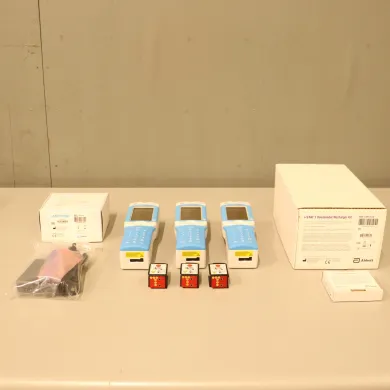
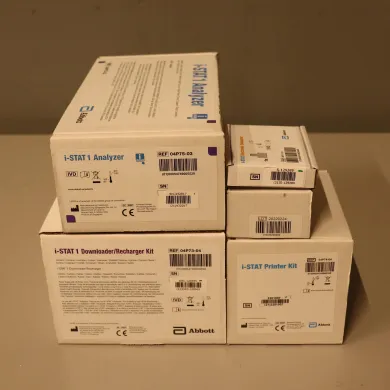
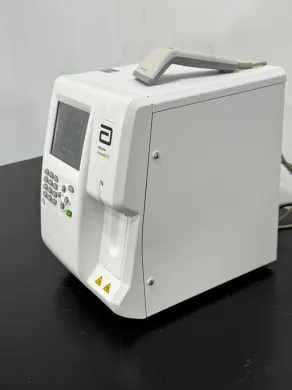
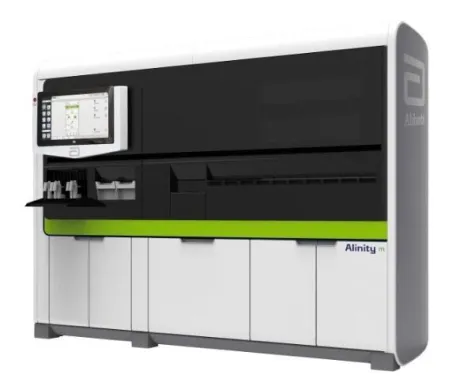
About Abbott
Abbott Laboratories is an American manufacturer of medical devices and diagnostics instruments, founded in 1888 in Chicago by Dr. Wallace Calvin Abbott. He began as the Abbott Alkaloidal Company, producing precisely dosed alkaloid granules for fellow physicians who were dissatisfied with the inconsistent quality supplied by pharmacists. The company is now headquartered in Abbott Park, Illinois, and trades independently on the New York Stock Exchange under ABT, with no parent group above it. Its diagnostics business builds immunoassay systems, clinical chemistry analyzers, haematology analysers, molecular diagnostics platforms, point-of-care blood analysis devices and transfusion diagnostics. These run under names a clinical laboratory will recognise, among them Alinity, ARCHITECT, i-STAT, Cell-Dyn, Vysis, m2000, Abbott PRISM and BinaxNOW. On Questpair, this class of instrument is offered used by verified suppliers and distributors.
Much of this equipment does molecular diagnostics and clinical laboratory work directly. The m2000 and Alinity m platforms run nucleic acid testing, the automated extraction and amplification behind viral load measurement and infectious disease assays, which is molecular biology applied to patient samples rather than to research. The Vysis line does cytogenetics through fluorescence in situ hybridisation, a FISH-based method also used for detecting chromosomal rearrangements in oncology samples. ARCHITECT and Alinity immunoassay analysers run immunoassay panels across endocrinology, cardiac markers and infectious disease serology, while Cell-Dyn does haematology, the automated differential count that underlies a complete blood count. The i-STAT handheld does point-of-care blood gas and chemistry analysis at the bedside. Taken together these instruments sit at the centre of molecular diagnostics and clinical chemistry, the fields where immunoassay automation, nucleic acid amplification and automated haematology turn a patient sample into a result.
Abbott diagnostics product lines on Questpair
The lines that appear on the brand page map onto distinct kinds of work. ARCHITECT is the earlier generation of immunoassay and clinical chemistry automation, Alinity its successor across immunoassay, chemistry, haematology and molecular testing. The i-STAT system is the handheld end of the portfolio, Cell-Dyn the haematology analysers, and m2000 the molecular platform for nucleic acid testing. Vysis covers cytogenetic probes and the instruments around FISH, Abbott PRISM sits in transfusion and blood screening, and BinaxNOW is rapid antigen testing. Which of these is listed at any time depends on the catalogue rather than on the full product range, so the brand page is the place to check what is actually available.
What does an Abbott analyser cost on Questpair?
Prices run from EUR 38 to EUR 22.295. That range is the clearest guide to format: the lower figures point to handheld and point-of-care devices, the higher ones to full automated analysers with their modules fitted. The average of EUR 2.300 sits between those extremes and should not be read as a typical unit, because the catalogue is not clustered around it. Every listing is used: 100 percent of the stock is offered in used condition. A warranty on a particular unit is often possible and is arranged in consultation for that listing. Parts for a listed platform can be sourced via Questpair, and a buyer who needs manuals or documentation can contact Questpair, where specialists respond within the hour. The listings themselves, placed by 9 verified suppliers and distributors across 4 countries, carry the condition and configuration detail that decides whether a given analyser fits the bench.
Questpair review of Abbott
Our take based on listings data and supplier feedback
Abbott's diagnostics portfolio is unusually broad for a single maker, and that breadth is what a buyer first meets in the Questpair catalogue. The listings run from pocket-sized point-of-care devices to bench and floor-standing automated analysers, and the price tokens reflect that span: they range from EUR 38 to EUR 22.295, with an average around EUR 2.300. A figure that wide is not a quirk of pricing, it is the signature of a catalogue that mixes an i-STAT handheld blood analyser with an ARCHITECT or Alinity immunoassay system. Reading the spread as a buyer means deciding which end of it you are shopping, because the two ends solve very different problems.
The first benefit, diagnostics-grade instruments at used pricing, holds across the whole catalogue because 100 percent of the listings are used. There is no new stock to weigh against, so the comparison a buyer makes is between one used listing and another, on condition and on fitted configuration, rather than new against refurbished. Warranty on any individual unit is arranged in consultation for that listing, which matters more for a clinical analyser than for general lab equipment, since these platforms carry assay modules and fluidics that a buyer will want described before committing.
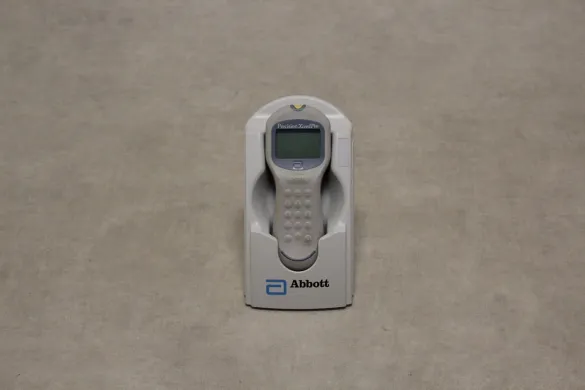
The second benefit, platforms a laboratory already recognises, is where Abbott's naming pays off. ARCHITECT and Alinity are immunoassay and clinical chemistry systems that run established assay menus, and a laboratory replacing or expanding capacity can slot a listed unit into protocols it already validates against. The i-STAT line does point-of-care blood analysis at the bedside, Cell-Dyn covers haematology, and the m2000 and Vysis names sit in molecular diagnostics and cytogenetics. A buyer who knows the line knows roughly what a listing does before reading the detail, which shortens the work of matching an instrument to a bench.
The third benefit, the range of instrument size, is the practical consequence of the first two. Because the catalogue carries both the smallest and the largest formats, a point-of-care clinic and a central laboratory are shopping the same brand page for genuinely different machines. The sensible approach is to read the listing against the work: a handheld analyser answers a different question from an automated chemistry line, and the price alone tells you which you are looking at. Where a buyer needs parts for a listed platform, those can be sourced via Questpair, and documentation requests reach specialists who respond within the hour. What the catalogue does not do is rank one Abbott system over another; the listings describe what each unit is and what condition it is in, and the judgement of fit stays with the laboratory that knows its own assay menu.
**Diagnostics-grade analysers at used pricing**
Every Abbott listing on Questpair is offered used, which places clinical-grade immunoassay and chemistry platforms below the cost of new equipment from verified suppliers and distributors.
**Platforms a lab already knows**
The ARCHITECT, Alinity and i-STAT names are familiar to clinical laboratory staff, so a listed unit matches established protocols rather than requiring a new workflow.
**Spread of price and instrument size**
With prices running from EUR 38 to EUR 22.295, the catalogue covers handheld point-of-care devices through to full-size automated analysers.
Frequently asked questions
Where can I get the manual or documentation for an Abbott instrument?
Contact Questpair for manuals or documentation on a specific Abbott platform, and specialists respond within the hour. Documentation availability depends on the individual listing and the platform involved.
How much do Abbott instruments cost here?
Prices range from EUR 38 to EUR 22.295, with the average around EUR 2.300. The low end reflects accessories and small point-of-care devices, while complete immunoassay and molecular systems sit toward the top.
What's the difference between a refurbished and a used Abbott unit?
The Questpair catalogue lists units as used and refurbished at prices below new, but it does not assign a standardised refurbished grade. Read each listing's own description of condition and configuration to understand what a specific unit includes.
Is there a warranty on used Abbott equipment?
A warranty is often possible and is arranged in consultation for the specific listing rather than as a fixed term. Terms are not set centrally, so check the individual listing you are considering.
Are Abbott analyzers suitable for clinical and research work?
Abbott's diagnostics platforms are built for hospital laboratory testing, including immunoassay serology, clinical chemistry, haematology, and molecular diagnostics. Lines like ARCHITECT and Alinity i perform immunoassay chemistry that overlaps with the proteomics and molecular biology techniques used in translational research.
How long do Abbott diagnostics systems last?
Lifespan depends on the platform, its usage history, and maintenance, none of which the Questpair catalogue tracks per unit. Clinical analysers are modular, so individual modules and sample handlers can be replaced over a system's working life.
Can I get spare parts for Abbott platforms?
Parts for these platforms can be sourced via Questpair. Availability depends on the platform and current listings, so check against what suppliers have posted for your specific system.
What are the alternatives to Abbott diagnostics instruments?
Alternatives depend on which test type you run: immunoassay, clinical chemistry, haematology, molecular diagnostics, or point-of-care blood analysis each have other manufacturers' platforms. Within Abbott itself, the Alinity series is the more recent successor to ARCHITECT across immunoassay, chemistry, molecular, and hematology.
What's the lead time on an Abbott instrument?
Lead time is set by the individual supplier and the unit's location, not centrally by Questpair. The catalogue is held by 9 suppliers across 4 countries, so timing varies with where a given platform is listed.
Is there a difference between parts and spares for these systems?
The terms are used interchangeably here for components such as processing modules, sample handlers, and accessories. These can be sourced via Questpair, and a listing may cover a single module rather than a full analyzer.
Can Abbott equipment be shipped internationally?
The catalogue spans 9 suppliers across 4 countries, so cross-border shipping is common. Shipping arrangements and costs are set per listing by the supplier.
Which Abbott product lines are there and how do they differ?
ARCHITECT covers high-throughput immunoassay and clinical chemistry, while Alinity is its successor across immunoassay, chemistry, molecular, and haematology. i-STAT is the handheld point-of-care platform, Cell-Dyn handles hematology, m2000 and Vysis serve nucleic acid testing and cytogenetic analysis, and Abbott PRISM and BinaxNOW cover transfusion screening and rapid testing.
Which Abbott instrument types are actually listed here and in what condition?
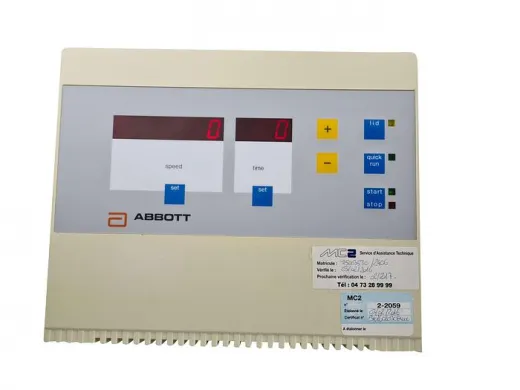
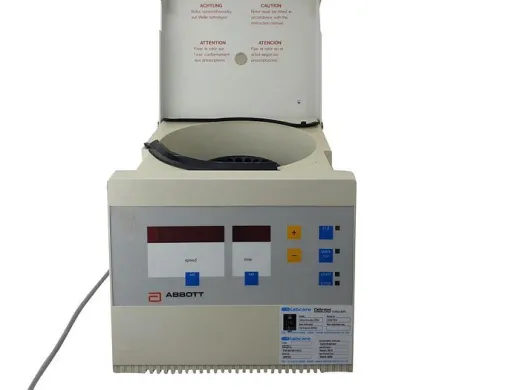
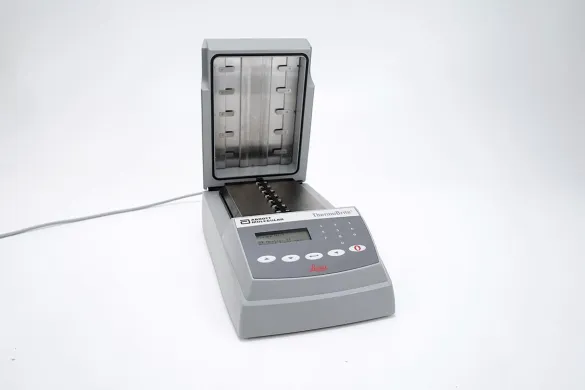
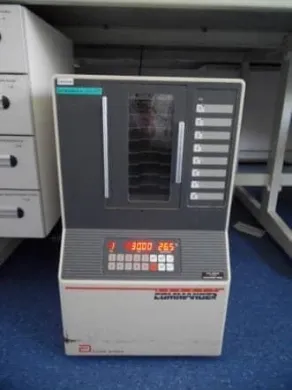
The listed types include slide processing systems, molecular diagnostics equipment, thermal cyclers for slides, benchtop centrifuges, biochemical analysers, and clinical centrifuges. Of the 57 Abbott items listed, 100 percent are used; read each listing for its specific condition and configuration.
Why are some Abbott listings so much cheaper than others?
Because these systems are modular, a bare processing module or small point-of-care device sits at the low end, while a complete immunoassay or molecular analyzer carries a much higher figure under the same family name. Read the platform name and the configuration described rather than price alone, since prices across the brand run from EUR 38 to EUR 22.295.
About Questpair
Questpair is the European marketplace for lab equipment, where AI-prepared cases and personal specialists guide every purchase. We work with 247 verified suppliers across 38 countries to find buyers the right new, used or refurbished instruments, with response within 1 hour and significant savings vs buying new.
Personal · Fast · Reliable · Affordable