

Water treatment equipment
We personally find you the right used, refurbished and new water treatment equipment from verified suppliers.
Water treatment equipment is the class of laboratory apparatus that purifies, conditions and polishes water to a defined quality for analytical, clinical and production use. It spans ultraviolet disinfection systems, filtration housings, ion exchange columns and reverse osmosis units, each removing a different class of contaminant from feed water. New, used and refurbished units are listed across the Questpair catalogue, from benchtop polishers to skid-mounted plant. Of the current listings, 86 percent are used. Prices run from EUR 1 to EUR 139.943, a spread that reflects how much the application varies, from a single point-of-use cartridge to a multi-stage system feeding a whole laboratory.
Updated:
Water treatment equipment product list


Not the exact instrument you need?
Tell our scientists what you are after. We track it down, including off-market supply.
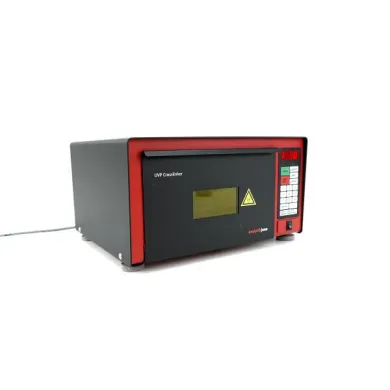
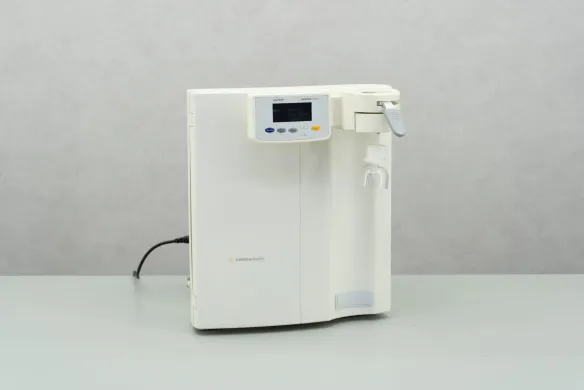
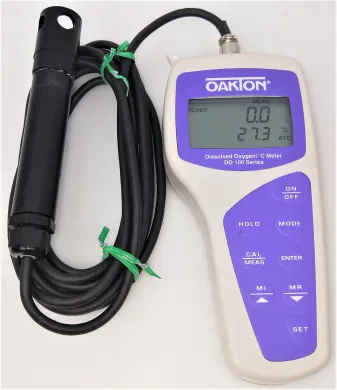
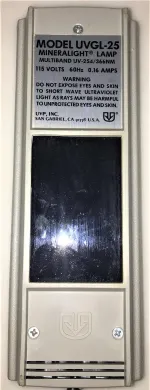
Not the exact instrument you need?
Tell our scientists what you are after. We track it down, including off-market supply.
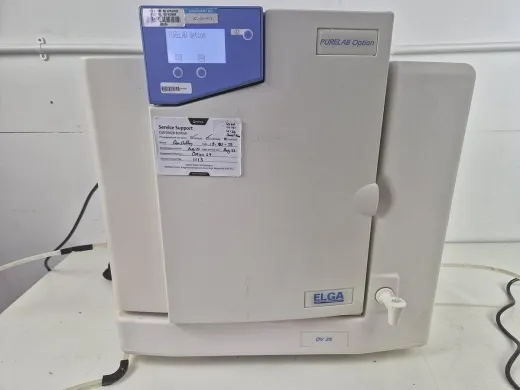
Showing 1–40 of 469 listings
Show 40 more listingsBuying guide
The water quality a method demands is the figure that settles the purchase, and everything else follows from it. A buffer for cell culture, a mobile phase for HPLC, a rinse for glassware and a feed for a steam generator are four different specifications, usually written as resistivity in megohm-centimetres, total organic carbon in parts per billion, and bacterial or endotoxin limits. Match the output grade to the most demanding method on the bench, not to an average, because a system sized for Type III water cannot be upgraded to Type I by changing a cartridge. Feed water matters as much as the target: a unit fed from a hard municipal supply works harder than one fed from already-softened water, and the running cost of consumables tracks that difference.
What to verify on a used unit
Condition on a second-hand purifier is mostly about what the previous owner ran through it. UV lamps and quartz sleeves have a rated service life and dim long before they fail outright, so a used ultraviolet system is worth more with lamp hours documented than without. Reverse osmosis membranes foul and ion exchange resins exhaust, and neither failure is visible from the outside, so ask what the last output reading was and when the consumables were changed. The pressure vessels, pumps and plumbing are the parts that carry real value on a used system; the replaceable media is expected to be replaced. Any used weighing or metering electronics benefit from a recalibration check before the unit is relied on for a validated method.
Where the price band sits depends entirely on scale. A point-of-use cartridge and a plant feeding an entire floor both appear under this heading, which is why the range is as wide as it is. Prices run from EUR 1 to EUR 139.943 across the catalogue. Benchtop polishing units and filtration housings occupy the lower and middle of that band; multi-stage reverse osmosis and ion exchange plant sit at the top. Millipore, Yamato, Acros Organics, CLiR, Thermo Scientific are the names that recur most often in the listings, and their presence affects what a buyer can budget for, since a widely sold model is easier to compare on price and easier to find replacement media for. Used and refurbished systems are listed below the cost of equivalent new equipment, and for buyers whose output grade is met by an older generation that difference can be substantial. What fits a given budget is less about the headline price than about the consumables the unit will consume over its working life, so read the running cost into any system offered for sale before comparing two on sticker alone.
Types of Water treatment equipment
Ultraviolet systems
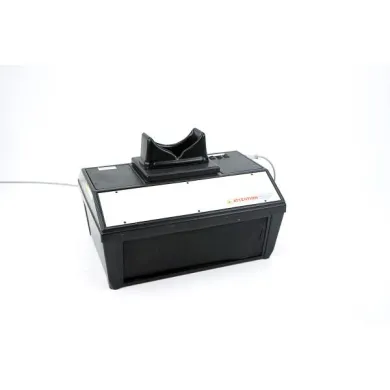
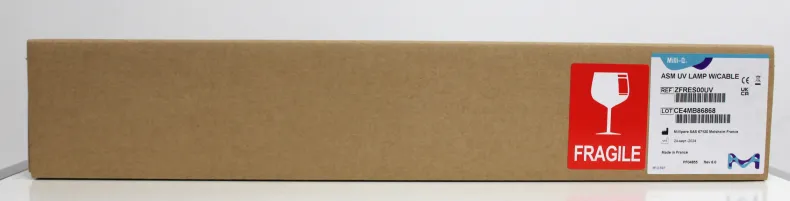
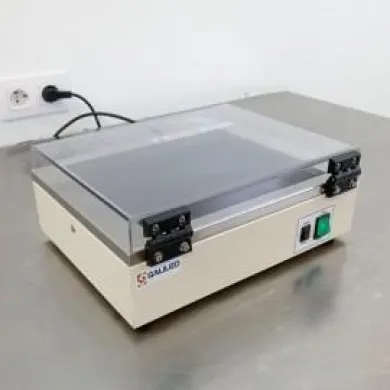
Among the listings that specify a type, ultraviolet systems are the most numerous. They pass water through a chamber lit by a UV lamp at 254 nanometres, which inactivates bacteria and breaks down organic molecules without adding anything to the water. In a laboratory polishing loop a 185-nanometre lamp is often used instead, to reduce total organic carbon for sensitive work. These units are chosen where bacterial and endotoxin control matters, so they are standard in cell culture and in microbiology, and they also support molecular biology benches that need low-organic water for sensitive assays. The lamp and quartz sleeve are the wearing parts, and output falls off as the lamp ages well before it stops lighting.
Water filtration equipment
Filtration equipment removes particulates, colloids and in some configurations dissolved organics by passing water through a membrane or a packed medium. The category covers cartridge housings, depth filters and activated-carbon beds, each separating a different size fraction. Depth and particulate filters protect downstream membranes and columns from fouling, which is why they usually sit upstream of a reverse osmosis or ion exchange stage rather than acting alone. Activated carbon removes chlorine and organics that would otherwise damage an RO membrane. In life sciences work these filters feed the clean-water stages that supply protein purification and electrophoresis buffers, where particulate carryover would compromise a result. The housings carry the value; the cartridges are consumable and sized by micron rating and flow.
Ion exchange equipment
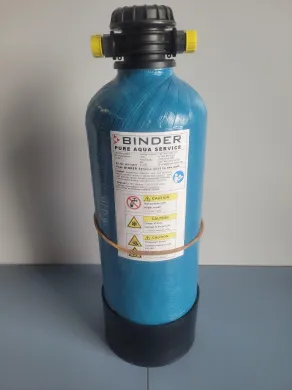
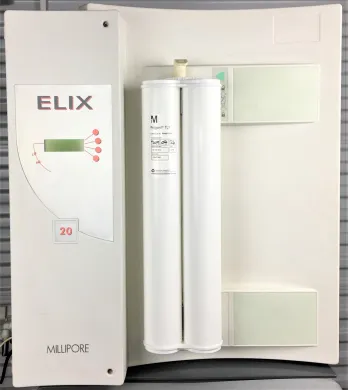
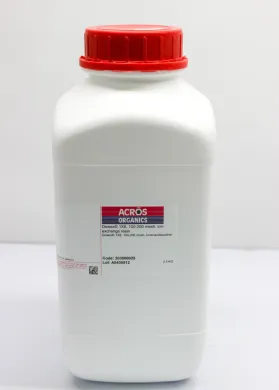
Ion exchange equipment removes dissolved ionic contaminants by passing water over resin beds that swap unwanted ions for hydrogen and hydroxyl. A mixed-bed polisher brings deionised water close to the theoretical maximum resistivity, which is why ion exchange is the final stage in most Type I systems. Cation and anion beds can also run separately where a specific ion has to be targeted. The resin exhausts in service and is either regenerated with acid and base or replaced as a cartridge, and an exhausted bed lets ions through silently, so output resistivity is the reading that tells a buyer where the resin stands. Deionised water from these systems feeds gravimetric analysis and trace work in genomics and proteomics, where a dissolved ion would register as background.
Reverse osmosis equipment
Reverse osmosis equipment forces feed water through a semi-permeable membrane under pressure, rejecting the large majority of dissolved salts, organics and microorganisms in a single stage. It is the workhorse pre-treatment that sits ahead of ion exchange and UV polishing, producing Type II or Type III water directly and the bulk feed for a Type I loop. An RO system needs a pump, a pressure vessel and good pre-filtration, and it rejects a share of its feed as concentrate, so recovery rate and feed pressure are specifications a buyer reads carefully. Reverse osmosis supplies the volume of purified water that biomanufacturing and bioprocessing consume, and it feeds the clean-water demand of a busy cell culture suite. The membrane fouls over time and is the part most likely to need replacement on a used unit.
Frequently asked questions
What is water treatment equipment?
It is laboratory apparatus that purifies, conditions and polishes water to a defined quality for analytical, clinical and production use. It covers ultraviolet disinfection, filtration, ion exchange and reverse osmosis, each removing a different class of contaminant from feed water.
What does water treatment equipment mean in a laboratory context?
It means the stages that take a feed supply, usually municipal or pre-softened water, and bring it to a grade a method requires. That grade is written as resistivity in megohm-centimetres, total organic carbon in parts per billion, and bacterial or endotoxin limits.
How does water treatment equipment work?
Each stage targets a different contaminant: reverse osmosis forces water through a membrane to reject dissolved salts, ion exchange swaps unwanted ions over resin beds, filtration removes particulates, and UV inactivates bacteria and breaks down organics. A full system chains these in sequence, with RO and filtration upstream and ion exchange and UV polishing at the end.
What types of water treatment equipment are there?
The listings include ultrapure water systems, laboratory water purification systems, general water purification systems, ultrapure water purification systems, laboratory water systems and benchtop water purifiers. By stage they divide into ultraviolet systems, filtration equipment, ion exchange equipment and reverse osmosis equipment.
What is water treatment equipment used for?
It supplies water for cell culture buffers, HPLC mobile phases, glassware rinsing, steam generator feed and trace analysis in genomics and proteomics. The target grade depends on the method, from Type III rinse water to Type I ultrapure water for sensitive assays.
How do I choose water treatment equipment?
Match the output grade to the most demanding method on your bench, not to an average, because a system sized for Type III water cannot be upgraded to Type I by changing a cartridge. Then check the feed water, since a hard municipal supply makes the unit work harder and raises consumable running cost.
What is the difference between refurbished and used water treatment equipment?
Used describes a unit sold in the condition it comes in, while refurbished means it has been checked and brought back toward working order before listing. For both, the wearing parts such as UV lamps, RO membranes and ion exchange resin are expected to be replaced, so ask when consumables were last changed.
How much does water treatment equipment cost?
Prices in the catalogue range from EUR 1 to EUR 139.943, with an average of EUR 2.778. The spread is wide because a point-of-use cartridge and a plant feeding an entire floor both fall under this heading.
Which brands come up most in this category?
Millipore, Yamato, Acros Organics, CLiR and Thermo Scientific are the names that recur most in the listings. A widely sold model is easier to compare on price and easier to find replacement media for.
Can I get a warranty on a refurbished unit?
A warranty is often possible and is arranged in consultation for the specific listing. Check the individual listing for what the seller offers on that unit.
Are parts available for these systems?
Parts can be sourced via Questpair. The consumable items on these systems, UV lamps, quartz sleeves, RO membranes, filter cartridges and ion exchange resin, are replaced as a normal part of running the equipment.
What is the lifespan of water treatment equipment?
The pressure vessels, pumps and plumbing are long-lived and carry the value of a system, while the media is consumed in service. UV lamps dim before they fail, RO membranes foul and ion exchange resin exhausts, so the housing outlasts the media many times over.
New versus refurbished, which should I buy?
Used and refurbished units are listed at lower prices than new equipment, and for a buyer whose output grade is met by an older generation that difference can be substantial. Weigh the two on the individual listing and remember warranty is arranged in consultation.
Where can I buy water treatment equipment?
Questpair lists new, used and refurbished units from verified suppliers and distributors across 17 suppliers in 12 countries. The listings span benchtop polishers to skid-mounted plant.
What are the lead time and shipping like?
Lead time and shipping depend on the individual listing and the supplier holding the unit. The listing is where those terms are stated, and Questpair specialists respond within one hour if you need to confirm them before buying.
What calibration and maintenance does this equipment need?
Output resistivity is the reading that tells you where the resin or membrane stands, since an exhausted bed or fouled membrane lets contaminants through silently. Any weighing or metering electronics on a used unit benefit from a recalibration check before the system is relied on for a validated method.
Which types are listed most and who reaches for which?
Among listings that specify a type, ultraviolet systems are the most numerous, chosen in cell culture and microbiology where bacterial and endotoxin control matters. Ion exchange polishers serve gravimetric and trace work in genomics and proteomics, while reverse osmosis supplies the bulk volume for biomanufacturing and busy cell culture suites.
Which brands dominate the category and what does that mean for a buyer?
Millipore, Yamato, Acros Organics, CLiR and Thermo Scientific appear most often across the listings. A model that recurs is easier to benchmark on price and easier to source replacement media for, so a frequently listed brand reduces the risk of a system becoming hard to feed.
What separates the cheapest listings from the most expensive?
Scale sets the band: benchtop polishing units and filtration housings sit at the lower and middle, while multi-stage reverse osmosis and ion exchange plant sit at the top. The headline price matters less than the consumables a unit will use over its working life, so read running cost into any comparison before judging two on sticker alone.