58k+ listingsShips to NLResponse within one hour+31 73 711 4717info@questpair.com
Procurable · sourced on request

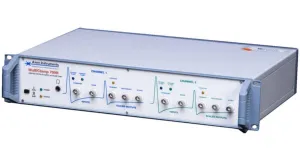
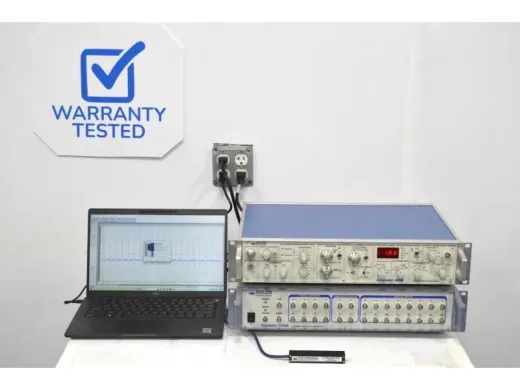
Molecular Devices MultiClamp 700B

UsedMolecular DevicesElectrophysiologyNetherlands
Procurable

Not in stock, available to order through our sourcing team

Not in stock, but we can get it for you

We source this model through our supplier network. Request a quote and we'll come back within one hour.

  1. Request a quote
  2. We confirm price and lead time
  3. You approve, we ship to you
Dimensions (H x W x D)
89 x 483 x 305 mm
Rack Use
Standard 19" rack-mount (2U) with handles
Benchtop Use
Bayonet feet
Holding Potential Range
±1000 mV
Holding Current Range
±200 nA
Availability
Procurable
Lead time
Confirmed with your quote
All 25 specifications
  • Ships to NL
  • Response within 1 hour
  • Warranty available. Buy without worry
  • Support from a scientist

Specifications 25

Brands
Molecular Devices
New/Used
Used
Dimensions (H x W x D)
89 x 483 x 305 mm
Weight
4.54 kg
Rack Use
Standard 19" rack-mount (2U) with handles
Benchtop Use
Bayonet feet
Holding Potential Range
±1000 mV
Holding Current Range
±200 nA
Output Gain Range
1.0 to 2000 mV/pA
Open Circuit Noise at 5 kHz
0.15 pA rms
Open Circuit Noise at 10 kHz
0.28 pA rms
Capacitance Compensation
Yes
RMS Noise at 50 GΩ
0.28 pA rms at 10 kHz
RMS Noise at 50 MΩ
3.0 pA rms at 10 kHz
Automatic Mode Switching
Yes
Slow Current Injection
Yes
True Current Clamp-Voltage Follower
Yes
Simultaneous Dual Patch Clamping
Yes
Computer Control
Yes
Channels
2 (sharing a common ground)
Communications
USB 1 Type B female ports
Power Supply
85-260 VAC, 50-60 Hz, 30 W (max)
Safety
CE marking (Conformité Européenne)
Availability
Procurable
Lead time
Confirmed with your quote

Product description

Dual-mode microelectrode amplifier for voltage- and current-clamp electrophysiology with low-noise, high-speed compensation.

MultiClamp 700B is a state-of-the-art microelectrode amplifier designed for precise electrophysiological recordings in neuroscience and biotechnology research. This instrument offers unparalleled control and flexibility, making it indispensable for studies involving patch-clamp and voltage-clamp techniques.

Key features include:

  • Dual-mode operation: Seamlessly switch between voltage-clamp and current-clamp modes to accommodate diverse experimental protocols.
  • High-speed capacitance compensation: Achieve rapid and accurate compensation, essential for maintaining signal fidelity during fast cellular events.
  • Low-noise performance: Ensure high-quality data acquisition with minimal background interference, crucial for detecting subtle biological signals.
  • User-friendly interface: Intuitive controls and software integration facilitate streamlined setup and operation, enhancing laboratory efficiency.

The amplifier is widely utilised in:

  • Neuroscience: Investigating neuronal activity, synaptic transmission, and ion channel function.
  • Molecular biology: Studying the electrophysiological properties of cloned ion channels and receptors.
  • Biotechnology: Developing and testing bioelectronic devices and biosensors.

Commonly employed in university laboratories, biomedical research centres, and biotechnology companies, the MultiClamp 700B has been a cornerstone in electrophysiological research since its release in the early 2000s and continues to be relevant in contemporary studies.

Why Questpair exists

Lab equipment markets are fragmented. Buyers spend weeks calling distributors, comparing quotes, and verifying supplier reliability. Sellers struggle to reach global research labs.

We built Questpair to fix this. Every supplier on the platform is verified before listing. Every quote you receive comes from a real, vetted seller. AI prepares your case in minutes, then a real specialist takes over.

We're an independent team based in The Netherlands, working with research labs and procurement teams across Europe and worldwide.

Frequently asked questions

How long does laboratory equipment typically last?

With a service contract, ten to fifteen years is normal for most benchtop instruments. Detectors and pumps are the parts that wear first.

Can I get service for older equipment?

Often, yes. Verified suppliers frequently work with service partners converting the instrument. If applicable, we can list servicing options alongside the offer.

Where can I buy parts?

Ask a scientist through the request button. Parts are often available even when the instrument itself is discontinued.

What is the typical lead time for refurbished equipment?

Two to six weeks, depending on refurbishment scope and whether calibration is included.

Does laboratory equipment ship internationally?

We ship to 38 countries. Crating and customs handling are quoted with the instrument.

Reply in one hour

Can't find the exact configuration?

Tell us what you need and a scientist finds it for you, usually within the hour.

Last updated 23 October 2026