
Microscopes
We personally find you the right new, used and refurbished microscopes instruments & equipment from verified suppliers.
Microscopes are optical instruments that magnify specimens too small for the unaided eye, using lenses to resolve detail in biological, materials, and clinical samples. The Questpair catalogue lists 4530 microscopes from 23 verified suppliers and distributors across 10 countries, in new, used, and refurbished condition. Of those listings, 94 percent are used, the remainder new, which tells you how this laboratory market actually trades: the secondhand channel carries the bulk of the volume. Prices span a wide field, from EUR 17 for a basic student unit to EUR 172.178 for a high-end research platform. That range reflects how far microscopy has split, from a single-objective teaching scope to a motorised confocal system.
Updated:
Microscopes product list
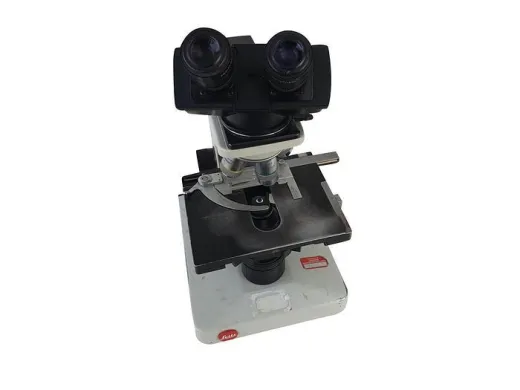
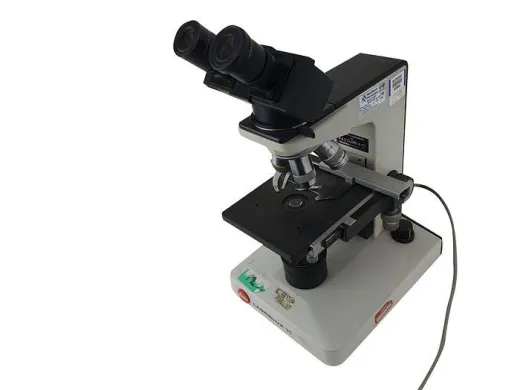


Not the exact instrument you need?
Tell our scientists what you are after. We track it down, including off-market supply.
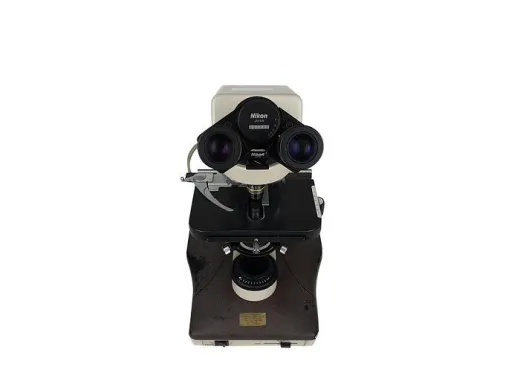
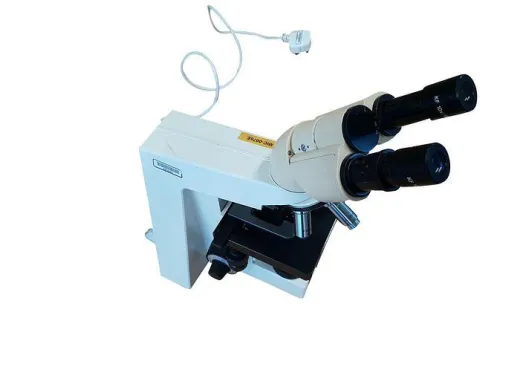
Not the exact instrument you need?
Tell our scientists what you are after. We track it down, including off-market supply.
Showing 1–40 of 3,413 listings
Show 40 more listingsBuying guide
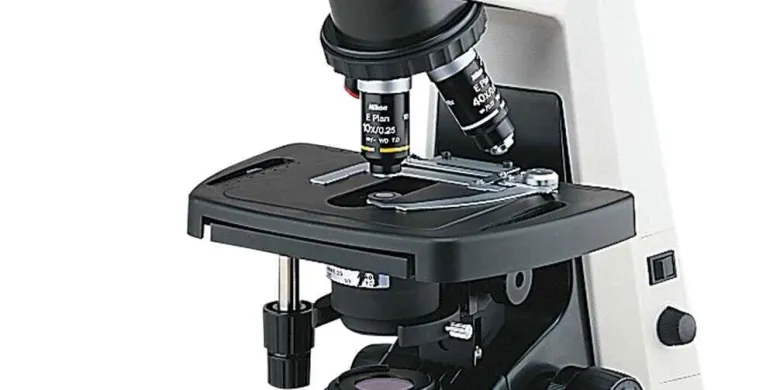
The decision usually turns on optical configuration before anything else, because it fixes what the instrument can show you and what it cannot. A binocular head suits long sessions at a single station; a trinocular head adds the third port a camera needs, and if documentation or shared viewing matters, that port is not optional. Magnification range follows from the objectives fitted and the condenser below the stage, so read the objective turret, not the headline number. Brightfield covers most routine work, but phase contrast, darkfield, polarisation, and fluorescence each demand specific optics and often a different illuminator, and retrofitting them later costs more than buying the right configuration once. Settle the optical path first and the rest of the specification falls into line behind it.
On a used unit, the glass is what you inspect and the glass is what goes unnoticed. Objective lenses and the internal prisms accumulate fungus, haze, and separation of cemented elements, none of which show in a photograph and all of which degrade the image. Ask whether each objective is original to the body and whether the parfocal and parcentric alignment still holds across the turret. Check the stage travel for backlash, the focus for drift, and on a fluorescence instrument the state of the lamp and filter cubes, which are consumables with a finite life. A unit sold without its original objectives is a different purchase from one that keeps them, and the gap rarely appears in the asking price.
Price here is as wide as the catalogue, running from EUR 17 to EUR 172.178 with an average near EUR 3.782. That spread covers everything from a monocular teaching scope to a research-grade system with motorised components, so an average tells you little about the unit in front of you. What fits a given budget depends far more on configuration than on brand. Among the names that dominate the listings, Olympus, Nikon, Zeiss, Leica, Motic set the reference points: parts and objectives for the established lines stay available on the secondhand market, and a widely sold model is easier to compare across sellers than a niche one. Used and refurbished microscopes are listed for sale well below new, which is why the secondhand channel carries most of the volume, and the right question is not what a model costs new but what this particular body, with these objectives, is worth to the work you do.
Types of Microscopes
Which microscope types are listed here?
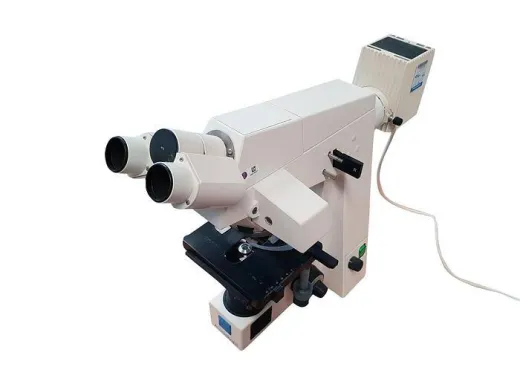
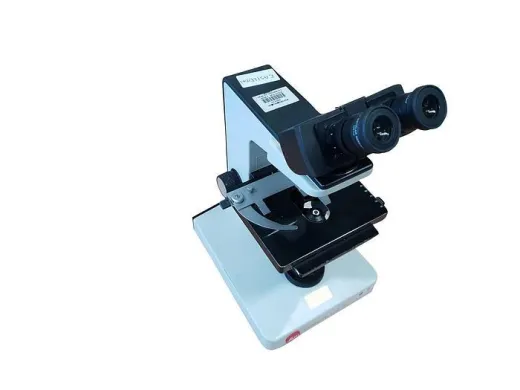
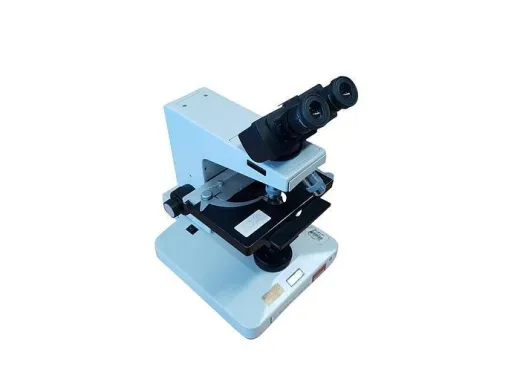
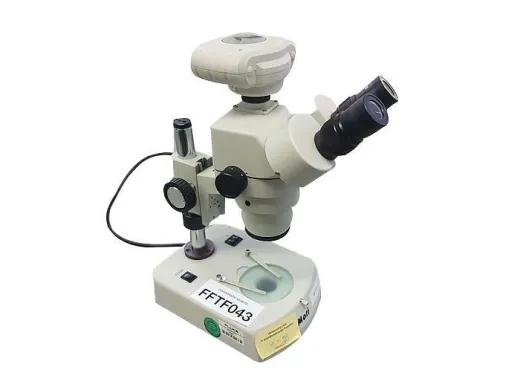
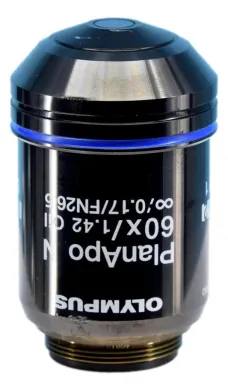
Among the listings that specify a type, the catalogue sorts into a few recurring forms. The optical microscope, which resolves specimens with visible light through a lens system, is the broad class most of the others sit inside. A binocular microscope carries two eyepieces for comfortable two-eyed viewing and suits sustained bench work in microbiology, cell culture screening, and routine histology. A trinocular microscope adds a camera port, which is what makes it the working instrument for digital imaging, cell imaging, and any workflow where a record has to be shared or measured. The research microscope and the laboratory microscope denote build quality and expansion capacity rather than a single optical trick: these are the bodies that accept phase contrast, polarisation, and fluorescence modules and carry the mechanical stability that quantitative work demands. Microscope objective lenses appear as listings in their own right, since objectives are the part most often replaced, upgraded, or sold separately from a body.
The work these instruments do in the life sciences
Microscopy sits at the centre of a great deal of life-science practice, and the type dictates the field. A research-grade optical microscope configured for fluorescence underpins fluorescence microscopy across molecular biology and cell biology, reading labelled proteins and localising them within fixed or live cells. The same platform, fitted for brightfield and a high-numerical-aperture objective, carries histology and microbiology work, from stained tissue sections to colony identification. Phase contrast optics serve live cell imaging and cell culture monitoring, where unstained cells would otherwise be invisible. Objective lenses built for immunoassay readers and slide scanning feed into molecular diagnostics and pathology. A polarising configuration also used for crystallography and materials analysis extends the same body into the physical sciences. The constant across these fields is that the optical configuration, not the badge, decides which work an instrument can actually do.
The brands behind the microscope listings
The names that recur across the catalogue are Olympus, Nikon, Zeiss, Leica, Motic, and their presence shapes a buyer's options more than any single specification. Established lines from these makers hold their value on the secondhand market precisely because objectives, condensers, and illuminators remain available, so a decade-old body can still be rebuilt to a working configuration. A model sold in volume is also far easier to compare across sellers, since several listings of the same body let you weigh condition and objective complement against price rather than guessing at a one-off. That liquidity is why the mainstream lines dominate here while specialist instruments appear only occasionally.
What condition and price look like across the catalogue?
The condition split is heavily weighted toward the secondhand market: 94 percent of the listings are used. Across the catalogue prices run from EUR 17 to EUR 172.178. That range stretches from a single-objective teaching scope to a motorised research platform, so the figure that matters is the one attached to the configuration you actually need, not the spread itself.
Frequently asked questions
What is a microscope?
A microscope is an optical instrument that magnifies specimens too small for the unaided eye, using a lens system to resolve detail in biological, materials, and clinical samples. The image you see comes from the combination of objective lens and eyepiece, with illumination below or around the stage.
What does microscope mean?
The word refers to any instrument built to view objects beyond the limit of human sight. In practice the term covers everything from a single-objective teaching scope to a motorised research platform, so the meaning narrows only once you specify the optical configuration.
How do microscopes work?
Light passes through or reflects off the specimen, then an objective lens gathers that light and forms a magnified image, which the eyepiece magnifies again for viewing. The condenser below the stage shapes the illumination, and the objective's numerical aperture sets how much fine detail the system can resolve.
What types of microscopes are there?
The listings here sort into optical microscopes, binocular and trinocular microscopes, research and laboratory microscopes, and microscope objective lenses sold separately. A binocular head has two eyepieces for comfortable viewing, while a trinocular head adds a third port for a camera.
What are microscopes used for?
They carry fluorescence work in molecular and cell biology, brightfield histology and microbiology, phase contrast live cell imaging, and polarised work in crystallography and materials analysis. The optical configuration, not the brand, decides which of these an instrument can actually do.
How do I choose a microscope?
Settle the optical path first: brightfield, phase contrast, darkfield, polarisation, or fluorescence each need specific optics, and retrofitting later costs more than buying the right configuration once. Then read the objective turret and condenser rather than the headline magnification number, and decide whether you need the camera port a trinocular head provides.
What is the difference between refurbished and used microscopes?
A used unit is sold in its current condition, while a refurbished one has been reconditioned before listing. On either, inspect the glass for fungus, haze, and separation of cemented elements, and confirm which objectives are original to the body, since those details rarely show in a photograph.
How much does a microscope cost?
Prices in the catalogue range from EUR 17 to EUR 172.178, with an average near EUR 3.782. That spread covers a monocular teaching scope at one end and a research-grade system with motorised components at the other, so the figure that matters is the one attached to the configuration you need.
Which microscope brands show up most here?
The names that recur are Olympus, Nikon, Zeiss, Leica, and Motic. Their established lines hold value on the secondhand market because objectives, condensers, and illuminators remain available, so an older body can still be rebuilt to a working configuration.
Can I get a warranty on a refurbished microscope?
A warranty is often possible and is arranged in consultation for the specific listing. Because terms are set per listing rather than centrally, check the individual unit you are considering.
Are parts available for these microscopes?
Parts can be sourced via Questpair. Objectives, condensers, and illuminators for the established lines from Olympus, Nikon, Zeiss, Leica, and Motic remain available on the secondhand market, which is part of why those lines keep their value.
How long does a microscope last?
A well-built optical body can run for decades, which is why a decade-old instrument can still be rebuilt to a working configuration. The consumable parts set the real limit: fluorescence lamps and filter cubes have a finite life, and cemented lens elements can separate over time.
Should I buy new or used?
Used and refurbished microscopes are listed at lower prices than new. The right question is not what a model costs new but what this particular body, with these objectives, is worth to the work you do, so point your comparison at the individual listing.
Where can I buy a microscope?
The Questpair catalogue lists microscopes from 23 verified suppliers and distributors across 10 countries, in new, used, and refurbished condition. You can compare condition and objective complement against price across listings of the same body.
What are the lead time and shipping like?
Lead time and shipping depend on the individual seller and the unit's location across the 10 countries represented. The listing itself is the place to confirm these, and Questpair specialists respond within one hour if you need help.
How do I handle calibration and maintenance?
On a used unit, check parfocal and parcentric alignment across the turret, inspect stage travel for backlash, and test the focus for drift. On a fluorescence instrument, examine the lamp and filter cubes, which are consumables that wear out.
Which microscope types are listed most, and who reaches for which?
Binocular microscopes suit sustained bench work in microbiology, cell culture screening, and routine histology, while trinocular microscopes serve anyone doing digital imaging or needing to share and measure a record. Research and laboratory bodies go to labs that need phase contrast, polarisation, or fluorescence modules and the mechanical stability quantitative work demands.
Which brands dominate this category, and what does that mean for a buyer?
Olympus, Nikon, Zeiss, Leica, and Motic recur across the listings, and that liquidity works in a buyer's favour. A model sold in volume lets you weigh several listings of the same body against each other, and its objectives and parts stay available, while a one-off specialist instrument gives you neither comparison nor easy spares.
What separates the cheapest microscopes here from the most expensive?
At the low end sits a single-objective monocular teaching scope with brightfield optics only. At the high end is a research-grade body with motorised components, a full objective complement, and the capacity to accept phase contrast, polarisation, or fluorescence modules, which is where most of the price difference lives.