58k+ listingsShips to NLResponse within one hour+31 73 711 4717info@questpair.com
Procurable · sourced on request

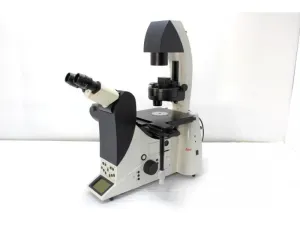
Leica DMI6000

UsedLeicaMicroscope accessoriesNetherlands
Procurable

Not in stock, available to order through our sourcing team

Not in stock, but we can get it for you

We source this model through our supplier network. Request a quote and we'll come back within one hour.

  1. Request a quote
  2. We confirm price and lead time
  3. You approve, we ship to you
Footprint
Approximately 1.05 m²
Objective Magnifications
5x, 10x, 20x, 40x, 63x, 100x
Objective Numerical Aperture
0.15 to 1.4
Objective Working Distance
2.2 to 13.7 mm
Sample Stage Travel Range
120 x 100 mm
Availability
Procurable
Lead time
Confirmed with your quote
All 17 specifications
  • Ships to NL
  • Response within 1 hour
  • Warranty available. Buy without worry
  • Support from a scientist

Specifications 17

Brands
Leica
New/Used
Used
Dimensions
1405 x 750 x 600 mm
Weight
Approximately 150 kg
Footprint
Approximately 1.05 m²
Objective Magnifications
5x, 10x, 20x, 40x, 63x, 100x
Objective Numerical Aperture
0.15 to 1.4
Objective Working Distance
2.2 to 13.7 mm
Sample Stage Travel Range
120 x 100 mm
Stage Inserts
20 optional inserts (standard, heating, cooling)
Light Sources
12V 100 W halogen lamp for transmitted light; Mercury metal halide bulb for fluorescence
Filter Cube Positions
6 motorized positions
Camera Ports
Lateral camera ports with 100%, 80%, or 50% light splitting; optional top port at the left side of the tube
Interfaces
2 x RS232C; 2 x USB; 4 x external/internal peripherals
Software
Leica Application Suite (LAS) for Windows 2000, XP with plug-ins for microscope and camera configuration, control, and image acquisition
Availability
Procurable
Lead time
Confirmed with your quote

Product description

Automated inverted microscope with fluorescence, phase contrast, DIC, AFC, and environmental controls for live-cell imaging.

The Leica DMI6000 is a fully automated inverted microscope designed for advanced biomedical research, particularly in live-cell imaging and fluorescence microscopy. Introduced in 2010, this instrument remains relevant in various scientific applications.

Key features include:

  • Adaptive Focus Control (AFC): Maintains consistent focus during time-lapse imaging, compensating for temperature-induced focus shifts.
  • Versatile Imaging Techniques: Supports brightfield, phase contrast, fluorescence, and differential interference contrast (DIC) for comprehensive sample analysis.
  • High-Performance Optics: Delivers exceptional image quality, enabling detailed visualisation of cellular structures and dynamics.
  • Automated Functions: Features motorised Z-focus, contrast and illumination management, and automatic brightness and diaphragm adjustments for reproducible results.
  • Live-Cell Imaging Support: Equipped with environmental controls to maintain optimal conditions for live-cell studies.

This microscope is widely utilised in fields such as cell biology, neuroscience, molecular biology, and biomedical engineering. It is commonly found in university laboratories, biomedical research centres, and clinical environments. The Leica DMI6000 continues to be a valuable tool for researchers seeking high-quality imaging solutions in life sciences.

Why Questpair exists

Lab equipment markets are fragmented. Buyers spend weeks calling distributors, comparing quotes, and verifying supplier reliability. Sellers struggle to reach global research labs.

We built Questpair to fix this. Every supplier on the platform is verified before listing. Every quote you receive comes from a real, vetted seller. AI prepares your case in minutes, then a real specialist takes over.

We're an independent team based in The Netherlands, working with research labs and procurement teams across Europe and worldwide.

Frequently asked questions

How long does laboratory equipment typically last?

With a service contract, ten to fifteen years is normal for most benchtop instruments. Detectors and pumps are the parts that wear first.

Can I get service for older equipment?

Yes. Every verified supplier states which service partners cover the instrument, and we list that alongside the offer.

Where can I buy parts?

Ask a scientist through the request button. Parts are often available even when the instrument itself is discontinued.

What is the typical lead time for refurbished equipment?

Two to six weeks, depending on refurbishment scope and whether calibration is included.

Does laboratory equipment ship internationally?

We ship to 38 countries. Crating and customs handling are quoted with the instrument.

Reply in one hour

Can't find the exact configuration?

Tell us what you need and a scientist finds it for you, usually within the hour.

Last updated 19 October 2026