53k+ listingsShips to NLResponse within one hour+31 73 711 4717info@questpair.com

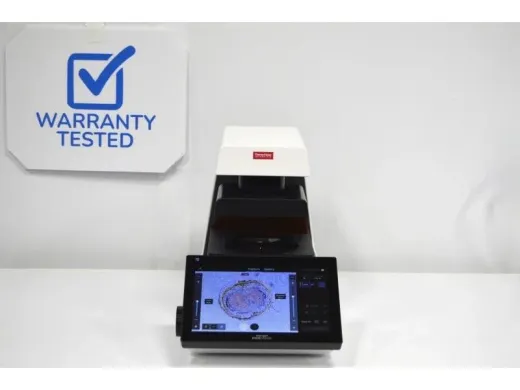
Life Technologies EVOS FL Auto Imaging System Automated Inverted Multi-Channel Fluorescence Microscope

Price on request

In stock

Can't find what you're looking for?

Color:
Transmitted Light
Data Output:
BMP Files, JPG Files, PNG Files, TIFF Files
Detection Method:
Chromogenic, Colorimetric, Fluorescent
Objectives:
5 Objective Turret
Stage:
Motorized encoded X/Y scanning stage with sub-micron resolution
All 10 specifications
  • Ships to NL
  • Response within 1 hour
  • Warranty available. Buy without worry
  • Support from a scientist

Specifications 10

Brands
Thermo Fisher Scientific
New/Used
Used
Color:
Transmitted Light
Data Output:
BMP Files, JPG Files, PNG Files, TIFF Files
Detection Method:
Chromogenic, Colorimetric, Fluorescent
Objectives:
5 Objective Turret
Stage:
Motorized encoded X/Y scanning stage with sub-micron resolution
Dimensions
16x19x13″
Power
100-240 VAC, 50/60 Hz,
Weight
44 lbs

Product description

The Life Technologies EVOS FL Auto Imaging System is an advanced automated inverted multi-channel fluorescence microscope tailored for high-precision cell imaging and fluorescence analysis critical in biotechnology, molecular diagnostics, and biomedical research. Key features include:

  • Motorized encoded X/Y scanning stage with sub-micron resolution enabling precise multi-position well scanning and high-resolution mosaic image stitching.
  • 5-position objective turret supporting up to 4 LED fluorescence cubes, allowing customizable 4-color fluorescence imaging compatible with various biotech applications such as live-cell imaging and multi-point time-lapse studies.
  • Autofocus and flat focus Z-stack capabilities ensure consistent image quality and focus accuracy, essential in complex cell counting and thresholding workflows.
  • Dual camera system automatically switches between colorimetric and fluorescence detection modes for versatile imaging modalities.
  • LED illumination offers superior intensity with rapid start-up, extended lifespan (>50,000 hours), and reduced operational costs compared to mercury lamps.
  • Compatible with interchangeable stage plates and holders, accommodating multiwell plates, slides, culture flasks, and Petri dishes, widely adopted in synthetic biology and biomanufacturing laboratories.
  • Supports multiple image export formats including BMP, JPG, PNG (all 8-bit), and TIFF (8 or 16-bit), facilitating seamless data integration in molecular diagnostics and gene editing documentation.
  • Compact footprint (16x19x13 inches) and robust design (44 lbs) powered by 100-240 VAC, 50/60 Hz, tailored for diverse laboratory environments focusing on biotechnology research fields such as cell imaging and fluorescence analysis.

This system is ideal for researchers and professionals seeking a reliable, fully automated fluorescence imaging platform supporting essential workflows in bioprocessing, molecular cloning, and clinical diagnostic development.

Why Questpair exists

Lab equipment markets are fragmented. Buyers spend weeks calling distributors, comparing quotes, and verifying supplier reliability. Sellers struggle to reach global research labs.

We built Questpair to fix this. Every supplier on the platform is verified before listing. Every quote you receive comes from a real, vetted seller. AI prepares your case in minutes, then a real specialist takes over.

We're an independent team based in The Netherlands, working with research labs and procurement teams across Europe and worldwide.

Frequently asked questions

How long does laboratory equipment typically last?

With a service contract, ten to fifteen years is normal for most benchtop instruments. Detectors and pumps are the parts that wear first.

Can I get service for older equipment?

Often, yes. Verified suppliers frequently work with service partners converting the instrument. If applicable, we can list servicing options alongside the offer.

Where can I buy parts?

Ask a scientist through the request button. Parts are often available even when the instrument itself is discontinued.

What is the typical lead time for refurbished equipment?

Two to six weeks, depending on refurbishment scope and whether calibration is included.

Does laboratory equipment ship internationally?

We ship to 38 countries. Crating and customs handling are quoted with the instrument.

Reply in one hour

Can't find the exact configuration?

Tell us what you need and a scientist finds it for you, usually within the hour.

Last updated 4 September 2026