Price on request
In stock
Can't find what you're looking for?
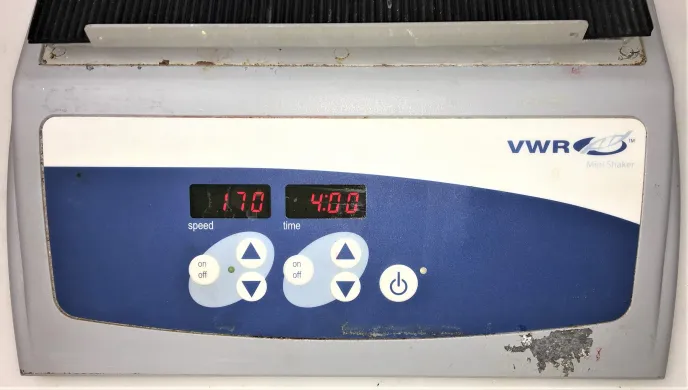
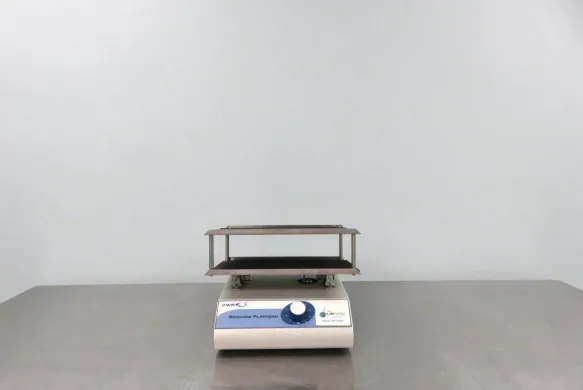
VWR 3500 Orbital Shaker with 12.5×11″ platform, 15–500 RPM, digital timer up to 160 hrs, ideal for cell culture assays.
The VWR 3500 Orbital Shaker is a microprocessor-controlled benchtop shaker engineered for consistent, uniform orbital shaking essential in biotechnology and molecular biology workflows, including cell culture and synthetic biology research. Featuring a robust 12.5″ × 11″ platform with a rubber mat, this shaker supports a maximum load of 35 lbs (15.9 kg) and an orbital diameter of 19 mm (3/4″), providing stable agitation critical for bioprocessing and molecular diagnostics.
Key technical features include:
This orbital shaker is widely adopted in laboratories focusing on cell culture, gene editing workflows, and molecular cloning, providing reliable agitation essential for consistent experimental outcomes. Its modular platform system allows easy accommodation of various vessel types, supporting diverse bioprocessing and synthetic biology applications.
Power requirements are 120 V, 75 W, 50/60 Hz, and the unit measures 16 × 14 × 6 inches (L × W × H) weighing 42 lbs, making it a compact and durable solution for laboratories seeking a dependable shaking platform.
Primary keywords: orbital shaker, benchtop shaker, microprocessor-controlled shaker Long-tail keywords: orbital shaker for cell culture assays, smooth operation shaker for bioprocessing, digital orbital shaker with timer for synthetic biology research, laboratory shaker for molecular diagnostics, essential shaker for molecular cloning workflows
Lab equipment markets are fragmented. Buyers spend weeks calling distributors, comparing quotes, and verifying supplier reliability. Sellers struggle to reach global research labs.
We built Questpair to fix this. Every supplier on the platform is verified before listing. Every quote you receive comes from a real, vetted seller. AI prepares your case in minutes, then a real specialist takes over.
We're an independent team based in The Netherlands, working with research labs and procurement teams across Europe and worldwide.
With a service contract, ten to fifteen years is normal for most benchtop instruments. Detectors and pumps are the parts that wear first.
Often, yes. Verified suppliers frequently work with service partners converting the instrument. If applicable, we can list servicing options alongside the offer.
Ask a scientist through the request button. Parts are often available even when the instrument itself is discontinued.
Two to six weeks, depending on refurbishment scope and whether calibration is included.
We ship to 38 countries. Crating and customs handling are quoted with the instrument.
Tell us what you need and a scientist finds it for you, usually within the hour.
Last updated 7 November 2026
The middle half of the 2,838 with a price runs from €95 to €2,050.