58k+ listingsShips to NLResponse within one hour+31 73 711 4717info@questpair.com

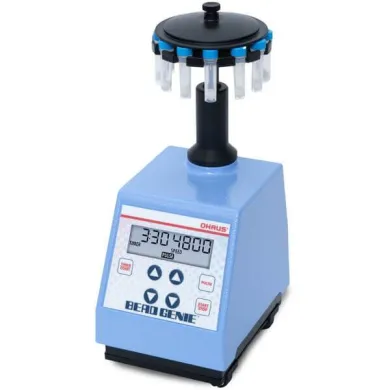
Ohaus Bead Genie SI-B106 Bead Mill Homogenizer 230V Australian Plug

UsedOhausHomogenisersUnited States

From€1,816.01excl. VAT

In stock

Can't find what you're looking for?

Speed Range
500 - 4800 strokes per minute
Motion
Reciprocating, 19 mm
Capacity
3 x 50 mL tubes; 12 x 1.5/2.0 mL microtubes; 6 x 15 mL tubes
Timer
1 s - 99 min
Control
Digital
All 14 specifications
  • Ships to NL
  • Response within 1 hour
  • Warranty available. Buy without worry
  • Support from a scientist

Specifications 14

Brands
Ohaus
New/Used
Used
Speed Range
500 - 4800 strokes per minute
Motion
Reciprocating, 19 mm
Capacity
3 x 50 mL tubes; 12 x 1.5/2.0 mL microtubes; 6 x 15 mL tubes
Timer
1 s - 99 min
Control
Digital
Dimensions
6.5 in x 13 in x 4.8 in (165 mm x 330 mm x 122 mm) (LxHxW)
Net Weight
13.3 lb (6 kg)
Safety Certification
CE
Power
100-240 VAC, 50/60Hz, 1.5A
Accessories Included
Tube Holder for 12x 1.5/2.0 mL; Tube Holder for 6x 15 mL; Tube Holder for 3x 50 mL; Tube Holder for 12x 1.5/2.0 mL (horizontal)
Working Environment
0°C - 38°C, 95%RH, non-condensing (32°F - 100°F, 95%RH, non-condensing)
Pulse - ON/OFF Time
1 s - 99 min

Product description

The Ohaus Bead Genie SI-B106 is a precise bead mill homogenizer designed for advanced cell lysis, tissue homogenization, and microbial disruption workflows. This laboratory instrument supports 100–240 VAC, 50/60 Hz power inputs and comes with an Australian plug, making it suitable for global biotechnology labs engaged in molecular diagnostics and bioprocessing.

Key Features:

  • Speed Range: 500 to 4800 strokes per minute (SPM) with a 19 mm reciprocating motion for efficient disruption of biological samples.
  • Capacity: Simultaneous processing of up to 3×50 mL tubes, 6×15 mL tubes, or 12×1.5/2.0 mL microtubes.
  • Bead Size Options: Five bead diameters (0.1 mm, 0.5 mm, 2.4 mm, 3.2 mm, and 5 mm) optimize sample homogenization tailored to cell types including yeast, bacteria, fungi, plant tissue, and soil samples.
  • Construction: Durable coated aluminum housing with rubber feet ensures vibration stability; solid metal casting weighs 6 kg to prevent movement during operation.
  • User Interface: Digital control with backlit LCD and programmable countdown timer ranging from 1 second to 99 minutes for precise control over processing time.
  • Accessories Included: Multiple tool-free interchangeable tube holders for versatile sample preparation needs across various tube sizes.
  • Applications: Widely adopted in molecular biology, synthetic biology, and clinical diagnostics for DNA/RNA extraction, protein isolation, microbial disruption, and plant tissue grinding essential to biomanufacturing and gene editing workflows.
  • Safety & Environment: CE certified; operates effectively in ambient temperatures from 0°C to 38°C with up to 95% relative humidity (non-condensing).

This bead mill homogenizer is essential for research laboratories focusing on biotechnology applications that require reproducible sample disruption and homogenization. Its versatility in tube capacity and bead size selection makes it critical in bioprocessing pipelines where sample integrity and throughput are priorities. The Ohaus Bead Genie SI-B106 is a reliable instrument for laboratories engaged in molecular cloning, live-cell imaging preparations, and fluorescence analysis, offering consistent performance in complex sample preparations.

Why Questpair exists

Lab equipment markets are fragmented. Buyers spend weeks calling distributors, comparing quotes, and verifying supplier reliability. Sellers struggle to reach global research labs.

We built Questpair to fix this. Every supplier on the platform is verified before listing. Every quote you receive comes from a real, vetted seller. AI prepares your case in minutes, then a real specialist takes over.

We're an independent team based in The Netherlands, working with research labs and procurement teams across Europe and worldwide.

Frequently asked questions

How long does laboratory equipment typically last?

With a service contract, ten to fifteen years is normal for most benchtop instruments. Detectors and pumps are the parts that wear first.

Can I get service for older equipment?

Often, yes. Verified suppliers frequently work with service partners converting the instrument. If applicable, we can list servicing options alongside the offer.

Where can I buy parts?

Ask a scientist through the request button. Parts are often available even when the instrument itself is discontinued.

What is the typical lead time for refurbished equipment?

Two to six weeks, depending on refurbishment scope and whether calibration is included.

Does laboratory equipment ship internationally?

We ship to 38 countries. Crating and customs handling are quoted with the instrument.

Reply in one hour

Can't find the exact configuration?

Tell us what you need and a scientist finds it for you, usually within the hour.

Last updated 22 October 2026