From€6.4excl. VAT
In stock
Can't find what you're looking for?
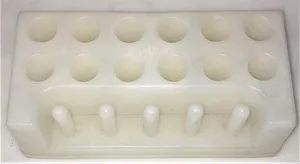
Endicott-Seymour ES200 tube drying rack for 18 to 20 mm tubes, with 17 positions and five drip posts for laboratory sample drying.
The Endicott-Seymour ES200 tube holder and drying rack is a laboratory rack for holding open tubes during drying and storage. It fits tubes with diameters from 18 to 20 mm and is also used for sample drying in biotechnology and life sciences laboratories.
The one-piece molded polypropylene rack includes a base unit and five individual drip posts. The rack provides 17 tube positions, with drying pins that hold test tubes open-end-up between the posts.
The unit is used and consists of one rack. Polypropylene construction resists stains and corrosive chemicals. The rack is easy to clean and stores in a freezer or refrigerator.
The ES200 tube drying rack supports tube drying and temporary tube storage. Its polypropylene construction resists stains and corrosive chemicals. The rack is easy to clean and stores in freezer or refrigerator environments.
The 17 positions support simultaneous drying of up to 17 tubes. The 18 to 20 mm diameter range defines compatibility with the supported tube sizes.
Lab equipment markets are fragmented. Buyers spend weeks calling distributors, comparing quotes, and verifying supplier reliability. Sellers struggle to reach global research labs.
We built Questpair to fix this. Every supplier on the platform is verified before listing. Every quote you receive comes from a real, vetted seller. AI prepares your case in minutes, then a real specialist takes over.
We're an independent team based in The Netherlands, working with research labs and procurement teams across Europe and worldwide.
With a service contract, ten to fifteen years is normal for most benchtop instruments. Detectors and pumps are the parts that wear first.
Often, yes. Verified suppliers frequently work with service partners converting the instrument. If applicable, we can list servicing options alongside the offer.
Ask a scientist through the request button. Parts are often available even when the instrument itself is discontinued.
Two to six weeks, depending on refurbishment scope and whether calibration is included.
We ship to 38 countries. Crating and customs handling are quoted with the instrument.
Tell us what you need and a scientist finds it for you, usually within the hour.
Last updated 29 November 2026
Questpair lists 277 similar items in Laboratory glassware - other, going up to around €2,800.