58k+ listingsShips to NLResponse within one hour+31 73 711 4717info@questpair.com
Procurable · sourced on request

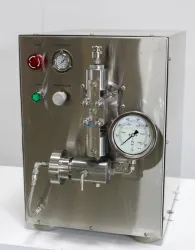
Avestin EmulsiFlex-C3

UsedAvestinProcess homogenizersNetherlands
Procurable

Not in stock, available to order through our sourcing team

Not in stock, but we can get it for you

We source this model through our supplier network. Request a quote and we'll come back within one hour.

  1. Request a quote
  2. We confirm price and lead time
  3. You approve, we ship to you
Maximum operating pressure
30,000 psi (207 MPa)
Temperature control
Compatible with heat exchangers
Sterilization
Steam-In-Place (SIP) sterilizable; all wetted parts autoclavable
Flow rate
3 L/h
Homogenizing valve
Dynamic homogenizing valve with pneumatic control
Availability
Procurable
Lead time
Confirmed with your quote
All 14 specifications
  • Ships to NL
  • Response within 1 hour
  • Warranty available. Buy without worry
  • Support from a scientist

Specifications 14

Brands
Avestin
New/Used
Used
Maximum operating pressure
30,000 psi (207 MPa)
Temperature control
Compatible with heat exchangers
Sterilization
Steam-In-Place (SIP) sterilizable; all wetted parts autoclavable
Flow rate
3 L/h
Homogenizing valve
Dynamic homogenizing valve with pneumatic control
Minimum sample volume
10 mL
Holdback volume
<1 mL
Dimensions
530 x 460 x 760 mm
Weight
95 kg
Power supply
220 V or 110 V, 50/60 Hz
Availability
Procurable
Lead time
Confirmed with your quote

Product description

High-pressure homogeniser operating up to 30,000 psi for particle size reduction from micron to nanometre scale.

The Avestin EmulsiFlex-C3 is a laboratory-scale, electric motor-driven, high-pressure homogeniser designed to efficiently reduce particles and droplets from micron to nanometre sizes. This instrument is widely used in various scientific fields, including biotechnology, pharmaceuticals, food science, and cosmetics, and is commonly found in university laboratories, biomedical research centres, and industrial R&D facilities. Since its release, the EmulsiFlex-C3 has remained a relevant and valuable tool in these domains.

Key features and benefits:

  • High-pressure capability: Operates up to 30,000 psi (207 MPa), enabling effective processing of diverse materials.
  • Dynamic homogenising valve: Maintains constant pressure for uniform particle size distribution.
  • Versatile sample handling: Processes volumes from 10 mL to 3 litres per hour, accommodating both small and larger-scale applications.
  • Efficient cell disruption: Achieves high yields of intact intracellular components with minimal passes, reducing over-processing and protein damage.
  • Temperature control options: Compatible with heat exchangers for precise sample temperature management.
  • Easy maintenance: Designed without 'O' rings or gaskets in the product path, simplifying cleaning and reducing contamination risks.

Applications:

  • Biotechnology: Essential for cell lysis, facilitating the extraction of proteins and other intracellular materials.
  • Pharmaceuticals: Widely used in the development of nanoemulsions and liposomes for drug delivery systems.
  • Food science: Employed in creating stable emulsions and dispersions, enhancing product texture and stability.
  • Cosmetics: Utilised in formulating creams and lotions with uniform consistency and improved absorption properties.

The EmulsiFlex-C3's robust design and consistent performance make it a valuable asset for researchers and industries aiming to achieve precise particle size reduction and efficient homogenisation in their processes.

Why Questpair exists

Lab equipment markets are fragmented. Buyers spend weeks calling distributors, comparing quotes, and verifying supplier reliability. Sellers struggle to reach global research labs.

We built Questpair to fix this. Every supplier on the platform is verified before listing. Every quote you receive comes from a real, vetted seller. AI prepares your case in minutes, then a real specialist takes over.

We're an independent team based in The Netherlands, working with research labs and procurement teams across Europe and worldwide.

Frequently asked questions

How long does laboratory equipment typically last?

With a service contract, ten to fifteen years is normal for most benchtop instruments. Detectors and pumps are the parts that wear first.

Can I get service for older equipment?

Often, yes. Verified suppliers frequently work with service partners converting the instrument. If applicable, we can list servicing options alongside the offer.

Where can I buy parts?

Ask a scientist through the request button. Parts are often available even when the instrument itself is discontinued.

What is the typical lead time for refurbished equipment?

Two to six weeks, depending on refurbishment scope and whether calibration is included.

Does laboratory equipment ship internationally?

We ship to 38 countries. Crating and customs handling are quoted with the instrument.

Reply in one hour

Can't find the exact configuration?

Tell us what you need and a scientist finds it for you, usually within the hour.

Last updated 22 October 2026