53k+ listingsShips to NLResponse within one hour+31 73 711 4717info@questpair.com

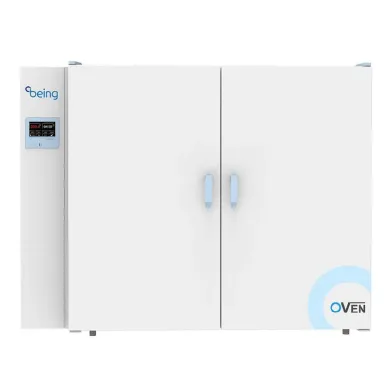
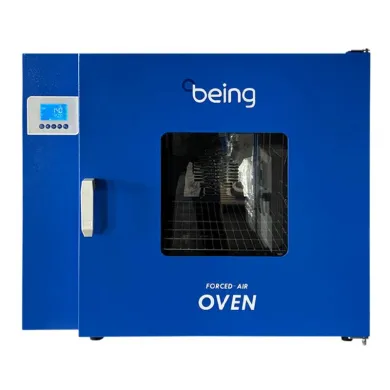
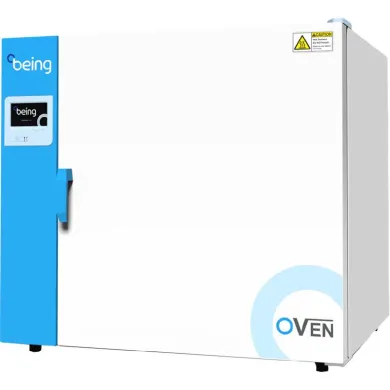
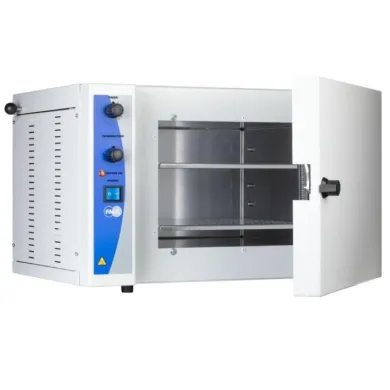
BEING BOV-210 216L Laboratory Vacuum Drying Oven with PID Temperature and Vacuum Control

UsedBeing ScientificOvensUnited States

From€7,888.12excl. VAT

In stock

Can't find what you're looking for?

Chamber Volume
216 L (7.6 cu ft)
Temperature Range
Ambient +10 °C to 200 °C
Max Vacuum (Limit Vacuum)
~133 Pa (0–0.1 MPa)
Chamber Material
Sandblasted / mirror-finished stainless steel interior
Shelf Load Capacity
20 kg per shelf
All 13 specifications
  • Ships to NL
  • Response within 1 hour
  • Warranty available. Buy without worry
  • Support from a scientist

Specifications 13

Brands
Being Scientific
New/Used
Used
Chamber Volume
216 L (7.6 cu ft)
Temperature Range
Ambient +10 °C to 200 °C
Max Vacuum (Limit Vacuum)
~133 Pa (0–0.1 MPa)
Chamber Material
Sandblasted / mirror-finished stainless steel interior
Shelf Load Capacity
20 kg per shelf
Shelves (Standard / Max)
3 included (expandable — see manufacturer)
Interior Dimensions (W×D×H)
~600 × 600 × 600 mm (≈ 23.6″ × 23.6″ × 23.6″)
Exterior Dimensions (W×D×H)
~905 × 740 × 835 mm (≈ 35.6″ × 29.1″ × 32.9″)
Vacuum Port
KF-25 flange standard; inert-gas / air inlet available
Heating System
Individual-shelf or uniform heating design for good temperature uniformity
Controller
PID digital controller, 0.1 °C resolution, vacuum & temperature controls with alarms & safety interlocks

Product description

Large 216L vacuum drying oven with PID control, uniform heating to 200°C, and vacuum down to ~133 Pa for sensitive sample processing.

The BEING BOV-210 Vacuum Oven is designed for *vacuum drying, curing, degassing,* and processing of moisture-, oxidation-, and heat-sensitive samples in research and biotechnological workflows. Featuring a spacious 216 L (7.6 cu ft) sandblasted stainless-steel chamber with corrosion resistance, this vacuum oven supports precise vacuum levels down to approximately 133 Pa (0–0.1 MPa), essential for controlled atmosphere applications including synthetic biology and molecular diagnostics.

Key technical specifications include:

  • Temperature Range: Ambient +10 °C up to 200 °C, regulated by an advanced PID digital controller with 0.1 °C resolution for stable and uniform heat distribution, critical for bioprocessing reliability.
  • Heating System: Individual-shelf or jacketed heating design ensures uniform temperature across samples, minimizing thermal gradients in bulk drying or biomanufacturing sample preparation.
  • Chamber Dimensions: Interior measures approximately 600 × 600 × 600 mm, with three adjustable shelves (each supporting up to 20 kg), accommodating a range of sample sizes and lab glassware.
  • Vacuum and Gas Interfaces: Equipped with KF-25 flange vacuum port and inert gas/air inlet, allowing customizable environments for oxidation-sensitive materials essential in biotechnology and polymer research.
  • Observation and Safety: Integrated toughened-glass observation door and LED interior lighting facilitate real-time sample monitoring without disrupting the vacuum environment. Safety features include over-temperature protection, vacuum control alarms, and over-current protection, ensuring operational safety in critical research settings.

Ideal for biomedical engineering, cell imaging prep, biopharmaceutical production pipelines, and molecular cloning workflows, the BOV-210 vacuum oven supports reproducible, contamination-free drying and processing of delicate biological and chemical samples. Its robust stainless-steel interior and flexible controls make it a reliable asset for laboratories engaged in synthetic biology and molecular diagnostics requiring stringent environmental control.

Why Questpair exists

Lab equipment markets are fragmented. Buyers spend weeks calling distributors, comparing quotes, and verifying supplier reliability. Sellers struggle to reach global research labs.

We built Questpair to fix this. Every supplier on the platform is verified before listing. Every quote you receive comes from a real, vetted seller. AI prepares your case in minutes, then a real specialist takes over.

We're an independent team based in The Netherlands, working with research labs and procurement teams across Europe and worldwide.

Frequently asked questions

How long does laboratory equipment typically last?

With a service contract, ten to fifteen years is normal for most benchtop instruments. Detectors and pumps are the parts that wear first.

Can I get service for older equipment?

Often, yes. Verified suppliers frequently work with service partners converting the instrument. If applicable, we can list servicing options alongside the offer.

Where can I buy parts?

Ask a scientist through the request button. Parts are often available even when the instrument itself is discontinued.

What is the typical lead time for refurbished equipment?

Two to six weeks, depending on refurbishment scope and whether calibration is included.

Does laboratory equipment ship internationally?

We ship to 38 countries. Crating and customs handling are quoted with the instrument.

Reply in one hour

Can't find the exact configuration?

Tell us what you need and a scientist finds it for you, usually within the hour.

Last updated 4 November 2026