51k+ listingsShips to NLResponse within one hour+31 73 711 4717info@questpair.com

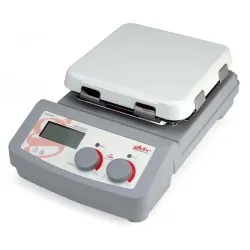
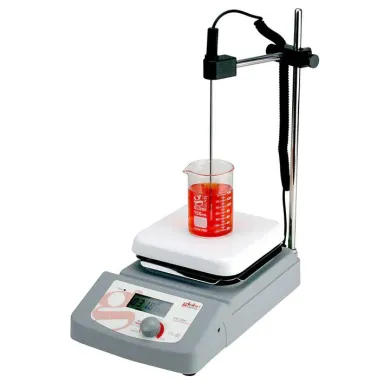
Globe Scientific GHS-550 Series Hotplates and Magnetic Stirrers with PID Control and Glass Ceramic Surface

From€1,326.99excl. VAT

In stock

Can't find what you're looking for?

TYPE
Hotplate-Stirrer
Display Type
LCD
Working Area
184mm W x 184mm D (7 x 7")
Working Area Material
Glass Ceramic
Heating Power
1000W
All 19 specifications
  • Ships to NL
  • Response within 1 hour
  • Warranty available. Buy without worry
  • Support from a scientist

Specifications 19

Brands
Globe Scientific
New/Used
Used
TYPE
Hotplate-Stirrer
Display Type
LCD
Working Area
184mm W x 184mm D (7 x 7")
Working Area Material
Glass Ceramic
Heating Power
1000W
Temperature Range
Ambient +5°C to 550°C
Temperature Accuracy
±1 °C (<100°C) ±1%(>100°C)
Max Stir Volume
20L
Stirring Speed Range
100-1500rpm,
Stir Bar Length
80mm (3.15")
RS232 Port
Yes
Voltage
100-120v 60Hz or 200-240v 50Hz
Power
1050W
Dimensions
215x360x108mm (8.5x14.2x4.3")
Weight
5.3kg / 11.7lbs
Operating Temp
5-40°C
Permissible Relative Humidity
80%RH (non-condensing)

Product description

The Globe Scientific GHS-550 series comprises advanced hotplates, magnetic stirrers, and combined hotplate magnetic stirrers designed for precise laboratory heating and robust solution mixing—essential equipment for biotechnology and molecular diagnostics workflows. Suitable for bioprocessing and synthetic biology applications, these benchtop units feature a compact design with a 7-inch chemical-resistant glass ceramic surface that ensures chemical inertness and ease of cleaning.

Key features include:

  • Powerful 1000-watt heating element capable of achieving temperatures from ambient +5°C to 550°C with *PID temperature control* for accuracy within ±0.2°C when using optional PT1000 sensor.
  • Stirring capabilities with a maintenance-free brushless DC motor providing strong magnetic coupling, supporting volumes up to 20 liters (GHS-550HSP) for homogeneous solution processing in cell imaging and biomanufacturing protocols.
  • Easy-to-read LCD or LED displays with intuitive control knobs allow stable temperature and speed adjustments, critical for reproducible kinetic studies and molecular cloning workflows.
  • Built-in overheating protection and a safety hot-plate warning system ensure operational safety in clinical diagnostics labs and biomedical engineering environments.
  • The RS232 communication port on select models enables external PC control and data logging, optimizing integration into automated bioprocessing pipelines.

Specifications at a glance:

  • Model GHS-550HSP: LCD display, stirring speed 100-1500 rpm, max stir volume 20 L, heating power 1000 W, working area 184 x 184 mm glass ceramic.
  • Models GHS-550HS and GHS-550S: LED display or no display, up to 10 L stirring volume, 1000 W heating power.
  • Compatible with 100-120 V 60Hz or 200-240 V 50Hz operations, dimensions approx. 215 x 360 x 108 mm, weight 3.8 to 5.3 kg depending on model.

This series is widely adopted in biotechnology research, particularly in molecular biology labs requiring precise temperature control and reliable magnetic stirring for assays like enzyme kinetics, live-cell imaging sample preparation, and biopharmaceutical production pipelines. The glass ceramic hotplate surface enhances durability against corrosive reagents common in gene editing and synthetic biology workflows.

Overall, the GHS-550 series hotplates and stirrers provide essential, precise heating and mixing capabilities critical for advanced biological and chemical laboratory applications.

Why Questpair exists

Lab equipment markets are fragmented. Buyers spend weeks calling distributors, comparing quotes, and verifying supplier reliability. Sellers struggle to reach global research labs.

We built Questpair to fix this. Every supplier on the platform is verified before listing. Every quote you receive comes from a real, vetted seller. AI prepares your case in minutes, then a real specialist takes over.

We're an independent team based in The Netherlands, working with research labs and procurement teams across Europe and worldwide.

Frequently asked questions

How long does laboratory equipment typically last?

With a service contract, ten to fifteen years is normal for most benchtop instruments. Detectors and pumps are the parts that wear first.

Can I get service for older equipment?

Often, yes. Verified suppliers frequently work with service partners converting the instrument. If applicable, we can list servicing options alongside the offer.

Where can I buy parts?

Ask a scientist through the request button. Parts are often available even when the instrument itself is discontinued.

What is the typical lead time for refurbished equipment?

Two to six weeks, depending on refurbishment scope and whether calibration is included.

Does laboratory equipment ship internationally?

We ship to 38 countries. Crating and customs handling are quoted with the instrument.

Reply in one hour

Can't find the exact configuration?

Tell us what you need and a scientist finds it for you, usually within the hour.

Last updated 16 November 2026