53k+ listingsShips to NLResponse within one hour+31 73 711 4717info@questpair.com
Procurable · sourced on request

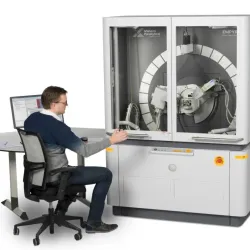
Malvern Panalytical Empyrean

UsedMalvern PanalyticalGeneral laboratory equipment - otherNetherlands
Procurable

Not in stock, available to order through our sourcing team

Not in stock, but we can get it for you

We source this model through our supplier network. Request a quote and we'll come back within one hour.

  1. Request a quote
  2. We confirm price and lead time
  3. You approve, we ship to you
Enclosure Dimensions
1400 x 1162 x 1947 mm
Enclosure Weight
1150 kg
Goniometer Configuration
Vertical goniometer, available in theta-theta or alpha-1 geometry
Goniometer Radius
240 mm
Maximum Usable Range
-111° < 2θ < 168°
Availability
Procurable
Lead time
Confirmed with your quote
All 40 specifications
  • Ships to NL
  • Response within 1 hour
  • Warranty available. Buy without worry
  • Support from a scientist

Specifications 40

Brands
Malvern Panalytical
New/Used
Used
Enclosure Dimensions
1400 x 1162 x 1947 mm
Enclosure Weight
1150 kg
Goniometer Configuration
Vertical goniometer, available in theta-theta or alpha-1 geometry
Goniometer Radius
240 mm
Maximum Usable Range
-111° < 2θ < 168°
2θ Linearity
±0.01°
Angular Resolution (FWHM on LaB₆)
0.02°
Angular Reproducibility
< 0.0002°
Smallest Increment
0.0001°
Maximum Angular Speed
15°/s
Operating Voltage
40 – 45 kV
Operating Current
20 – 40 mA
X-ray Tube Anode
Cu
X-ray Tube Focus
Line and spot focus
Beam Mask Sizes
5, 10, and 15 mm
Programmable Divergent Slit Range
0.5 to 20 mm
Fixed Divergent Slit Range
1/32 to 2°
Antiscatter Slit Range
1/16 to 4°
Soller Slit Divergence
2.3°
Detector
PIXcel1D
Non-Ambient Stage Temperature Range
−196°C to 2300°C
Non-Ambient Stage Atmosphere
Vacuum, O₂, Ar, and N₂
Sample Weight Capacity
Up to 2 kg
Sample Holder Sizes
16 mm and 27 mm diameter, up to 6.5 mm deep
Sample Holder Depths
0.4 mm and 0.8 mm
Sample Holder Diameter for Transmission Mode
40 mm
Sample Holder Depth for Transmission Mode
6 mm
Sample Holder Depths for Alumina Sample Holders
0.8 mm, 0.4 mm, or flat
Zero-Background Sample Holders
Available for small amounts of material
Manual Powder Press
Available for back-loading samples
Incident Beam Optics
Bragg-Brentano HD, 2xGe(220) Hybrid Monochromator, and Fixed Divergence Slit
Diffracted Beam Optics
Fixed Anti-Scatter Slit, 0.18° Parallel Plate Collimator, and 2xGe(220) Triple-Axis Analyzer
Soller Slit Angles
0.02 and 0.04 rad
Divergence and Incident Beam Anti-Scatter Slit Openings
1/32, 1/16, 1/8, 1/4, 1/2, 1, 2, and 4°
Microbeam Masks and Collimators
0.1, 0.3, and 0.5 mm
Software
Data Collector, Data Viewer, HighScore Plus, Epitaxy, Stress, XRD2D, Excel-based 'beam size guidance calculator', Crystallography Open Database, PDF4+ database, and CSD database
Availability
Procurable
Lead time
Confirmed with your quote

Product description

Versatile XRD instrument with Cu/Mo sources, 5-axis cradle, SAXS/WAXS, and in situ stages from −190°C to 1100°C.

The PANalytical Empyrean X-ray Diffractometer is a versatile instrument designed for comprehensive crystallographic analysis across various materials. This diffractometer enables researchers to investigate phase identification, texture, residual stress, and pair distribution functions, providing critical insights into material properties.

Key features include:

  • Cu and Mo radiation sources for both low- and high-energy X-ray diffraction (XRD) applications.
  • Reflection and transmission geometries with rotating sample capabilities to enhance statistical accuracy.
  • Spinning capillary functionality for analysing air-sensitive materials or small sample sizes.
  • Bragg–Brentano optics and focusing geometry for precise diffraction measurements.
  • Residual strain measurement capabilities to assess internal stresses within materials.
  • Microdiffraction with a 100 µm beam using Cu/Mo focusing mirror and monocapillary optics.
  • 5-axis Eulerian cradle for comprehensive texture mapping.
  • Small- and wide-angle X-ray scattering (SAXS/WAXS) for analysing nanostructures.
  • Grazing incidence XRD for surface-sensitive analyses.
  • Pair distribution function analysis to study local atomic arrangements.
  • Galipix 3D area detector for rapid and accurate data collection.
  • In situ stages capable of operating from −190°C up to 1100°C with a 3-axis cradle for temperature-dependent studies.
  • Multiple X-ray tubes (Cr, Cu, Mo) available to accommodate a variety of measurement requirements.
  • High-resolution residual stress analysis including parallel beam optics and microbeam dual mask sets.

This diffractometer is widely utilised in fields such as materials science, pharmaceutical research, nanotechnology, and metallurgy. It is commonly found in university laboratories, biomedical research centres, and industrial R&D facilities. The Empyrean X-ray Diffractometer remains a relevant and powerful tool in contemporary research, offering advanced capabilities for material characterisation.

Why Questpair exists

Lab equipment markets are fragmented. Buyers spend weeks calling distributors, comparing quotes, and verifying supplier reliability. Sellers struggle to reach global research labs.

We built Questpair to fix this. Every supplier on the platform is verified before listing. Every quote you receive comes from a real, vetted seller. AI prepares your case in minutes, then a real specialist takes over.

We're an independent team based in The Netherlands, working with research labs and procurement teams across Europe and worldwide.

Frequently asked questions

How long does laboratory equipment typically last?

With a service contract, ten to fifteen years is normal for most benchtop instruments. Detectors and pumps are the parts that wear first.

Can I get service for older equipment?

Often, yes. Verified suppliers frequently work with service partners converting the instrument. If applicable, we can list servicing options alongside the offer.

Where can I buy parts?

Ask a scientist through the request button. Parts are often available even when the instrument itself is discontinued.

What is the typical lead time for refurbished equipment?

Two to six weeks, depending on refurbishment scope and whether calibration is included.

Does laboratory equipment ship internationally?

We ship to 38 countries. Crating and customs handling are quoted with the instrument.

Reply in one hour

Can't find the exact configuration?

Tell us what you need and a scientist finds it for you, usually within the hour.

Last updated 4 November 2026