€748excl. VAT
In stock
Can't find what you're looking for?
Reliable dry block heaters with exceptional temperature stability. Ideal for laboratory applications.
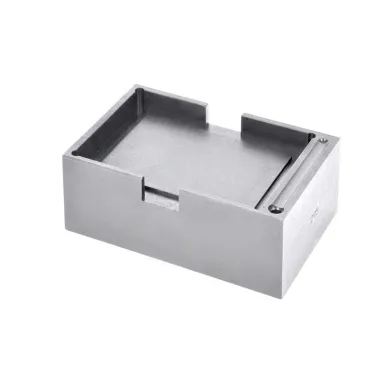
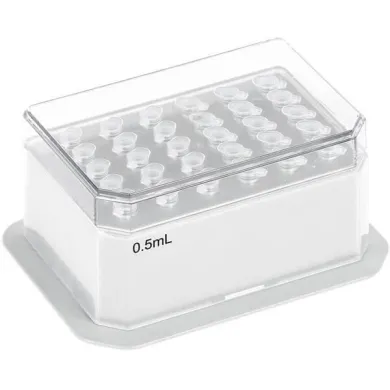
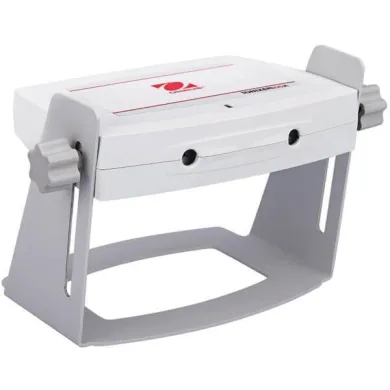
The Ohaus HB2DG Dry Block Heaters are designed for routine laboratory applications that necessitate precise temperature control and stability. These units accommodate two interchangeable modular blocks, providing compatibility with 40 options, ensuring versatility for various sample types. Exceptional heat retention is achieved through close contact between the tube and block, promoting efficient heating. Analog models serve as an economical alternative with a low-temperature range of +5°C above ambient to 100°C, and a high-range from 75°C to 150°C, controlled via two adjustment knobs. Digital models enhance repeatability, operating from 5°C above ambient to 120°C with touch pad controls and independent LED displays for both temperature and time. They feature a sound alarm for added convenience. Models with heated lids maintain temperatures from 5°C above ambient to 100°C, further reducing condensation to protect sample integrity. These dry block heaters exhibit exceptional temperature uniformity and thermal stability. They feature a unique single-point calibration function to ensure accurate temperature displays on digital models. Applications cover a broad range, including culture incubation and activation, enzymatic reactions, immunoassays, determining melting/boiling points, isothermal incubation, and nucleic acid denaturation. Digital models feature LED displays and keypad control, while analog models use dual-adjustment knobs and marking. Structure comprises painted steel armor with a support bar and fixing knob, alongside a detachable three-wire cable and plug. For analog models, an external thermometer or temperature adjustment tool is required for setpoint accuracy.
Lab equipment markets are fragmented. Buyers spend weeks calling distributors, comparing quotes, and verifying supplier reliability. Sellers struggle to reach global research labs.
We built Questpair to fix this. Every supplier on the platform is verified before listing. Every quote you receive comes from a real, vetted seller. AI prepares your case in minutes, then a real specialist takes over.
We're an independent team based in The Netherlands, working with research labs and procurement teams across Europe and worldwide.
With a service contract, ten to fifteen years is normal for most benchtop instruments. Detectors and pumps are the parts that wear first.
Often, yes. Verified suppliers frequently work with service partners converting the instrument. If applicable, we can list servicing options alongside the offer.
Ask a scientist through the request button. Parts are often available even when the instrument itself is discontinued.
Two to six weeks, depending on refurbishment scope and whether calibration is included.
We ship to 38 countries. Crating and customs handling are quoted with the instrument.
Tell us what you need and a scientist finds it for you, usually within the hour.
Last updated 22 October 2026
€748 sits above most general laboratory equipment here.
2 other listings of this model are available.