58k+ listingsShips to NLResponse within one hour+31 73 711 4717info@questpair.com

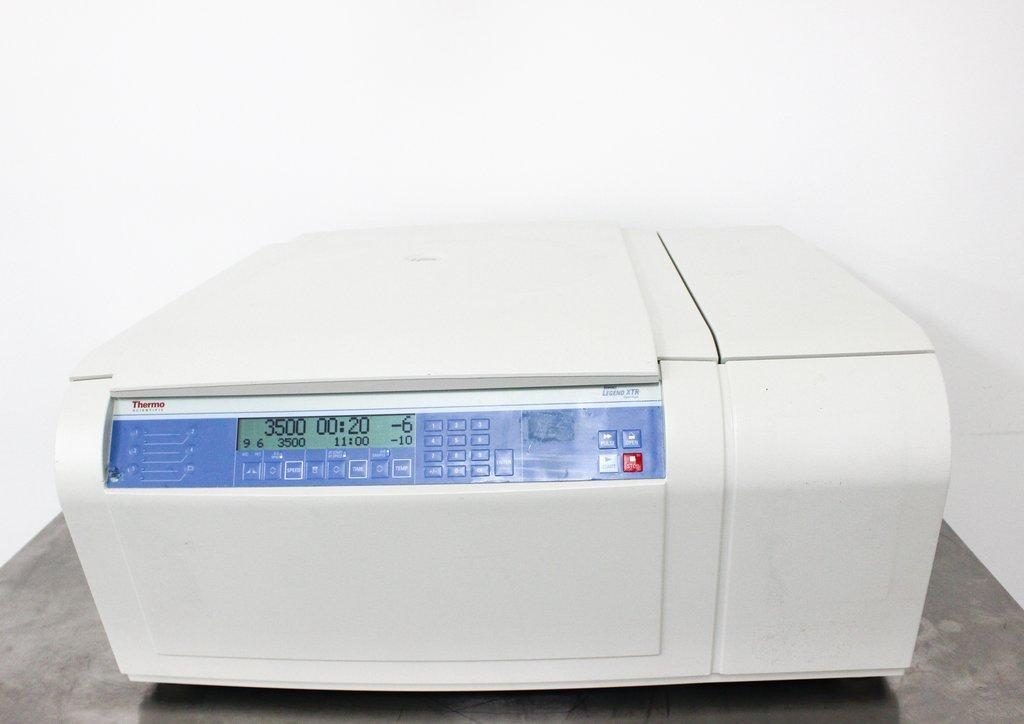
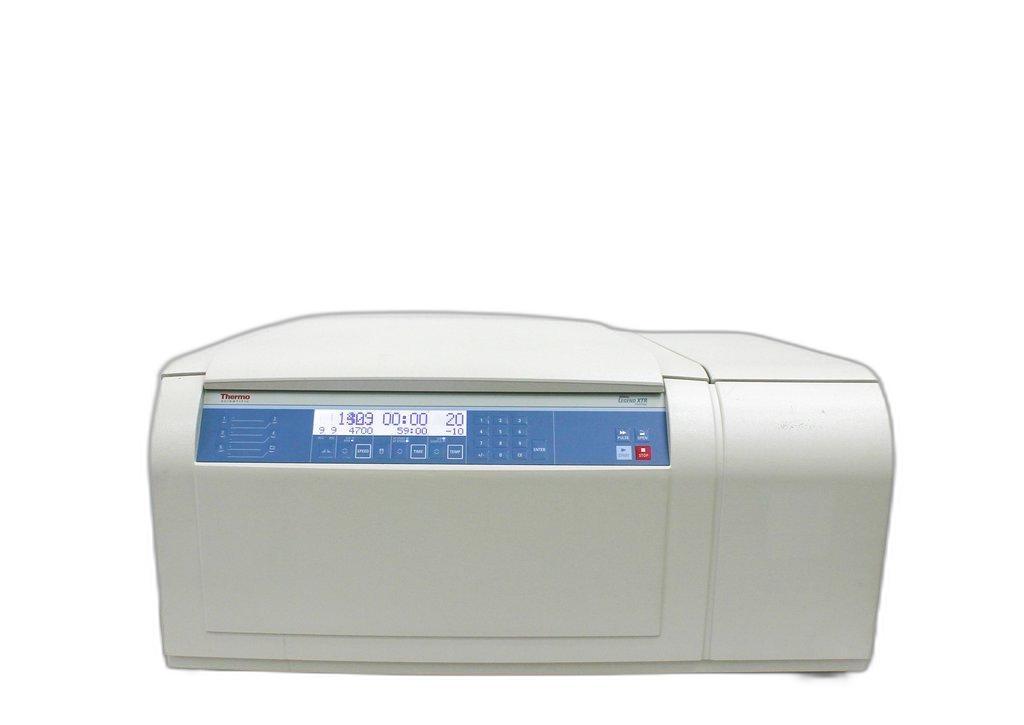
Thermo Sorvall Legend XTR Refrigerated Benchtop Centrifuge with SMARTspin Rotor Detection

Price on request

In stock

Can't find what you're looking for?

Acceleration/Deceleration
9/10
Maximum Capacity
4 x 1000 mL (with TX-1000 rotor)
Maximum Speed
6000 rpm (with BIOShield 1000A rotor)
Maximum RCF
7164 x g (with BIOShield 1000A rotor)
RPM
300-15200 rpm (with microvolume rotors)
All 22 specifications
  • Ships to NL
  • Response within 1 hour
  • Warranty available. Buy without worry
  • Support from a scientist

Specifications 22

Brands
Thermo Fisher Scientific
New/Used
Used
Acceleration/Deceleration
9/10
Maximum Capacity
4 x 1000 mL (with TX-1000 rotor)
Maximum Speed
6000 rpm (with BIOShield 1000A rotor)
Maximum RCF
7164 x g (with BIOShield 1000A rotor)
RPM
300-15200 rpm (with microvolume rotors)
Drive System
Direct, brushless induction low profile motor
Rotor Locking System
Push-button Auto-Lock
Imbalance Detection System
SMARTSpin
Programs
99 (5 with direct access key)
Temperature Set Range
-10 °C to +40 °C
Pre-Cooling Function
Yes, with direct button
Refrigeration System
CFC free
Pulse (Short)
Run Yes
Centrifugation Chamber
Corrosion-resistant, high-thermal conductivity, 304 grade stainless steel
Maximum Timer Range
99h, 59min + continuous
Sound Level (dBA)
with swinging bucket rotor at top speed < 61 with fixed angle rotor at top speed < 64
Maximum Power Consumption
(W) 120 V 1400
Maximum Heat Output
(BTU/h) 120 V 4776
Dimensions
30x26x14″
Weight
314 lbs

Product description

Refrigerated benchtop centrifuge with 4L capacity, SMARTspin rotor ID, max 25830 x g, ideal for bioproduction and molecular diagnostics.

The Thermo Sorvall Legend XTR is a refrigerated benchtop centrifuge engineered for advanced laboratory workflows requiring dependable, high-throughput sample processing. Designed with SMARTspin rotor detection and imbalance protection, this centrifuge supports multiple rotor types including fixed-angle and swinging-bucket rotors, accommodating volumes up to 4 liters with speed ranges from 300 to 15,200 rpm.

Key technical features include:

  • Maximum RCF of 25,830 x g with microvolume rotors for high-speed molecular biology protocols essential in bioprocessing and molecular diagnostics.
  • Brushless direct-drive motor ensures quiet operation and long service life, critical in environments such as cell culture, food safety testing, and biomanufacturing processes.
  • Temperature control from -10 °C to +40 °C, with programmable pre-cooling and refrigeration (CFC-free system), safeguarding temperature-sensitive samples in synthetic biology and biotechnology research.
  • Push-button Auto-Lock rotor system simplifies rotor changes while enhancing user safety and operational efficiency.
  • 99 programmable protocols with 5 direct access keys streamline repetitive workflows common in gene editing and biopharmaceutical production pipelines.
  • Corrosion-resistant, high thermal conductivity 304 stainless steel centrifuge chamber supports consistent temperature maintenance and durability during intensive cycles.
  • Compliance with performance standards backed by thorough factory inspection and warranty support.

The Legend XTR centrifuge is widely used in research domains such as biomedical engineering, molecular diagnostics, and synthetic biology, making it an essential instrument for labs focused on live-cell imaging, gene editing workflows, and bioprocessing applications needing reliable refrigerated sample separation.

Why Questpair exists

Lab equipment markets are fragmented. Buyers spend weeks calling distributors, comparing quotes, and verifying supplier reliability. Sellers struggle to reach global research labs.

We built Questpair to fix this. Every supplier on the platform is verified before listing. Every quote you receive comes from a real, vetted seller. AI prepares your case in minutes, then a real specialist takes over.

We're an independent team based in The Netherlands, working with research labs and procurement teams across Europe and worldwide.

Frequently asked questions

How long does laboratory equipment typically last?

With a service contract, ten to fifteen years is normal for most benchtop instruments. Detectors and pumps are the parts that wear first.

Can I get service for older equipment?

Yes. Every verified supplier states which service partners cover the instrument, and we list that alongside the offer.

Where can I buy parts?

Ask a scientist through the request button. Parts are often available even when the instrument itself is discontinued.

What is the typical lead time for refurbished equipment?

Two to six weeks, depending on refurbishment scope and whether calibration is included.

Does laboratory equipment ship internationally?

We ship to 38 countries. Crating and customs handling are quoted with the instrument.

Reply in one hour

Can't find the exact configuration?

Tell us what you need and a scientist finds it for you, usually within the hour.

Last updated 19 October 2026