53k+ listingsShips to NLResponse within one hour+31 73 711 4717info@questpair.com
Procurable · sourced on request

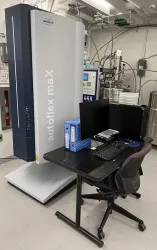
Bruker Autoflex

UsedBrukerMass spectrometersNetherlands
Procurable

Not in stock, available to order through our sourcing team

Not in stock, but we can get it for you

We source this model through our supplier network. Request a quote and we'll come back within one hour.

  1. Request a quote
  2. We confirm price and lead time
  3. You approve, we ship to you
Laser Repetition Rate
2 kHz
Mass Resolution in Reflectron Mode
> 26,000
Mass Accuracy in Reflectron Mode
< 2 ppm
Mass Range in Linear Mode
up to 500,000 m/z
Mass Range in Reflectron Mode
up to 8,000 m/z
Availability
Procurable
Lead time
Confirmed with your quote
All 19 specifications
  • Ships to NL
  • Response within 1 hour
  • Warranty available. Buy without worry
  • Support from a scientist

Specifications 19

Brands
Bruker
New/Used
Used
Laser Repetition Rate
2 kHz
Mass Resolution in Reflectron Mode
> 26,000
Mass Accuracy in Reflectron Mode
< 2 ppm
Mass Range in Linear Mode
up to 500,000 m/z
Mass Range in Reflectron Mode
up to 8,000 m/z
Laser Focus Diameter for Imaging
10 µm
Flight Length in Linear Mode
120 cm
Flight Length in Reflectron Mode
215 cm
Maximum Sampling Rate
200 Hz
Sensitivity for Single Peptide
500 fmol
Sensitivity for Large Polymers/Proteins
low pmol
Laser Wavelength
355 nm
Ionization Source
MALDI
Ion Optics Mode
Linear and Reflectron
Maintenance Feature
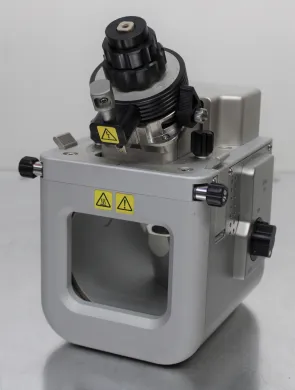
Self-cleaning Ion Source
Availability
Procurable
Lead time
Confirmed with your quote

Product description

MALDI-TOF mass spectrometer with 2 kHz smartbeam™ laser, 26,000 resolution, TOF/TOF modes, and MALDI imaging for biomolecular analysis.

The Bruker Autoflex is a MALDI-TOF mass spectrometer designed for rapid and precise analysis of biomolecules, including proteins, peptides, oligonucleotides, and polymers. This instrument facilitates high-throughput screening and detailed molecular characterisation, making it indispensable in various research and clinical settings.

Key features include:

  • High-speed data acquisition: Equipped with a proprietary smartbeam™ solid-state laser operating at up to 2 kHz, enabling swift analysis suitable for high-throughput applications.
  • Enhanced mass resolution: Utilises PAN™ technology to achieve resolving power up to 26,000, ensuring accurate mass determination across a broad range.
  • Versatile analytical modes: Supports both TOF and TOF/TOF configurations, accommodating diverse applications from proteomics to polymer analysis.
  • Advanced imaging capabilities: Features MALDI imaging for spatial distribution studies of biomolecules within tissue sections, crucial for molecular histology and drug distribution research.
  • User-friendly maintenance: Incorporates a self-cleaning ion source, reducing downtime and ensuring consistent performance with minimal operator intervention.

The Bruker Autoflex is widely applied in fields such as proteomics, biotechnology, polymer science, and clinical diagnostics. It is commonly utilised in university laboratories, biomedical research centres, and clinical environments for applications including:

  • Biomarker discovery: Identifying potential disease markers through protein and peptide analysis.
  • Molecular imaging: Mapping the spatial distribution of biomolecules within tissues.
  • Polymer characterisation: Determining molecular weights and structures of synthetic polymers.
  • Microbial identification: Rapidly identifying microorganisms in clinical samples.

First introduced in 2010, the Bruker Autoflex has undergone continuous enhancements to meet the evolving demands of modern research, maintaining its relevance and reliability in scientific investigations.

Why Questpair exists

Lab equipment markets are fragmented. Buyers spend weeks calling distributors, comparing quotes, and verifying supplier reliability. Sellers struggle to reach global research labs.

We built Questpair to fix this. Every supplier on the platform is verified before listing. Every quote you receive comes from a real, vetted seller. AI prepares your case in minutes, then a real specialist takes over.

We're an independent team based in The Netherlands, working with research labs and procurement teams across Europe and worldwide.

Frequently asked questions

How long does laboratory equipment typically last?

With a service contract, ten to fifteen years is normal for most benchtop instruments. Detectors and pumps are the parts that wear first.

Can I get service for older equipment?

Often, yes. Verified suppliers frequently work with service partners converting the instrument. If applicable, we can list servicing options alongside the offer.

Where can I buy parts?

Ask a scientist through the request button. Parts are often available even when the instrument itself is discontinued.

What is the typical lead time for refurbished equipment?

Two to six weeks, depending on refurbishment scope and whether calibration is included.

Does laboratory equipment ship internationally?

We ship to 38 countries. Crating and customs handling are quoted with the instrument.

Reply in one hour

Can't find the exact configuration?

Tell us what you need and a scientist finds it for you, usually within the hour.

Last updated 2 November 2026