58k+ listingsShips to NLResponse within one hour+31 73 711 4717info@questpair.com

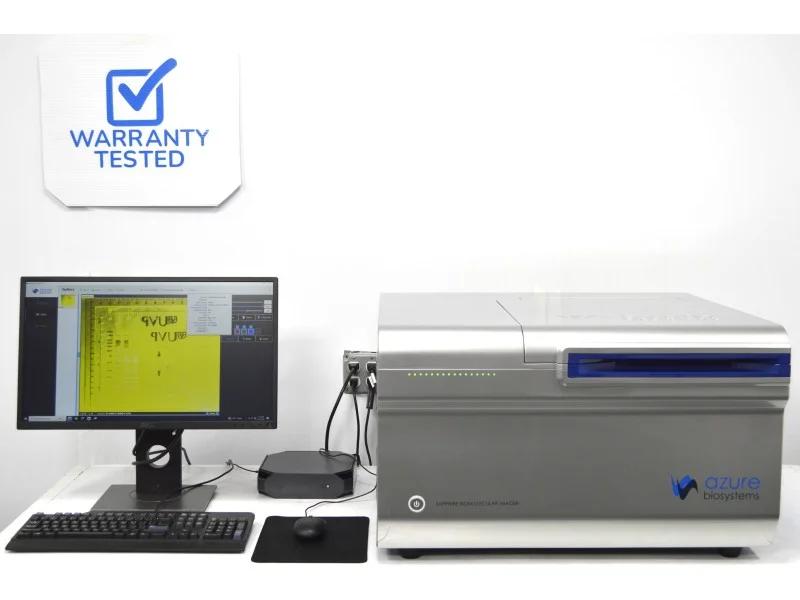
Azure Biosystems 600 Imager – Multi-Channel Western Blot and Fluorescence Imaging System

Price on request

In stock

Can't find what you're looking for?

Camera
9.1 MP camera (600) 8.3 MP camera (c600)
Pixel resolution
16-bit, 65,536, Grayscale
Field of View
20.5 x 16.5 cm
Peltier Cooling
-50°C regulated cooling
Filter wheel
7 position
All 20 specifications
  • Ships to NL
  • Response within 1 hour
  • Warranty available. Buy without worry
  • Support from a scientist

Specifications 20

Brands
Azure Biosystems
New/Used
Used
Camera
9.1 MP camera (600) 8.3 MP camera (c600)
Pixel resolution
16-bit, 65,536, Grayscale
Field of View
20.5 x 16.5 cm
Peltier Cooling
-50°C regulated cooling
Filter wheel
7 position
UV
UV302 and 365nm
UV Safety Override Switch
Yes
Color Imaging
Yes
Trans-white imaging
Yes
Chemiluminescence
Yes
Laser-based NIR Imaging
Yes
Visible/RGB Fluorescent Imaging
Yes
NIR Fluorescence Imaging
Yes
Epi Blue Light Imaging
yes
Total protein normalization channel
yes
Dimensions
15x12x18”
Weight
49lbs
Power
100-240v, 50/60hz, 2a

Product description

High-sensitivity 9.1MP Western blot imager with multi-channel fluorescence and chemiluminescence detection for molecular diagnostics.

The Azure Biosystems 600 Imager is a compact, high-performance imaging system designed for advanced molecular biology and biotechnology laboratories. It supports multi-channel digital image capture across a broad spectrum including NIR, visible light, UV, blue light, and chemiluminescence, making it essential for quantitative Western blotting and fluorescence analysis.

Key specifications include:

  • Camera: 9.1 megapixels (600 model) or 8.3 megapixels (c600 model) with 16-bit, 65,536 grayscale pixel resolution for publication-quality images.
  • Illumination sources: Blue LED, RGB LED, solid-state lasers (685nm and 784nm for 600; 660nm and 785nm LD laser for c600), UV302 and 365nm wavelengths, enabling versatile excitation options.
  • Imaging channels: Supports up to 4-channel fluorescence detection spanning RGB to NIR, chemiluminescence, total protein normalization, and trans-white illumination.
  • Cooling system: Integrated Peltier cooling down to -50°C to reduce sensor noise, improving signal-to-noise ratio for sensitive molecular diagnostic workflows.
  • Filter wheel: 7-position filter wheel for precise spectral separation and automation of multi-color fluorescence experiments.
  • Software capabilities: Robust analysis software with preset and customizable protocols for autofocus, illumination control, filter selection, and image overlay, facilitating reproducible image acquisition in bioprocessing and synthetic biology research.
  • Physical attributes: Compact 15x12x18 inch footprint, 49 lbs weight; compatible with 100-240V, 50/60Hz power supplies for global laboratory deployment.

This Western blot imager is widely adopted in molecular diagnostics and biomanufacturing pipelines, supporting workflows such as gene editing verification, protein quantification, and real-time fluorescence detection. Its high sensitivity to low-background fluorescence is critical in biotechnology research fields including synthetic biology and bioprocess monitoring. The Azure 600 Imager’s advanced optical and digital features make it a key instrument for labs requiring quantitative protein analysis and fluorescent imaging with publication-ready results.

Why Questpair exists

Lab equipment markets are fragmented. Buyers spend weeks calling distributors, comparing quotes, and verifying supplier reliability. Sellers struggle to reach global research labs.

We built Questpair to fix this. Every supplier on the platform is verified before listing. Every quote you receive comes from a real, vetted seller. AI prepares your case in minutes, then a real specialist takes over.

We're an independent team based in The Netherlands, working with research labs and procurement teams across Europe and worldwide.

Frequently asked questions

How long does laboratory equipment typically last?

With a service contract, ten to fifteen years is normal for most benchtop instruments. Detectors and pumps are the parts that wear first.

Can I get service for older equipment?

Yes. Every verified supplier states which service partners cover the instrument, and we list that alongside the offer.

Where can I buy parts?

Ask a scientist through the request button. Parts are often available even when the instrument itself is discontinued.

What is the typical lead time for refurbished equipment?

Two to six weeks, depending on refurbishment scope and whether calibration is included.

Does laboratory equipment ship internationally?

We ship to 38 countries. Crating and customs handling are quoted with the instrument.

Reply in one hour

Can't find the exact configuration?

Tell us what you need and a scientist finds it for you, usually within the hour.

Last updated 19 October 2026